

City Know-hows
Target audience
Those involved with teaching and practicing urban planning, architecture, urban design, engineering, transport and public health.
The problem
The idea of ‘healthy’ urban development has been narrowly framed, resulting in poor understanding of how to create places that support health and wellbeing. Health inequities have been perpetuated by a focus on individual ‘lifestyle choices’, such active travel and nutrition, which downplay the role of structural barriers to healthy living. Similarly, environmental sustainability has often been left out of public health messaging for place-making, rather than framed as an immediate imperative for human health. A new model is needed to communicate and align action for healthy urbanism.
What we did and why
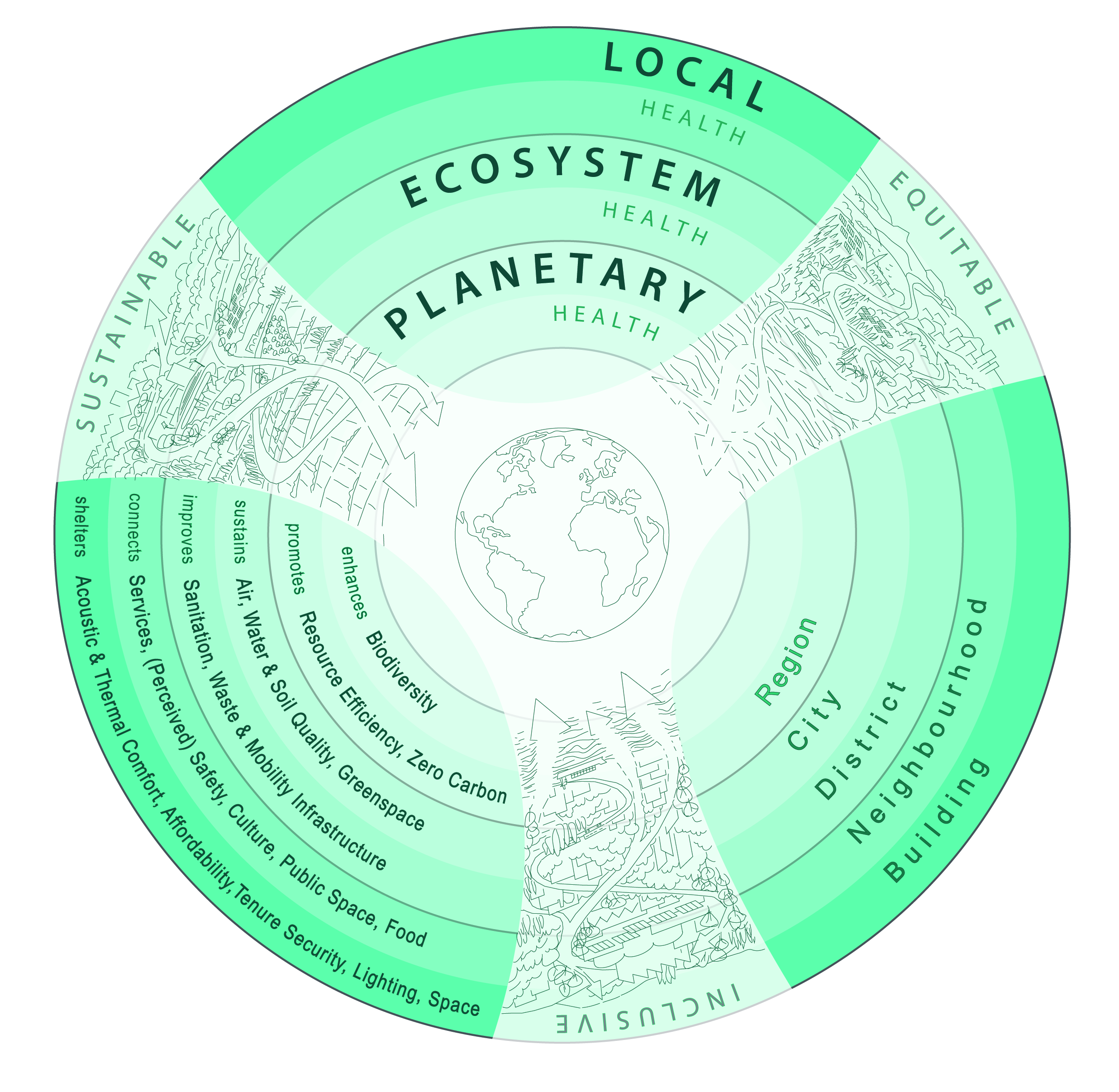
We produced a new conceptual framework called THRIVES (Towards Healthy Urbanism: Inclusive, Equitable, Sustainable) that bridges social and environmental concerns to redefine healthy urban development. The framework argues for a renewed focus in built environment research and practice on the links between human, ecosystem and planetary health, that must be underpinned by the principles of equity, inclusion and sustainability. We used participatory methods to create this framework, learning from built environment and public health professionals.
Our study’s contribution
Impacts for city policy and practice
Participants in our workshop viewed the THRIVES framework as a lens to examine healthy urban development. It could be used to achieve the following:
Further information
Further information on the framework, including case studies can be found here: healthyurbanism.net
Full research article:
Related posts

In the aftermath of conflict, cities prioritize reconstruction, but green spaces often get left behind. This study delves into how residents of post-conflict cities engage with urban parks, providing valuable knowledge for decision-makers to unlock the full potential of these green havens for social cohesion and well-being.

Air pollution is linked to a high risk of dementia. However, it is concerning that only two Latin American countries are studying this association. We wanted to establish whether the association has been described in this area of the world, how often it has been done and what policies have been generated from it to intervene.

Autism inclusive urban environments design principles to support sensory and cognitive navigation.