


City Know-hows
Generating awareness and evidence of existing housing conditions and their health impacts are fundamental. That makes it possible to collaborate across sectors and with stakeholders, establishing effective enforcement and tackling issues concerning private rights.
Share
Target audience
Policy makers, urban leaders, expert groups on housing
The problem
There is a lack of housing policy that stipulates requirements for health. A recent publication from WHO, its Housing and Health Guidelines re-focuses us all on the need to consider housing when providing healthy environments.
What we did and why
We completed a review of the literature that discussed the development and implementation of healthy housing policy, to understand what worked and to guide the development of this policy area.
Our study’s contribution
Our evidence review sets out lessons for those who are working in housing and health to take forward and then enable better policy development and implementation.
Impacts for city policy and practice
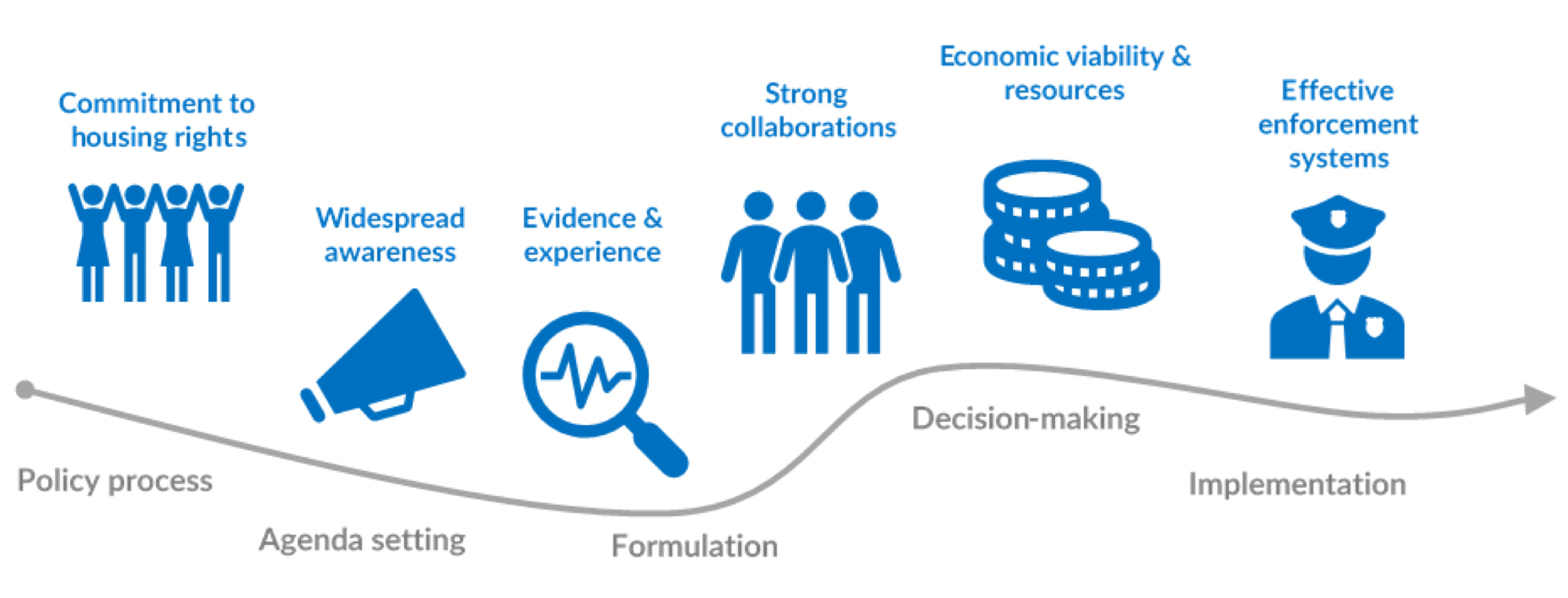
What enables health housing policy development and implementation?
We need to
Further information
Full research article:
Getting to effective housing policy for health: a thematic synthesis of policy development and implementation by Emily Nix, Andrew Ibbetson, Ke Zhou, Michael Davies, Paul Wilkinson, Ramona Ludolph, and Helen Pineo.
Related posts

What makes a city truly happy? Drawing on research from nine global megacities, this study identifies the most important factors that foster happiness in urban public spaces. Put these 18 evidence-based criteria to work and transform your city’s streets, parks, and squares.

Can Bangkok truly clean its air? New initiatives show promise, but key changes are needed. This analysis reveals how better infrastructure, stronger governance, and embracing renewable energy can pave the way for a healthier city.

Although the CASE and MAPs were supposed to be temporary shelters for displaced persons, after fourteen years, they have not received proper maintenance and are dilapidated. This scenario opens to the idea that living in these places could negatively affect different psychological aspects, including perceived urban quality and environmental well-being.