City Know-hows
Target audience
City planners, city officials, residents, community and public health committees.
The problem
Concerned residents reached out to a local research group (Community Noise Lab) and city officials to complain of the significant mental and physical health impacts of incessant firework activity during Covid-19’s stay-at-home advisory.
What we did and why
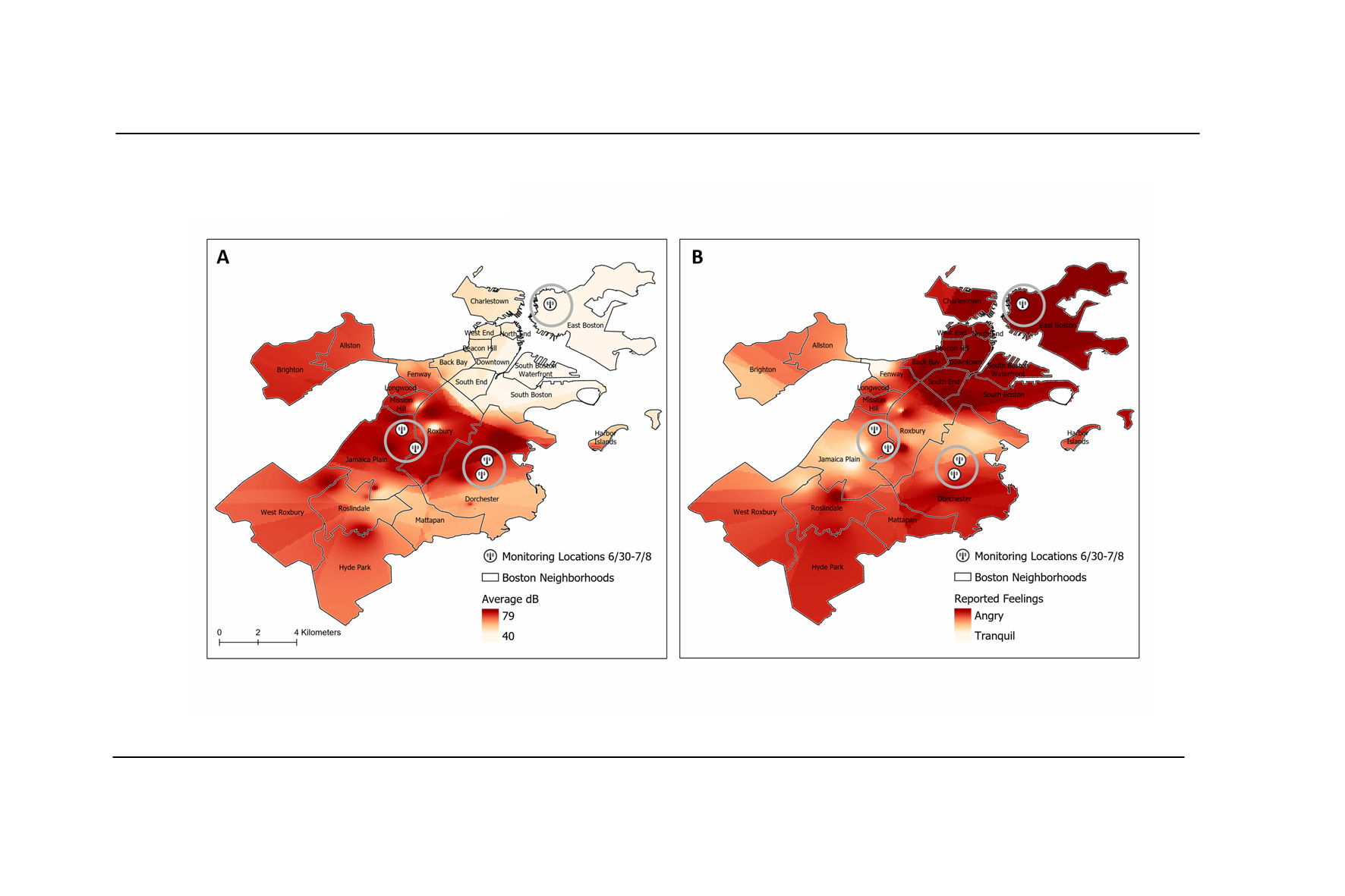
Community residents, city officials, and academic researchers come together to measure and problem solve incessant illegal firework activity in the City of Boston. We used a research app called ‘NoiseScore’ together with sound level meters, noise complaint calls, and census data to measure sound levels. These data allowed us to also be able to describe its impacts on community noise perception; map who is most vulnerable to such noise; and used these data to form the first ever Firework Task Force in the city of Boston.
Our study’s contribution
We explain the process of how a group of academic researchers, city officials, and concerned residents can come together to measure, report, and create a fireworks taskforce.
Impacts for city policy and practice
This experience can be informative for cities and/or community residents who need to organize around an environmental issue and create a tangible, effective solutions.
Further information
Community Noise Lab: Community Noise Lab is currently located at the Brown University School of Public Health. The lab’s primary aim is to holistically explore the relationship between community noise and health by working directly with communities to support their specific noise issues using real-time monitoring and exposure modelling. Our smartphone app, NoiseScore, which allows users to objectively measure and subjectively describe noise events in their community.
City of Boston – Fireworks Safety Guide: Sound levels from incessant use of fireworks are unreasonably loud. The City of Boston states that unreasonable sound levels are anything louder than 50 decibels from 11pm to 7am, or anything louder than 70 decibels at anytime.
Full research article:
Firework activity and environmental sound levels: community impacts and solutions by Erica D. Walker, Nina F. Lee, Koen F. Tieskens, Jonathan Jay, Lorrie J. Walker, Marisa Luse, Roudnie Celestin, Jerome Smith, Julia Mejia & Jonathan I. Levy.
Related posts

Our study investigated whether apartment dwelling and building design attributes influenced residents’ housing satisfaction in the initial stages of the COVID-19 pandemic. Multivariate models showed that residents’ perceptions of their apartment’s internal space and layout and the thermal comfort it afforded them in winter were independently associated with increased housing satisfaction.

Cities can build stronger, healthier, and more resilient communities by tailoring resilience strategies to the unique vulnerabilities and strengths of each neighbourhood. This approach ensures resilience is integrated into both emergency response and the long-term development of urban areas.

How do we develop liveable cities? Researchers in St. Louis surveyed multiple disciplines to see what skills we need to make future places healthy, equitable,