City Know-hows
Urban design and planning, and associated policies, must enable and support a collective adaptation to climate change by responding to local needs. These needs can be identified through an urban comfort lens considering sociocultural preferences and needs which must inform urban design and planning practice.
Share
Target audience
Urban designers, urban planners, policy makers
The problem
Understanding the role of sociocultural values in promoting or inhibiting adaptation to microclimates can help improve urban design and planning in face of urban climate change contributing to social cohesion, resilience, and local economies. But while studies relating culture and thermal perceptions have gained attention in recent years, studies on collective cultural meanings of climate, weather and place that affect experiences and activities in urban spaces are rare, but essential to understand human adaptation capacity.
What we did and why
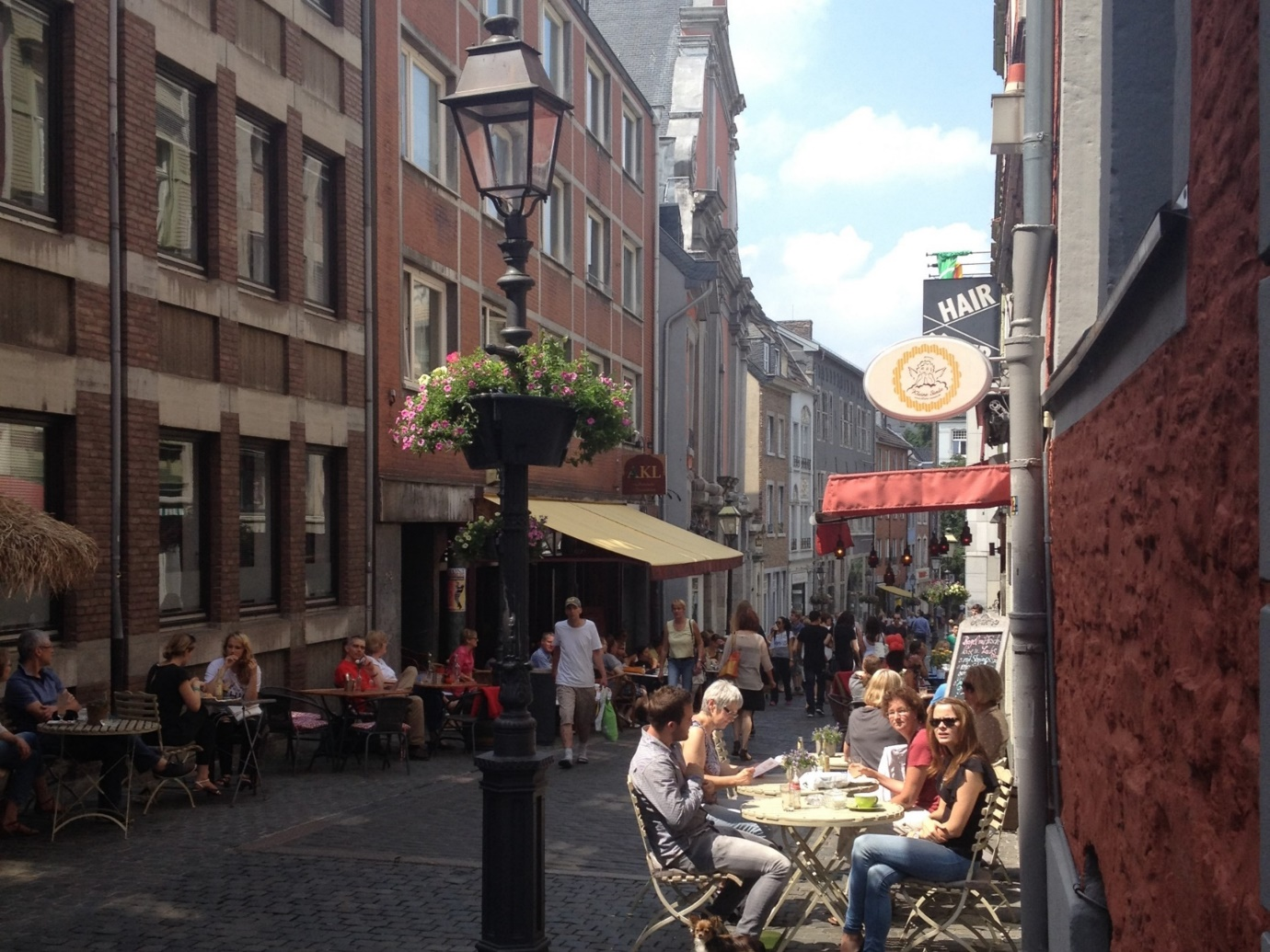
We focus on this gap and aim at investigating how people adapt to the local weather and climate to enjoy public spaces, and how this adaptation is collectively shaped by regional identity and culture. Through an interpretive analysis, we explore how Aachen’s public open spaces are used in respect to microclimate. Our main objective was to explore and highlight place-based aspects influencing adaptation to urban climates, to promote adaptation to climate (change) in general.
Our study’s contribution
Adaptive capacity is influenced by culture. We focus on a multi-cultural city to investigate how adaptive capacity can be enhanced by urban comfort in a multi-cultural context. We then highlight:
• The role of cultural background on people’s tolerance of urban microclimate conditions
• The role of urbanity on adaptation to urban microclimate, in comparison to places where nature are at the centre
• Urban comfort contribution to the design of resilient cities, adapted to climate change challenges
Impacts for city policy and practice
Results of our study show ways in which policy can enable and support the collective adaptation to climate change by responding to local needs, these needs can be identified through urban comfort. In addition, the regional approach enabled by urban comfort is an important dimension in addressing climate change to avoid generic strategies that are too high-level to be place-effective.
Further information
Full research article:
Urban comfort and adaptive capacity: an exploratory study of urban life and climate responses in Aachen, Germany by Silvia Tavares, Andreas Wesener, Runrid Fox-Kämper and Lisandra Krebs.
Related posts

Our study found that community place-based initiatives involving the public and private sectors can provide public spaces, such as public parks and communal gardens, that are appropriate for reconnecting mental and urban health using the concept of co-benefit endorsed by the World Health Organization in 2011. We examined this concept in large projects in Seoul and Singapore to show the advantage of intersectoral collaboration for reconnecting mental and urban health initiatives by urban planning.

Assessing the urban environment is crucial for enhancing mental well-being. It is imperative to identify relevant indicators and establish a comprehensive framework to measure the impact effectively. This approach is essential for initiating strategic interventions aimed at improving mental health outcomes.

This study explores how urban playground design can either segregate or integrate children within the broader city fabric. By comparing Venice and Auckland, we illustrate how playgrounds in Venice encourage unstructured exploration, while those in Auckland limit engagement to isolated, structured zones. We propose strategies for urban design that foster inclusive and dynamic public spaces for children.