City Know-hows
Considering the increase in loneliness and isolation, and importance of creating inclusive communities, this study explored older adults’ social participation needs, facilitators and barriers during a downtown revitalization. Findings highlighted the signification of inclusive environments, and importance of accessibility to activities and resources, affordable transportation and housing, and information about participation opportunities.
Share
Target audience
City officers; urban and town planners; community organisation professionals; public health officials
The problem
The aging population and diverse life trajectories of older adults represent a challenge for cities, especially during a revitalization. While the planned investments in this downtown revitalization aimed to attract residents and drive economic development, there was concerns about potential negative consequences on older adults at risk of marginalization (e.g. closure of affordable restaurants, limited low-income housing options). There is higher risks for individuals aged 80 and older, having low income or disabilities, or from minority groups.
What we did and why
We conducted a study to better understand the specific needs of marginalized older adults in the context of urban revitalization and promote their social inclusion and well-being. We mobilized older adults, caregivers and community partners to document individual and collective needs, facilitators and barriers to social participation of downtown older residents and users at risk of marginalization. We also describe the collaboration, challenged by the COVID-19 pandemic, which required the use of new research strategies.
Our study’s contribution
Our study provides insights into the social participation needs, facilitators, and barriers of older residents and users at risk of marginalization, during a downtown revitalization.
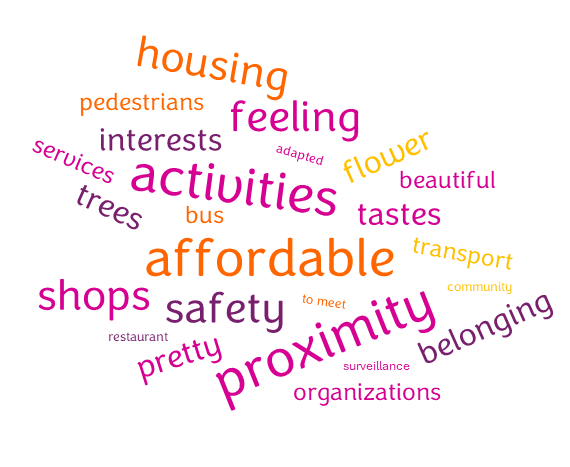
• Social participation needs mainly concern: inclusive environments, accessibility to activities and resources, accessibility to affordable transportation and housing, being accompanied, and being informed about social participation opportunities
• Facilitators: related to health, income, convivial public space, activities being offered and security
• Obstacles concern: disabilities, precarious living conditions, COVID-19 restrictions and discrimination
Impacts for city policy and practice
Considering the social participation needs of older adults in city policies and practices is critical to promote the well-being of the whole community:
• Ensure public spaces and activities are designed to be inclusive and accessible for older adults, according to their diverse needs and abilities,
• Develop strategies to maintain affordability in transportation and housing options,
• Implement communication strategies to provide clear and accessible information about available resources and activities,
• Maintain proximity and accessibility to resources.
Useful extra information:
More information on the publications on social participation from Mélanie Levasseur.
Research Lab Connect, for more information on the research and publications from our team
The Handbook of Salutogenesis for more information on salutogenesis
Promoting the health of older adults for more information on how to promote the health of older adults
Further information
Full research article:
Social participation needs of older adults in an urban revitalization: results from participatory action research during the COVID-19 pandemic by Mélanie Levasseur, Martine Shareck, Ruth Ndjaboue, Louis Braverman, Joanie Lacasse-Bédard, Agathe Chaintre Prieur, Mélissa Généreux, Sébastien Lord & Stéphanie Meynet
Related posts

How has the pandemic changed how we use and perceive our home? Many were working, eating, living, playing, sleeping, and learning in the same space. Has changed perceptions influenced ideas of the design of our homes, and potential for happiness and wellbeing?

Through field observations, surveys with the residents, and interviews with decision-maker, we identified key variables that define food access in rural areas in Jordan, mapped access to food services according to the identified variable. and assessed food access in relation to land use regulations. Our work investigated frameworks governing the allocation of food service establishment locations, spatial requirements, integration into city masterplans, equitable distribution of food service types, and pertinent legislative frameworks.

Our systematic review of the impacts of neighbourhood design on well-being found strong evidence linking design principles such as walkability and access to green space with health and well-being.