City Know-hows
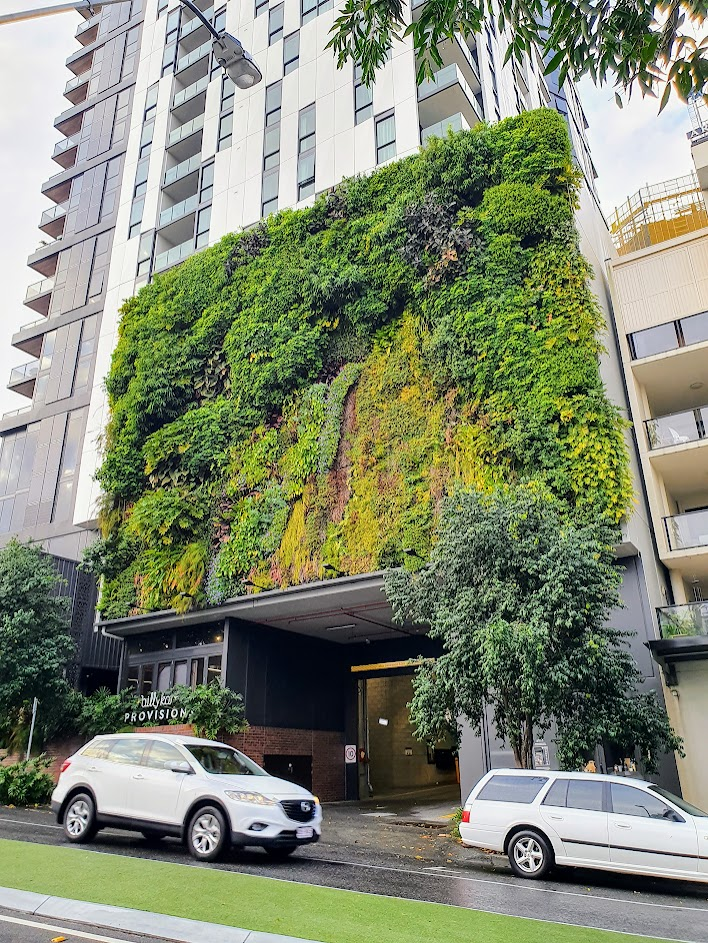
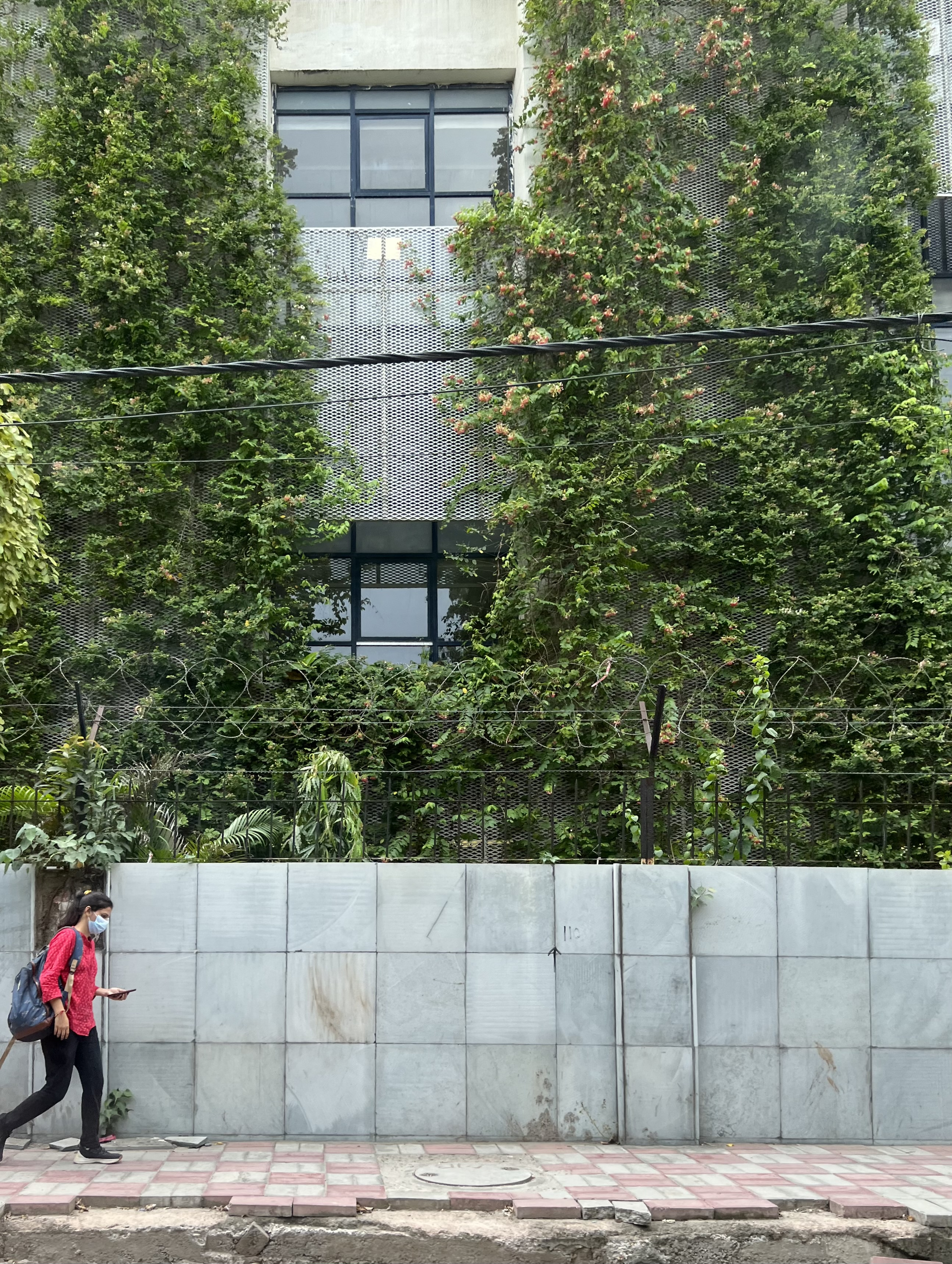
Our study reports on the perceptions of design professionals regarding vertical greenery in Delhi. We discover how this green solution combats climate change and improve liveability in Indian cities.
Share
Target audience
Built environment professionals, city legislators, policy makers and climate change practitioners.
The problem
The study addresses the issue of underutilization of vertical greenery systems in Indian urban environments, particularly Delhi. Despite their climate change mitigation potential, these systems face resistance from building owners and regulators. A lack of technical expertise among professionals involved in placemaking adds to the challenge. The study underscores the importance of investigating the viewpoints of built environment experts, underscoring the urgency of research and policy development in light of the imminent climate crisis.
What we did and why
For our study, we conducted a qualitative investigation of professionals’ perspectives on vertical greenery systems in Delhi. It seeks to understand the barriers to adoption, especially the technical challenges faced by built environment experts. The research is motivated by the recognition of vertical greenery’s long-term benefits and its potential to mitigate climate change. It aims to shed light on these obstacles to facilitate future research and policymaking, promoting the integration of vertical greenery for sustainable urban development.
Our study’s contribution
Our study provides valuable insights by examining the obstacles and viewpoints regarding vertical greenery systems in Delhi. It highlights the technical challenges as significant adoption barriers among built environment professionals. Emphasizing the pivotal role of vertical greenery in climate change mitigation, this research advocates for further scholarly investigation and evidence-based policy formulation. This deepened understanding supports the seamless integration of vertical greenery systems into urban landscapes, fostering sustainability and resilience.
Impacts for city policy and practice
Our approach can foster greener, more environmentally conscious cities, offering numerous benefits to residents and the environment.
• Policymakers should consider initiatives that facilitate the adoption of vertical greenery systems, addressing technical challenges faced by professionals.
• Integrating climate change mitigation strategies into urban planning is crucial, recognizing vertical greenery as a valuable tool.
• City policies must prioritize sustainability and resilience by incorporating nature-based solutions like vertical greenery into urban development practices.
Further information
Full research article:
Built environment professionals’ perceptions of vertical greenery systems: a case of Delhi, India by Irfan Haider Khan and Taiyaba Munawer
Related posts

Experts agree that the planning of public space in light of new active mobility trends and policies has not properly taken into account the active aging policies and the context of older people as users, especially in the construction of a barrier-free and safe environment. Only through the alignment of active mobility and active ageing policies is it possible to respond to the needs and to include people of all ages

We examined the factors that limit and enable the uptake of healthy diets among urban populations with multiple socio-economic vulnerabilities. By exploring the interconnected economic, social and environmental influences, we aimed to generate context-specific evidence that can inform effective and targeted action to support progress towards achieving global nutrition targets in the context of triple burden of malnutrition and increasing concern on high incidences of diet-related diseases in rapidly urbanizing areas.

Children’s daily movement is shaped by how residential open spaces are designed. Our findings show that small spatial adjustments—such as connected pathways, flexible play zones, and improved visibility—can significantly enhance children’s physical activity. These insights help cities create healthier living environments.