
Want diversity? Collaborate and plan with members from equity-deserving groups 

People from equity-deserving groups have unique needs, barriers, and priorities that need to be addressed in order to create inclusive and accessible active transportation. This paper highlights some of the complexities of planning for different cultures, languages, ages, and abilities. Recommendations are made to support municipalities with creating better active transportation infrastructure and policies.

Read More »

Bio-reconciliation: Dialectics for healthier, equitable urban futures – Biophilia and Biophobia

I diagnose urbanization’s toll: 60% of city dwellers face stress-related morbidity, which biophilic design aims to curb; yet my 100-study review reveals biophobia’s backlash, like glare spiking cortisol 10%. This dialectic, rooted in evolutionary and urban disconnect, exacerbates health inequities e.g., 30% higher stress in underserved areas —demanding my evidence-based, Hegelian synthesis to recalibrate architecture for resilience.

Read More »

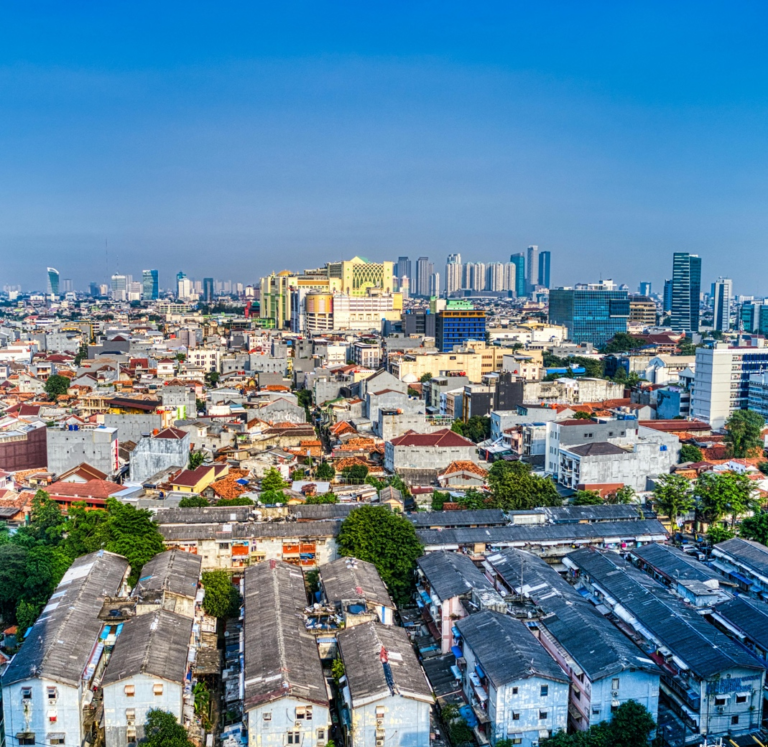
Jakarta’s position in global health and sustainable city progress

This pioneering study on healthy and sustainable indicators for Jakarta is the first in Indonesia to use the Global Healthy and Sustainable City Indicators framework. As the most populous city in Indonesia and Southeast Asia, Jakarta’s inclusion provides valuable insights into its status compared to 25 international cities. We offer a critical perspective on existing spatial indicators, highlighting the need for precise definitions and careful interpretation within the city’s local context. Additionally, we propose new indicators to help policymakers and public health officials develop more adaptable measures for urban health and sustainability.

Read More »

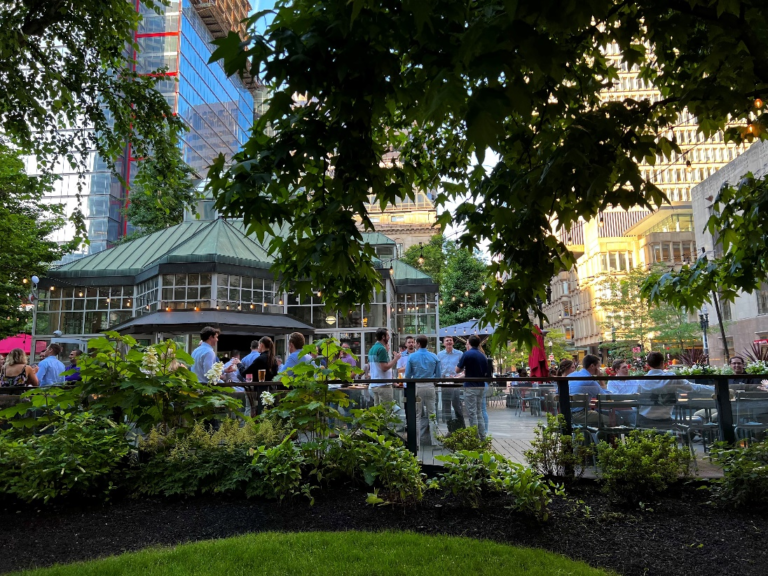
How can third places within walking distances support people’s happiness?

This study aimed to delve into the significance of neighborhood walkability and the accessibility of third places in bolstering community well-being. It scrutinized the influence of walkable designs and convenient access to third places on the emotional well-being of community members. Moreover, the research utilized tweets to gauge the frequency of positive sentiments as a proxy for measuring happiness levels within the community.

Read More »

Manageable slices through the city: walkable space supporting mobile, democratic and dynamic clinics

Mental health needs are poorly understood in the development and management of public space. However, people recovering from health issues such as psychosis need to use city space in their everyday lives. We note that large sites in city centres continue to be made available. As such their redesign and management needs to factor in these broader needs. There will be further benefits to people with conditions such as anxiety, depression and autism.

Read More »

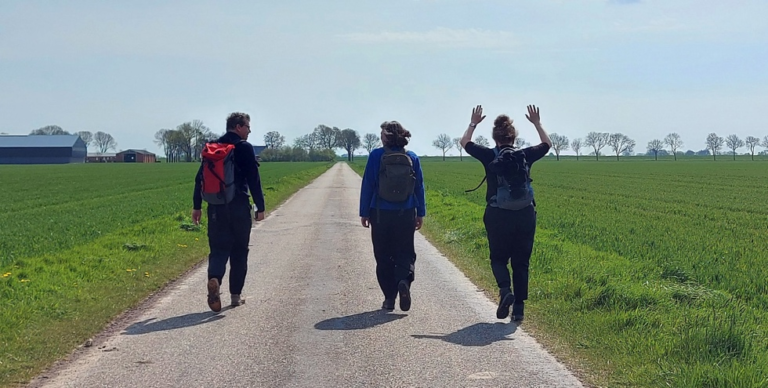
Walkability and Safety: How neighborhoods influence older people’s walking in Brazil

Walking around the neighborhood is good for older adults health, but the way older adults perceive their surroundings can affect this behavior. This topic has been discussed for some time in high-income countries. There, it is observed that older adults who live in neighborhoods with high residential density, diverse land use, good road connectivity, access to public transport, pleasant aesthetics, security against crime and traffic, presence of recreational facilities, infrastructure for pedestrians and cyclists, green spaces and visible parts of the sky are more likely to walk, whether for utilitarian or recreational purposes. On the other hand, in Latin American countries such as Brazil, where there is a significant increase in the older adults population and challenges related to urbanization and social inequalities, the relationship between the characteristics perceived of neighborhoods by the older adults and walking behavior is still unknown.

Read More »

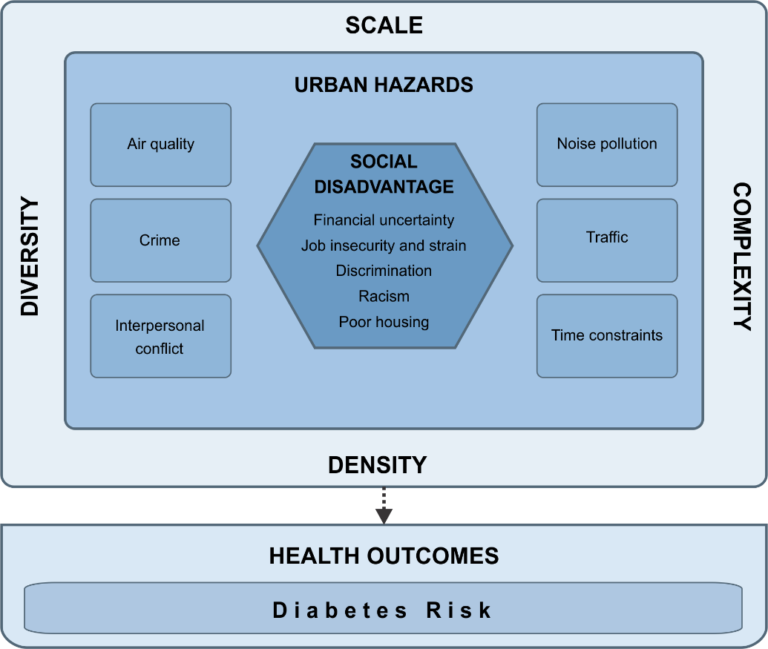
The urban health crisis: How city living is quietly fueling the world diabetes crisis

We present a novel conceptual framework called the Urban Stress Model, which intentionally crosses disciplinary boundaries. We suggest that the unique physical form of cities contributes to an increased stress burden through the interacting influences of daily urban hazards and social disadvantage. We use New York City as a case example because of its high diabetes rates and its legacy of unequal healthcare in the context of concentrated wealth. Therefore, New York City can provide valuable insights for newly developing urban centers worldwide confronting similar challenges and growing social and health inequality.

Read More »

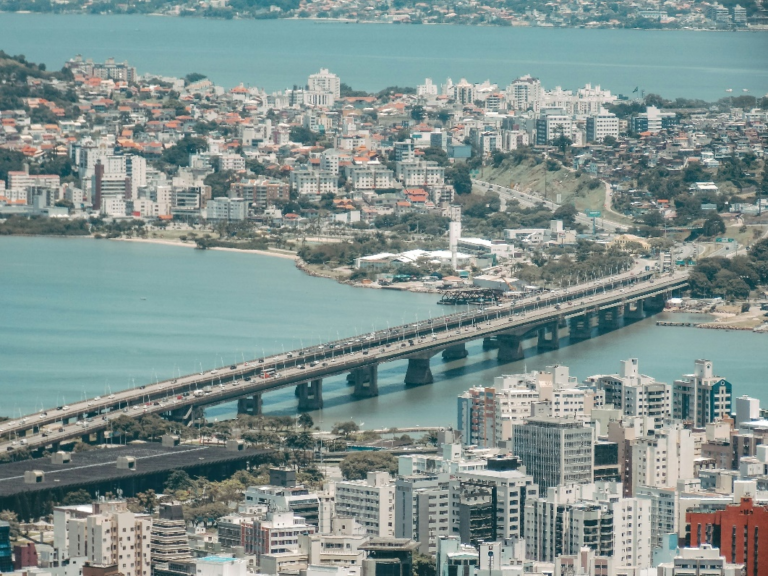
What determines better neighbouring among affordable housing residents in Metro Vancouver, Canada

At the intersection of urban and public health policy, the success of higher-density affordable housing solutions to serve an inclusive well-being agenda depends upon reducing the association of these lifestyles and built environments with loneliness and social isolation. We construct a pro-neighbouring index and test its predictors using an ordinal logistic regression model based on resident survey data.

Read More »