

Visual Essays
Share
City and Climate Zone
The capital of Germany, Berlin has a Continental Climate with warm summers and cold winters. It combines historic architecture, green spaces, and modern infrastructure, making it a hub for urban innovation.
Thematic Focus
Health and Climate Impacts
Health Impacts
Sealed streets in Berlin exacerbate the Urban Heat Island effect, increasing risks of heat-related illnesses like heatstroke and respiratory issues due to worsened air quality. Reduced thermal comfort discourages outdoor activity, particularly for vulnerable populations.
Climate Impacts
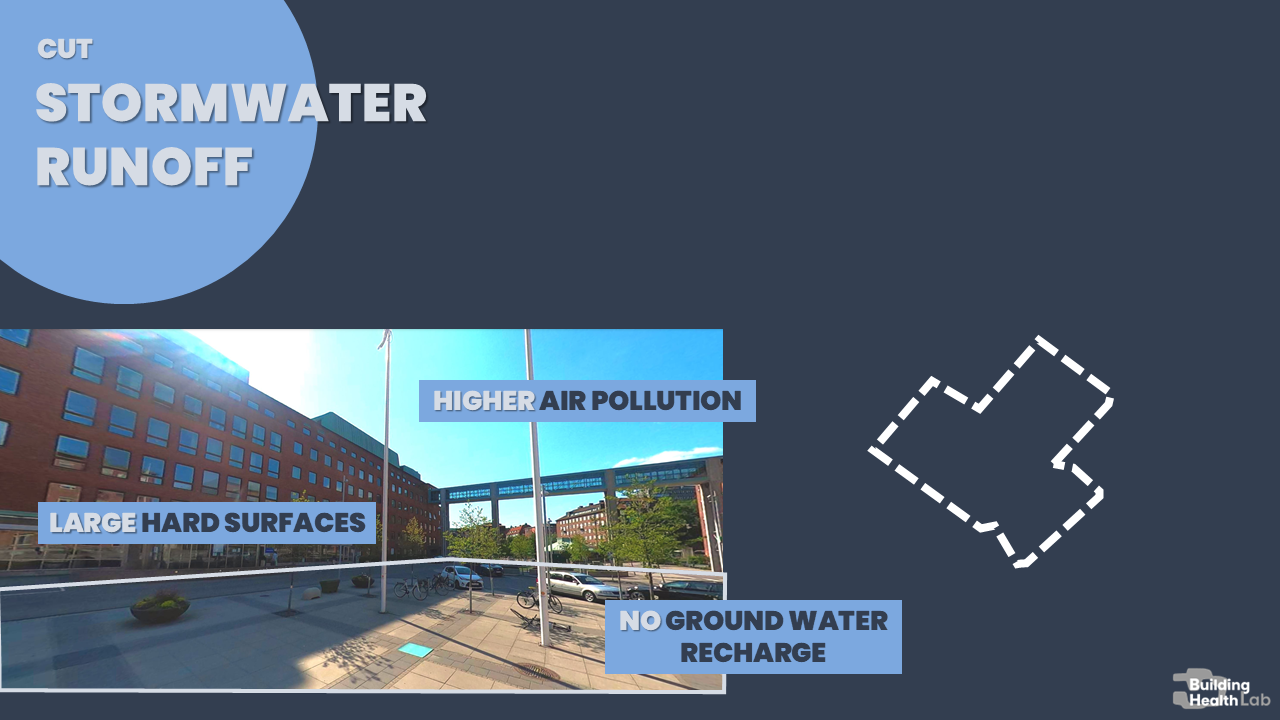
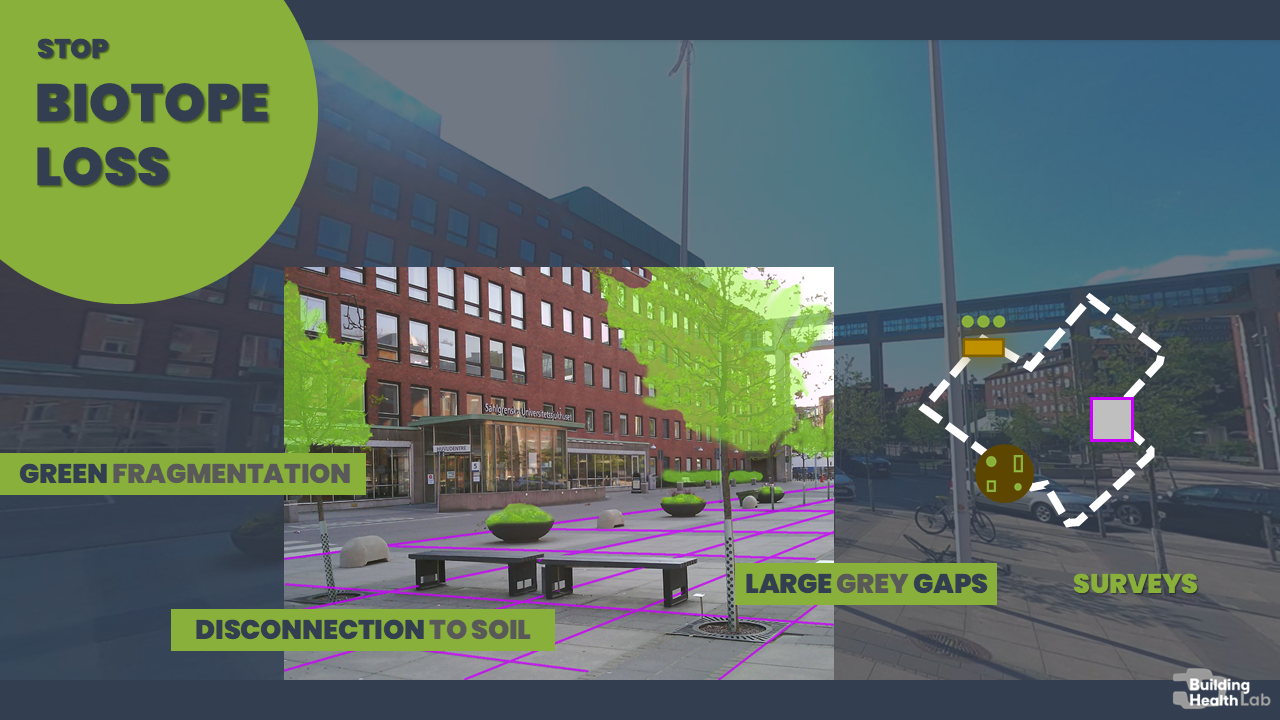
Heat retention from sealed surfaces intensifies urban temperatures and increases stormwater runoff, leading to urban flooding and ecosystem stress, reducing the cooling benefits of nearby vegetation.
Reflexive Approach
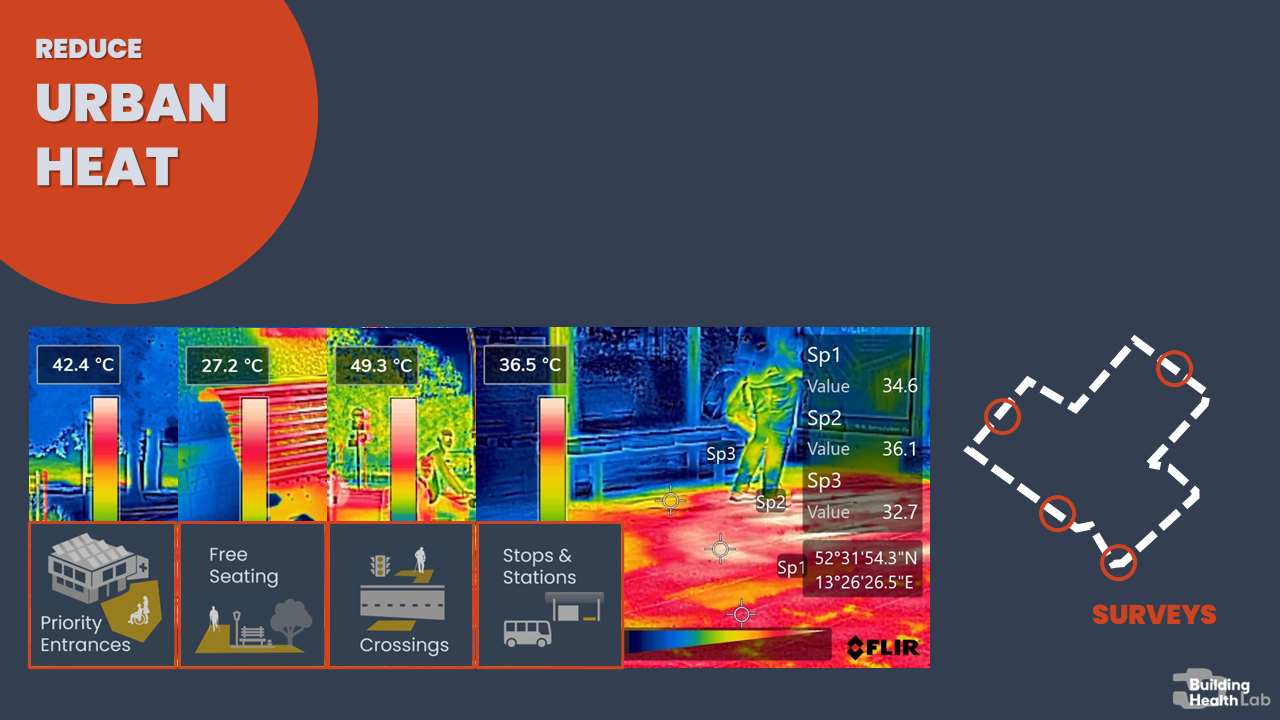
A thermal study of Berlin’s pedestrian urban scenes reflects on the interplay between urban design and thermal comfort during summer. It combines objective measurements with subjective insights, considering the impact of sealed surfaces, shading, and greenery on pedestrians. Researchers critically evaluate their own biases and engage with stakeholders for inclusive perspectives. The study advocates practical solutions to enhance thermal comfort and public health.
Technical Description
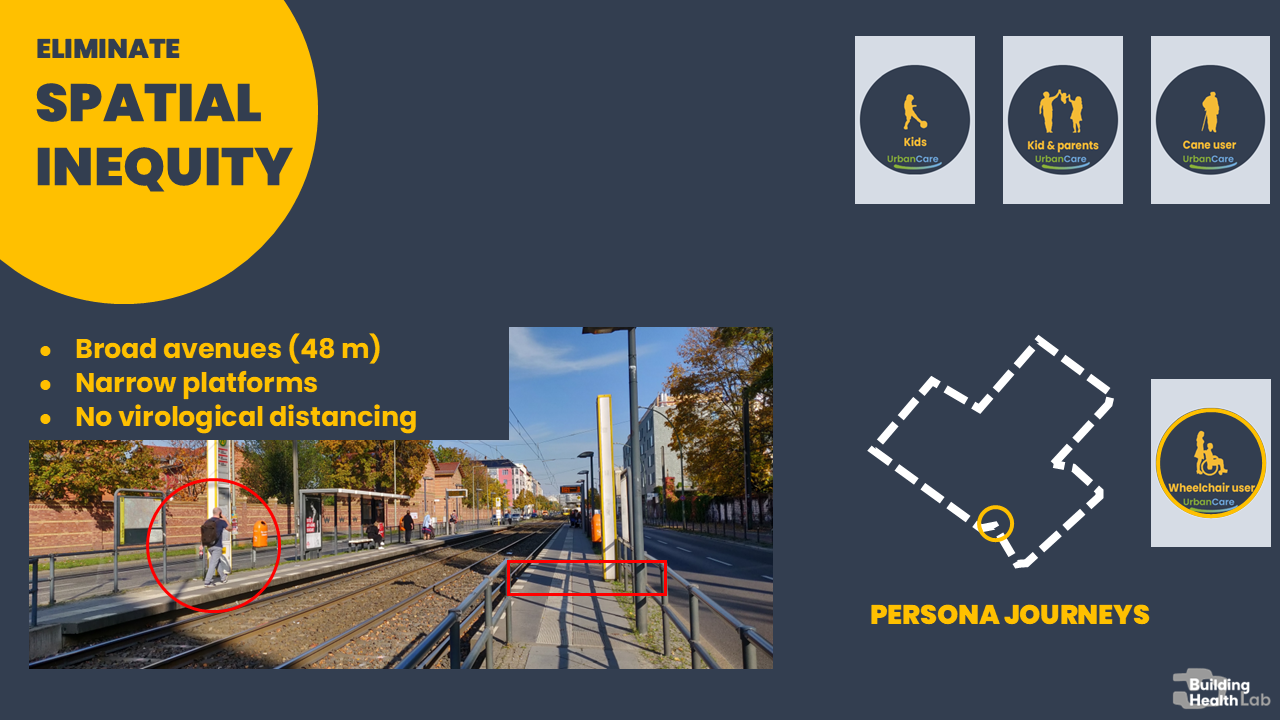
The survey was systematic, involving meticulous planning to identify key pedestrian urban scenes such as stops & stations, street crossings, respite areas, and entrances to buildings with priority uses. These strategically chosen locations aimed to assess thermal conditions and their impact on walkability in high-activity zones. A FLIR e76 thermal imaging camera was used to measure surface temperatures of pathways, sealed streets, vegetation, and shading structures. The equipment setup included a tripod for stable imaging, a handheld weather station for ambient temperature, humidity, and wind speed data, and a GPS tracker to map survey routes accurately.
Team
Alvaro Valera Sosa, lead researcher
Anna Au, research assistant
Krati Agarwal, research assistant
Related posts

Our cross-sectional study of 272 neighbourhoods of thirteen cities shows that diverse physical and social attributes of neighbourhoods influence mental well-being of the citizens in the Asia and Africa.

Social sustainability entails improving quality of life by addressing basic human needs, promoting well-being, and creating supportive communities. Our approach prioritizes the inclusion of human needs in neighborhood design to enhance the overall quality of a neighborhood’s physical environment.

What makes a city truly healthy? This study engaged experts worldwide to identify 144 key indicators across social, economic, environmental, legal, technological, and commercial determinants of health—offering a practical roadmap for India’s mission to build 500 healthy, inclusive, and sustainable cities.