City Know-hows

Wild Ways: influencing ‘rewilding’ behaviour in urban gardens

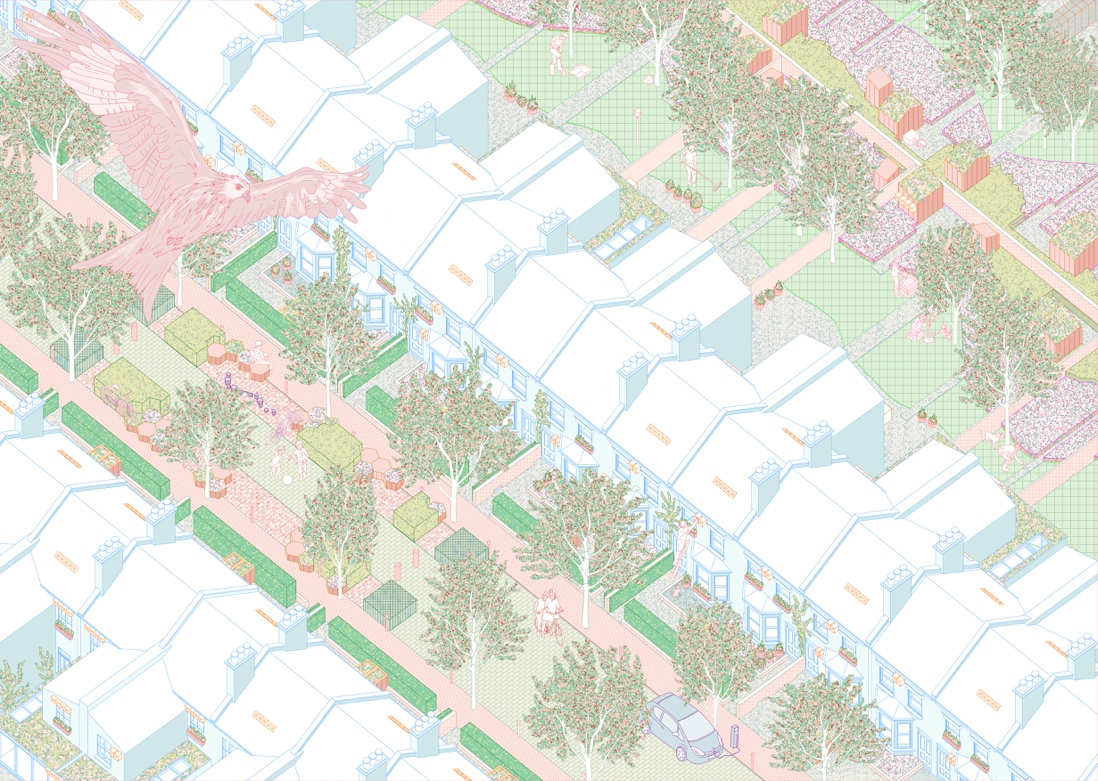
Rewilded street aerial view drawing. Image credit: Viktoria Fenyes/Rewild My Street

We reviewed the existing research on influencing rewilding behaviour by city residents in their gardens. We used a behaviour-change model to identify intervention and policy strategies that affect residents’ rewilding behaviour. We found that all intervention and policy categories were effective, requiring action across many organisations and areas to drive change.

Share

Target audience

Policymakers – national, regional, local government; Conservation organisations working in urban areas; Design professionals – urban designers, landscape architects

The problem

Rewilding private residential gardens in cities would help address the global biodiversity crisis and enhance residents’ wellbeing. But changes made by residents mean the habitat value of city gardens is decreasing. Rewilding behaviour by city residents in their gardens is already understood in relation to capability, opportunity and motivation factors. But knowing how to influence this behaviour is critical to developing intervention strategies to encourage residents to engage in rewilding their gardens.

What we did and why

We reviewed the existing global literature on influencing urban-rewilding behaviour in gardens to work towards developing an intervention strategy to change behaviour. We mapped the existing literature to assess the state of knowledge. We coded the literature, using a behaviour-change model, to identify which intervention functions (education, training, persuasion, incentivisation, coercion, enablement, modelling, environmental restructuring and restriction) and policy categories (environmental/social planning, communication/marketing, legislation, service provision, regulation, fiscal measures and guidelines) influence residents’ rewilding activity.

Our study’s contribution

We found an important body of work with implications for practice and policy to influence urban rewilding in gardens. We found all intervention functions and policy categories affect urban-rewilding behaviour by city residents in their private gardens.
We found the literature in this field is in its infancy, therefore more research is needed, not least in the context of London, where the next stages of our study will be focused.

Impacts for city policy and practice

We recommend city policy and practice consider demographic factors, and:
Practice:
• Focus on educating the public, from childhood to continuing education, through schools, wildlife-gardening activities, citizen science, volunteering and campaigns.
• Use sophisticated messaging in communications, informed by behavioural psychology. Highlight favoured species and functions, and personal benefits.
• Offer grants and products to help with the cost of wildlife gardening.
• Provide sources of inspiration and advice, such as websites, visuals and on-site garden assessments.
• Develop community-driven initiatives and partnerships, across public and private sectors.
Policy:
• Focus on targeted marketing, across multiple channels, to increase public knowledge of rewilding, highlighting rewilding benefits and challenges.
• Co-create the local environment and conservation approaches with citizens.
• Support community groups and local businesses to fund, deliver and evaluate wildlife-gardening programmes.
• Introduce legislation, on pesticides and invasive species, to raise awareness of harmful practices.

Further information:
Rewild My Street: Urban-rewilding project, including urban-rewilding guidance and news updates on Wild Ways.
Centre for Urban & Built Ecologies – Wild Ways:  London Metropolitan University, research study overview.

Further information

Full research article:

Related posts

A city in need: Analyzing the ongoing dilemma of open defecation in Delhi

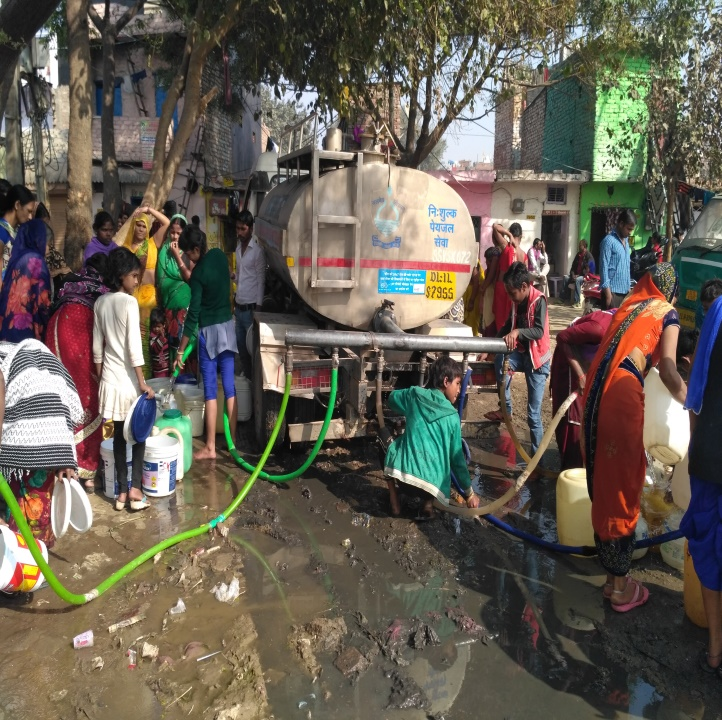
Unveiling the hidden truth behind open defecation in Delhi, this study exposes the role of infrastructural incapacity and institutional failure. With 80% of surveyed households’ still practicing open defecation, the findings underscore the urgent need for comprehensive policies to address the inadequacy of public and household facilities, water availability, and coordination among governmental bodies.
Read More »

Wild Ways: influencing ‘rewilding’ behaviour in urban gardens

We reviewed the existing research on influencing rewilding behaviour by city residents in their gardens. We used a behaviour-change model to identify intervention and policy strategies that affect residents’ rewilding behaviour. We found that all intervention and policy categories were effective, requiring action across many organisations and areas to drive change.
Read More »