City Know-hows

Playing and age-friendly planning

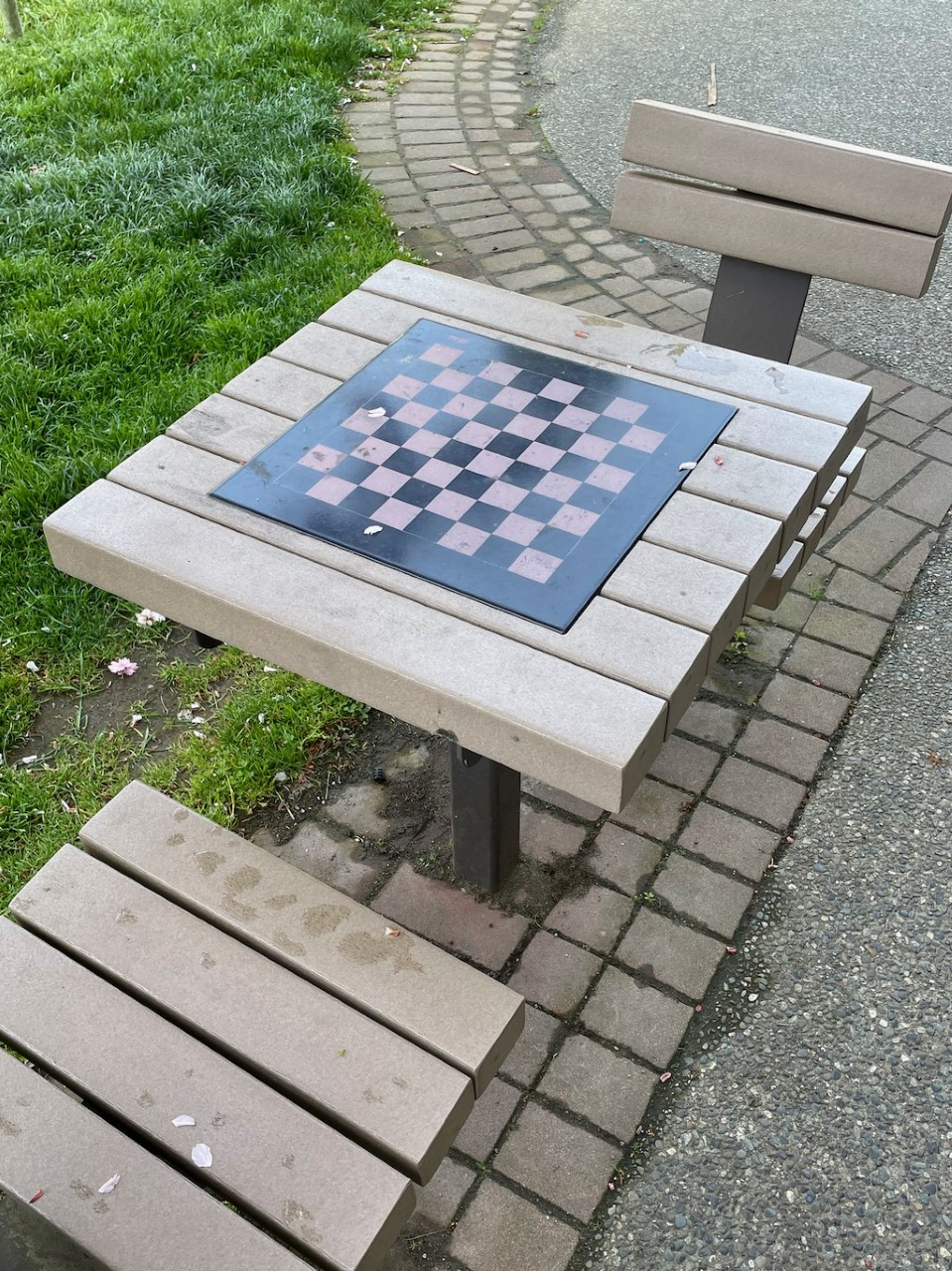
Public chessboard in Victoria, BC, Canada. Credit: Ellory Vincent.

Why only plan for children’s play in cities? Play could support the health and wellbeing of older adults. Let’s reimagine age-friendly planning with play in mind.

Share

Target audience

Urban planners, play advocates, urban designers

The problem

Play has the potential to support the health and wellbeing of older adults, but research on play as a public health and planning intervention is solely focused on children.

What we did and why

As the first study to examine older adult play, we needed to first understand the perspective of older adults. We ran a photovoice study to capture older adult perceptions and experiences of spaces that enabled and limited play.

Our study’s contribution

Our findings broaden play discourse to include older adults, by
• Broadening age-friendly discourse to consider play,
• Highlighting real experiences and perceptions of older adults with regard to play and public space,
• Challenging narrow ageist assumptions of older adult public space activity.

Impacts for city policy and practice

We pose a clarion call for city policymakers and practitioners that planning for play should not be narrowly focused on children. They can expand their age-friendly conceptualizations and practical interventions to include play.

Further information

Full research article:

Related posts

Perceived urban quality and well-being during post-earthquake shelter projects (MAPs and CASE) in L’Aquila, Italy

Although the CASE and MAPs were supposed to be temporary shelters for displaced persons, after fourteen years, they have not received proper maintenance and are dilapidated. This scenario opens to the idea that living in these places could negatively affect different psychological aspects, including perceived urban quality and environmental well-being.

Read More »

Understanding the influence of local politicians on healthy local planning policy

Understanding of the influence of local political actors helps to highlight where their influence is limited, particularly by national-level housing policy, which in the UK is focused on housing numbers, rather than quality of new homes, as well as financial viability and public opinion. Understanding this can help to build trust in the political processes of decision-making and inform interventions for healthier place-making.

Read More »