

City Know-hows
Target audience
Jamaica public health, urban planning and transport sectors; Multilateral investment agencies working in Jamaica; Similar interests and agencies in other Latin American and Caribbean and middle-income countries.
The problem
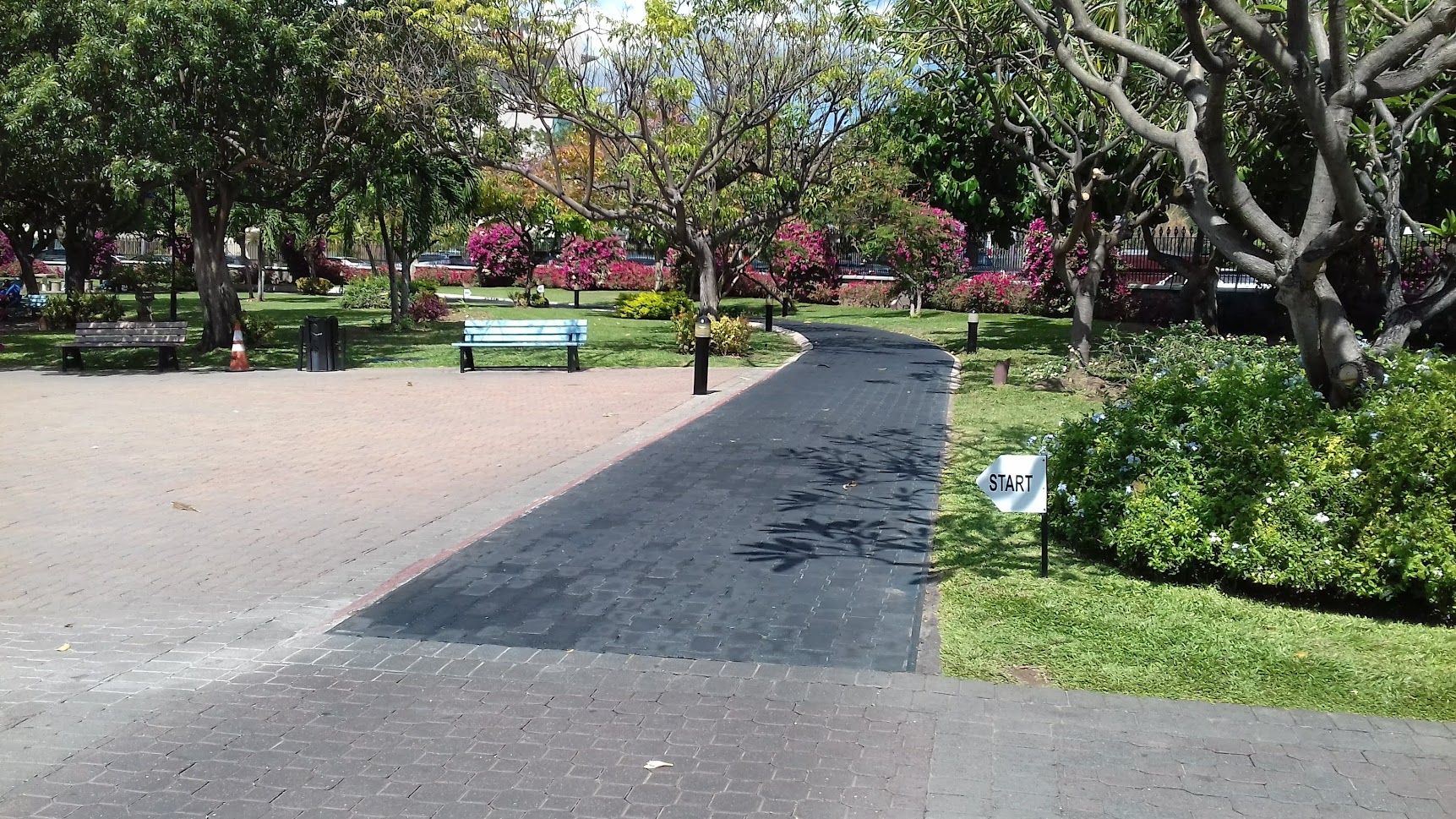
Our environments can influence levels of physical activity, particularly walking and cycling infrastructure and quality open spaces – this we call active living infrastructure. However, we know that there is increasing physical inactivity and related non-communicable disease in low- and middle-income countries, such as Jamaica. The lack of safe pedestrian and cycling infrastructure makes walking and cycling dangerous and the small number of quality open spaces are often only accessible to more wealthy residents.
What we did and why
We interviewed ten expert stakeholders across the sectors of urban development (urban planners and architects), public health and civil society (including running, cycling and neighbourhood organisations). We wanted to understand what influences decision-making for walking and cycling infrastructure and open spaces in Jamaica. Our aim was to help identify additional ways to increase the amount of quality active living infrastructure, so as to increase physical activity and achieve healthier communities.
Our study’s contribution
We found that popular views of economic development related to road construction and private car use may not be seen to align with active living infrastructure, walking, cycling and nature. We propose that the issue of insufficient active living infrastructure needs to be re-framed to better emphasis the positive health and economic impacts, including road safety and vehicle emissions, and not only the negative impacts of physical inactivity. Urban development and public health sectors are natural allies. Collaboration is needed, overcoming government department silos, to work together effectively to develop more powerful messaging and advocacy.
Impacts for city policy and practice
Implications for city policy and practice: Our summary for urban policy and practice…
Develop clearer policies to support active living infrastructure ;
Emphasise the economic benefits of active living infrastructure (beyond the health related benefits);
Prioritise the safety of pedestrians;
Invest in cycling infrastructure to create demand for cycling, reduce congestion, reduce inequality, increase economic opportunity and increase physical activity;
Increase collaboration across sectors, particularly between urban planning and public health;
Encourage the public health sector to influence the wider determinants of health, going beyond behaviour change interventions and to address health supporting infrastructure;
Use contextually-relevant examples to inspire decision-makers.
Further information
For further information:
International Cycling Infrastructure Best Practice Study: Published by Transport for London
Health economic assessment tool (HEAT) for cycling and walking: To facilitate evidence-based decision-making, WHO has developed, in collaboration with experts, an online tool to estimate the value of reduced mortality that results from regular walking or cycling.
Evidence Brief 15 – Changing the way we travel – Infrastructure and our everyday transport choices: Published by CEDAR (Communicating Diet and Activity Research)
Full research article:
Challenges for creating active living infrastructure in a middle-income country: a qualitative case study in Jamaica by Anna Le Gouais (@AnnaLeGouais), Ishtar Govia (@IshtarGovia) and Cornelia Guell (@ConnyGuell).
Related posts

We explored the factors that can encourage walking and cycling to school from the adolescents’ perspective, considering individual and built environment factors as well. Travel mode selection, companionship, desired mobility autonomy, and perceptions of pedestrian and cyclist safety regarding traffic were relevant and interconnected.

The deterioration of the built environment, as well as poor traffic and pedestrian conditions, creates obstacles to active mobility, active ageing and functional abilities among older adults residing in heritage city cores. This has negative impacts on their social inclusiveness, quality of life and well-being. The walled city, which encompasses Jaipur’s heritage neighbourhood, is one of the few planned cities in India, extending back to the 18th century, and is considered a tourist attraction. With an in-depth study, we use Jaipur’s walled city to examine how supporting a better quality of life for an ageing population can have co-benefits for the tourism economy.

Researchers demonstrated empirically that COVID-19 lockdowns damaged mood. In fact, their results indicate that there is a negative relationship between household density and the mood