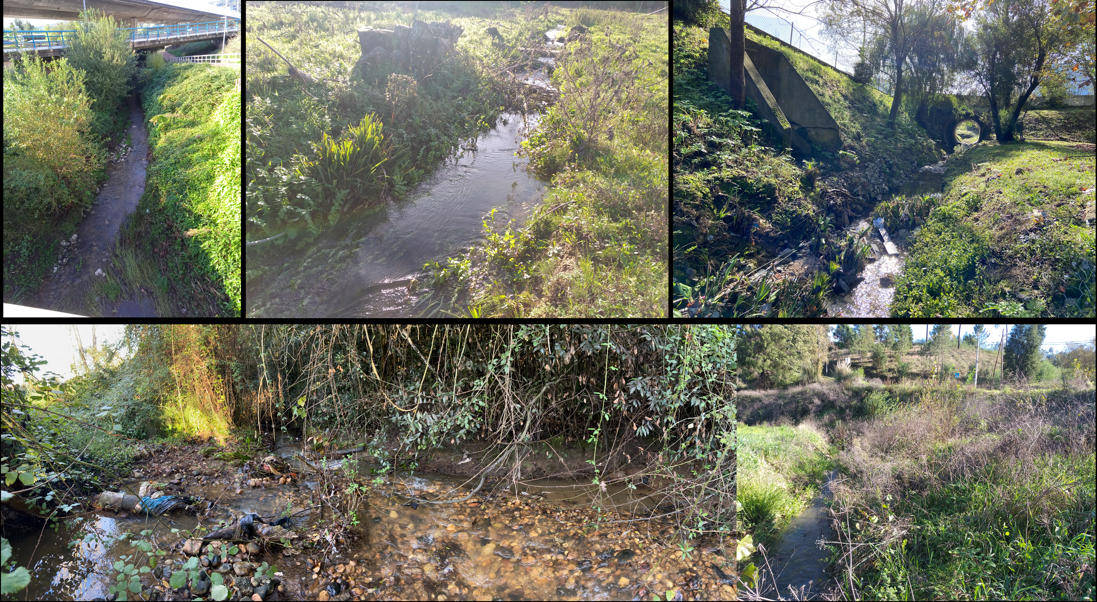
Urban freshwater ecosystems support human well-being, but their degradation can lead to several health risks. Our study introduces an innovative approach to quantify these risks, revealing increased susceptibility to physical and mental disorders — emphasizing the importance of urban stream restoration.

Share

Target audience

City managers; Urban planners; Policymakers; Public health managers: Urban wildlife and urban river restoration specialists.

The problem

River and stream ecosystems offer important benefits to the well-being of the human population, known as ecosystem services. However, these are critical due to the general decline in environmental quality. Even though studies have addressed the advantages of ecosystem services for human health, our study underscores a substantial research gap in calculating the risks to human physical and mental health resulting from the loss of these services provided by flowing water (lotic) ecosystems in cities.

What we did and why

We proposed and tested an approach, based on Urban Stream Assessment System, the UsAs framework. UsAs is a standardised methodology, specifically developed for urban streams, and has been successfully used in previous studies assessing the impact of urbanisation on aquatic biodiversity and ecosystem services provided by streams and to investigate the association between biodiversity and ecosystem services. In addition, we proposed an enhancement of the UsAs to improve the assessment of air quality regulation. This enabled us to assess a selection of ecosystem services that are directly related to human health, identifying and quantifying the risk for the populations living near urban streams within the city, due to the degradation of these services. The results also allowed the analysis of the type of risks for the human of population of the city.

Our study’s contribution

Our study emphasizes the importance of using ecosystem services as an approach to assess the health risks posed to urban populations by degraded freshwater ecosystems, which is compatible with the concept of One Health. Furthermore, working at intersection of freshwater ecosystems and public health within urban environments, applying our framework can be important to assist the elaboration of preventive measures and restoration efforts of urban stream ecosystems.

Impacts for city policy and practice

Our study presents an easy framework to apply. Also easy to use, at the same time, to raise awareness about the impact of urban streams and river degradation on human health. It can provide strong arguments for decision-makers regarding the need for ecosystems restoration. Additionally, it helps prioritize restoration efforts and support the design of the most cost-effective restoration measures of urban stream ecosystems by identifying the highest-risk areas in cities and the types of diseases involved.

Further information

Full research article:

Risks for human health from the loss of urban stream ecosystem services by Maria Carolina Sousa, Andreína Zerega, Ana Raquel Calapez, Sónia R. Q. Serra, Nuno Eduardo Simões and Maria João Feio.

Related posts

Policy challenges and best practice to designing-in play in cities, a study from the UK

This study contributes to the broader discourse on urban design for children, offering insights into how cities can create more inclusive, engaging, and health-promoting environments. It supports and adds to existing literature, finding that the alignment of play initiatives with public health goals, and strong collaboration between local government departments are effective in supporting children’s play on the strategic level. It identifies barriers to play in policy, namely budget constraints and deprioritisation of play.

Read More »

Compact city, compact playgrounds: How Oslo’s population density and daycare size influence children’s outdoor spaces 

In this study, I measured the size of outdoor playgrounds at all daycare centers in Oslo and looked at how these sizes relate to how densely populated the districts are and how many children are enrolled at each center. Since the 1980s, Oslo has been getting busier and more built-up due to a compact city policy, a trend that is likely to continue as more people move to the city in the coming years. This makes it interesting to investigate how living in a denser city and having bigger daycare centers might affect the space children have to play outside in their daycare.

Read More »