

Target audience

Urban leaders at both regional and local levels

The problem

Londoner’s can adapt, change and transform, their gardens to positively impact on biodiversity. This behaviour require a conscious effort to reverse the trend of loss of green space. London’s residential gardens offer an opportunity to increase biodiversity by making small adaptions to turn them into a habitat for wildlife. Altering these spaces to accommodate nature could significantly contribute to London fulfilling its aims as a ‘National Park City’.


What we did and why

This research aims to investigate rewilding behaviours in relation to changes to private gardens within Greater London to improve biodiversity. This research will synthesise the existing literature on intent-orientated urban rewilding; conduct mixed methods research including interviews and a quantitative survey to understand the capabilityopportunity and motivational factors influencing urban rewilding behaviour; and develop an intervention strategy to change behaviour in relation to adaptations to urban private gardens.

Our study’s contribution

With urbanisation increasing coupled with a worrying trend in the reduction of vegetated green spaces in London, facilitating behaviour change in the rewilding of London’s private gardens is important to support biodiversity; this research project contributes to this important topic.

Impacts for city policy and practice

The results of this research will allow urban leaders, local and regional, to identify approaches to improve the rewilding of urban private gardens to improve biodiversity. In London, altering such spaces to accommodate nature could significantly contribute to London fulfilling its aims as a National Park City.

Further information

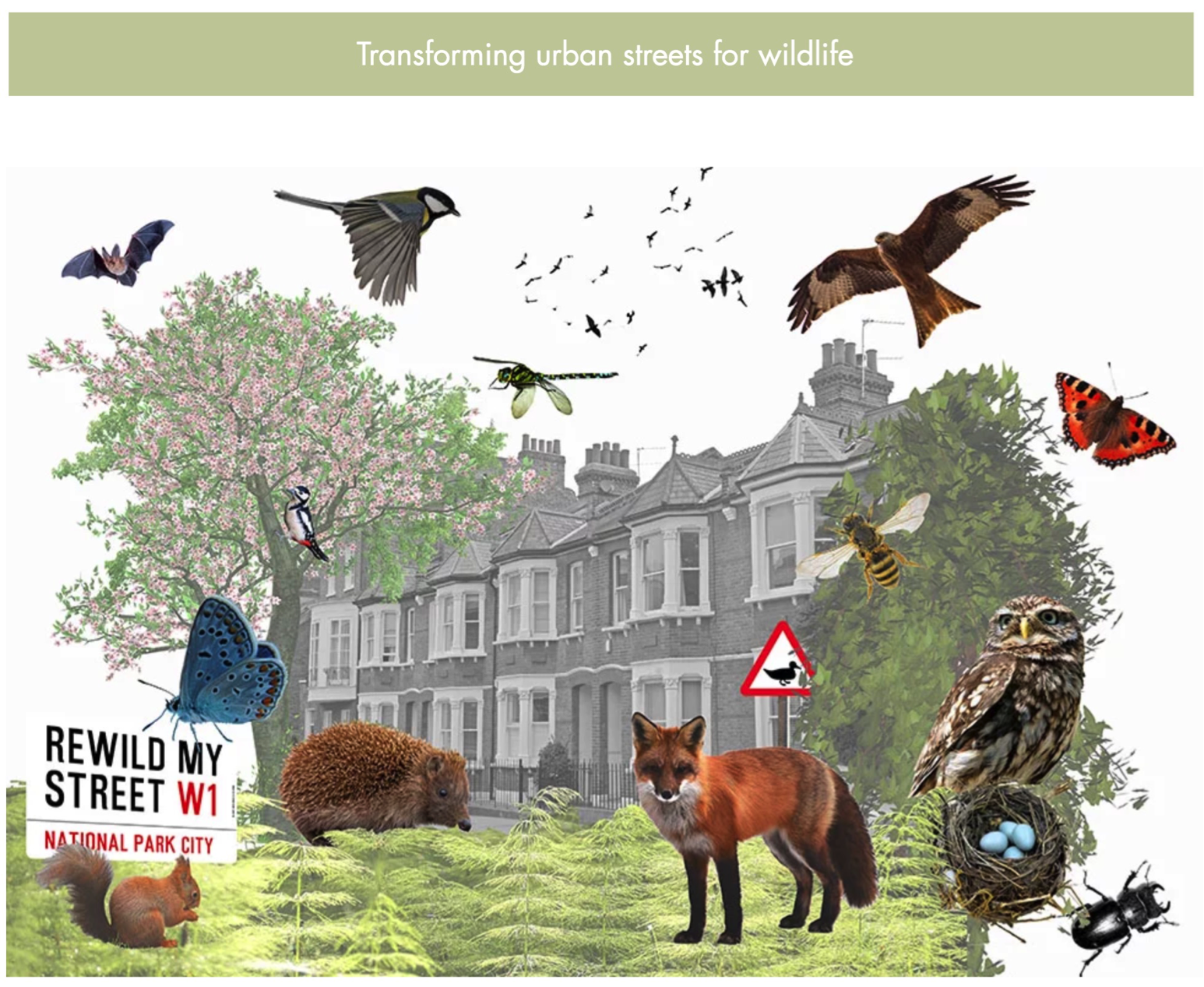
Rewild My Street providing guidance for people wishing to adapt their homes, gardens and streets to encourage wildlife.

Full research article:

A study protocol to understand urban rewilding behaviour in relation to adaptations to private gardens by Justin Webb & Siân Moxon. City Know-how editor: Marcus Grant.

Related posts

Co-designing healthy and sustainable cities: what Paris residents teach us about urban environmental health

This study introduces a place-based model of urban environmental health drawn from residents’ perspectives.
• Highlights eight interconnected local parameters of environmental health.
• Demonstrates that residents link environmental health to everyday nuisances like noise, air pollution, and lack of safety.
• Shows that viable and livable environments depend on inclusive governance and infrastructure decisions.
• Offers a replicable approach for other cities to assess urban health from the ground up.
Read More »