
City Know-hows
Social sustainability entails improving quality of life by addressing basic human needs, promoting well-being, and creating supportive communities. Our approach prioritizes the inclusion of human needs in neighborhood design to enhance the overall quality of a neighborhood’s physical environment.
Share
Target audience
Architects, urban planners, policy-makers and developers
The problem
Social sustainability encompasses the evaluation and improvement of individuals’ general welfare. However, it remains unclear how an urban area can be designed to meet the social requirements of its residents. One of the foremost unresolved issues in urban social sustainability research is identifying factors of urban form that either facilitate or impede the attainment of social sustainability in urban neighbourhoods.
What we did and why
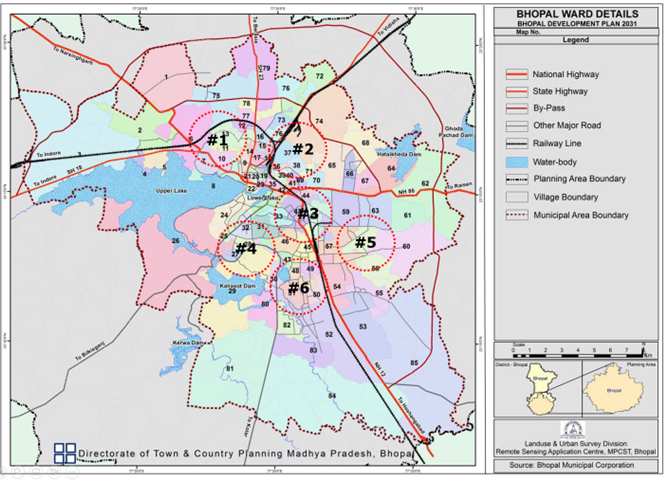
Our study addresses the pressing need for a precise, neighbourhood-level framework to assess social sustainability in urban contexts, particularly in the under-researched area of Indian neighbourhoods. This paper contributes to existing literature by proposing a comprehensive measurement model, derived through extensive exploratory and confirmatory factor analyses, and validated with data from six diverse neighbourhoods in Bhopal.
Our study’s contribution
Our study highlights the essential importance of maintaining human well-being as a core idea in urban planning exercises. By understanding the influence of multiple variables and circumstances on citizens’ perceptions of social issues in the neighborhoods, urban planners and policymakers can implement effective measures to enhance social sustainability.
Impacts for city policy and practice
Our findings enhance urban planners and politicians’ comprehension of residents’ viewpoints and anticipation regarding the design quality of the built environment, enabling them to address residents’ demands more effectively in the planning of socially sustainable neighbourhoods.
Further information
Full research article:
The determinants of neighborhoods’ social sustainability factors: conceptualization and scale development by Vineet Shrivastava and Kamini Sinha
Related posts

Thailand has spent 16 years developing design guidelines for the elderly and people with disabilities. Still, accessible design for cognition remains inadequate for the impending super-aged society. This mismatch emphasises a critical failure in design planning that demands urgent improvement.

Looking at city water features as therapeutic blue urban spaces. Based on the architectural redesign of a water fountain in Valetta Malta. We studied its restoration and conservation to understand its potential influence as a therapeutic blue urban space in the public realm.

This study on Greater Cairo Region, Egypt, addresses urban challenges through “urban micro-lungs.” It explores designing green corridors responsive to local climate and space constraints, emphasizing resilient, public health-focused interventions for hyper-dense cities in the Global South.