City Know-hows

Opportunities and challenges of using mobile phone data for evaluating placed-based interventions: A green space pilot

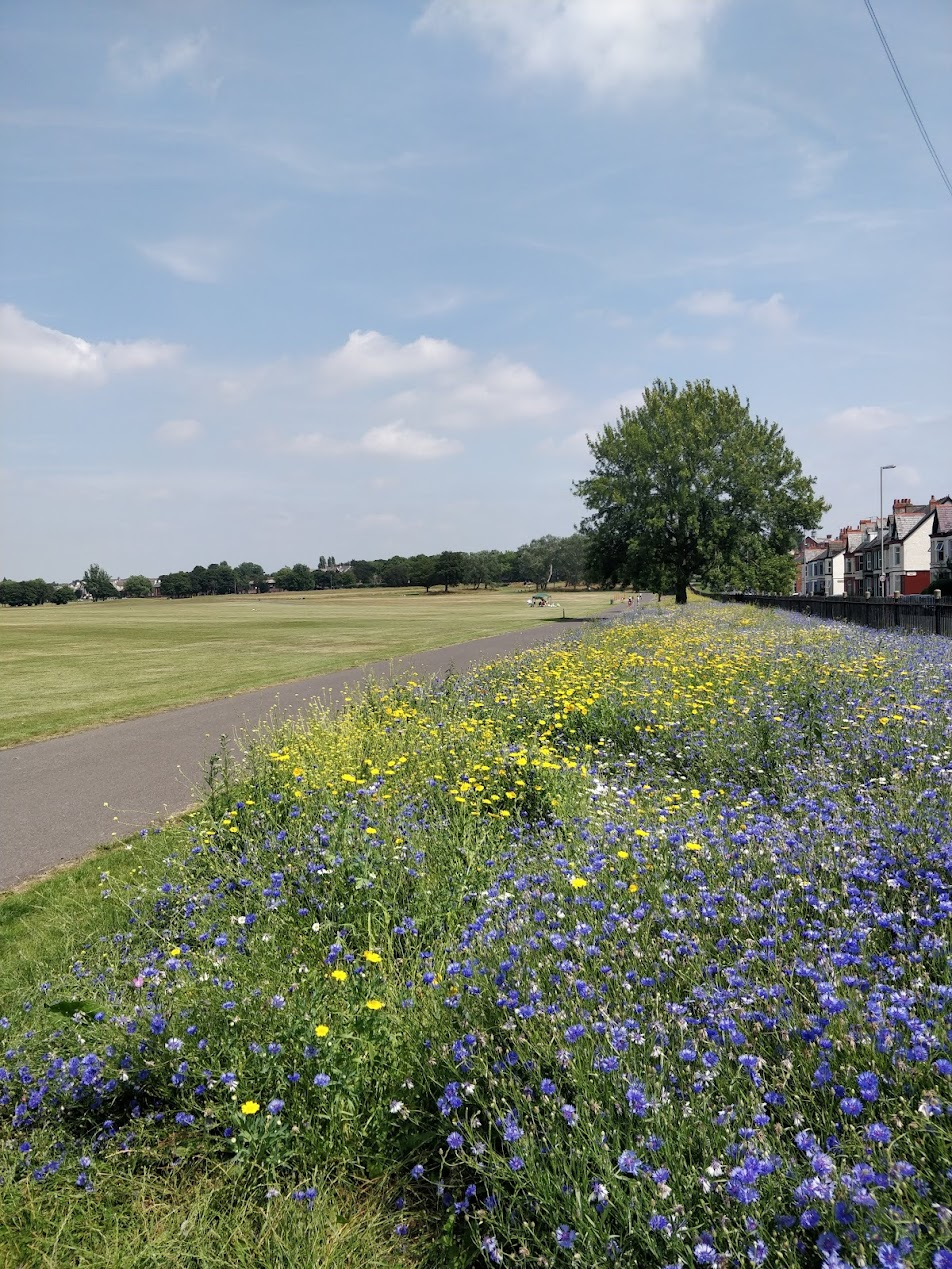
A wildflower intervention site in full bloom on Grant Avenue, Liverpool. Image credit: Mark Green.

The study presents an evaluation of how mobile phone data can be used to evaluate place-based green space interventions. It uses a case study of wildflower planting in Liverpool.

Share

Target audience

Community organisations involved in planting wildflowers. Council officials involved in parks and nature-based solutions.

The problem

There is limited evaluation of whether green space interventions lead to more people using these spaces. This is partly due to the difficulty of collecting data on visits to green spaces. Mobile phone data may offer one solution, but are rarely made available to researchers. As such, there is less examination of whether these data are valuable. We accessed small area anonymised mobile phone GPS data for Liverpool (2021-2022). Using a case study of wildflower planting, we identified green spaces where wildflowers were planted. A synthetic control was then constructed to identify similar green spaces where planting did not take place. We then compared the number of visits post-intervention between the intervention and control green sites.

What we did and why

We accessed small area anonymised mobile phone GPS data for Liverpool (2021-2022). Using a case study of wildflower planting, we identified green spaces where wildflowers were planted. A synthetic control was then constructed to identify similar green spaces where planting did not take place. We then compared the number of visits post-intervention between intervention and control green sites.

Our study’s contribution

The planting of wildflowers led to 17.2% higher number of visits than expected in the first month of the intervention, declining thereafter. There was wide uncertainty in these estimates, and we could not ascertain statistical significance. Our paper also gives an empirical and methodological evaluation of the strengths and weaknesses of using mobile phone data, which can inform others on how to best use them.

Impacts for city policy and practice

Where policy organisations use mobile phone-derived datasets, they should report openly on how their data is affected by the limitations and biases we report. Organisations should openly evaluate the effectiveness of all green space interventions so we can learn what works for encouraging greater use of green space. Where possible, evaluations should use both mobile phone data and manual visitation counts to minimise methodological differences in findings.

Further information

Full research article:

How can mobility data be used to evaluate urban green space interventions? A synthetic control analysis of wildflower planting in Liverpool, UK (2021–2022) by Mark A. Green, Wenjing Zhang, Polly Moseley, Richard Scott, Olly Butters, Ruoyo Wang, Benedict W. Wheeler & Rebecca S. Geary

Related posts