City Know-hows
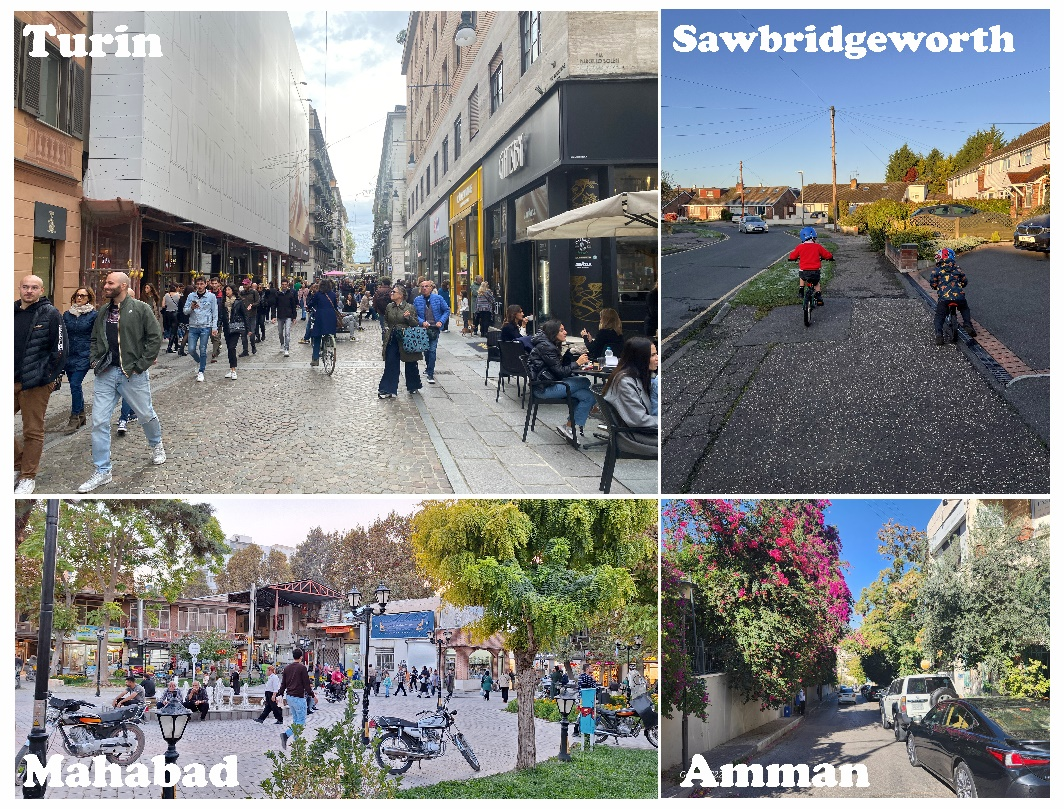
We evaluated four case studies from Europe and the Middle East with a qualitative method. In this study, walkable areas in four cities, Amman, Turin, Mahabad, and Sawbridgeworth, with their citizens, were studied. By visiting these spaces, recording personal experiences, photographing, and interviewing citizens, their roles in walkability and improving citizens’ rights, health, and climate challenges were identified.
Share
Target audience
Policymakers, municipalities, city planners, public health officials, community leaders, Climate activists, Health activists, Social rights activists.
The problem
Many studies so far have tried to show the positive outcomes with different quantitative and qualitative analyses worldwide. However, there are few studies that focus on citizens’ points of view and how they experience these positive outcomes. Our study aims to fill this gap.
What we did and why
We shared our story from studying walkable spaces with photos and then asked users about the role of space in their lives from three viewpoints: citizens’ rights, health, and climate. We did this to positively engage with people in these walkable spaces. We were able to better understand the impact of walkable cities from their perspective. We argue that analyzing walkable spaces from the citizen’s view can open new and different perspectives.
Our study’s contribution
Our findings provide valuable insight of local perspective from four different locations with respect to the role of walkable spaces, and how important it is to see cities through the citizens’ lens. We found that, Amman and Sawbridgeworth had the best conditions for health benefits and community involvement, suggesting that their city designs had effectively encouraged people to be active and to interact socially. We show that designing walkable cities can change people’s perception of space and have positive effects.
Impacts for city policy and practice
Design and planning walkable cities need to involve citizens. There is a potential to enhance health and safety for people (especially the vulnerable groups) by designing sustainable walkable spaces. Above all of that, prioritizing citizens’ needs, perceptions, and education toward walkable cities is vital in light of enhancing positive outcomes for climate, health and social rights.
Further information
Full research article:
Walkable cities for all: enhancing citizens’ rights, health, and climate adaptations by Borhan Sepehri, Mohammad Anvar Adibhesami, Rosalina Gadyuchkova, Alaa Ababneh and Amirmohamad Parvanehdehkordi
Related posts

When designing and managing public space, decision-makers and designers should:
• involve citizens in the process,
• consider all of the factors that contribute to citizen happiness,
• use evidence-based approaches to inform their decisions,
• monitor and evaluate the impact of public spaces on citizen happiness

For city planners and policymakers, increasing the tree canopy coverage stands out as the most promising green infrastructure planning/management strategies to contribute to health of campus communities/users. The tree canopy data are also more widely available than most other green infrastructure variables, making its use for the purpose of monitoring, intervention, and assessment feasible for various stakeholders.

Well-planned cities and neighbourhoods are building blocks for health and wellbeing. Our study evaluated one approach that two English local government organisations took to facilitate healthier environments, in both ‘healthy places officers’ were employed to bridge the gap between planning and public health teams.