City Know-hows

Achieving healthier environments by employing healthy places officers in local government settings

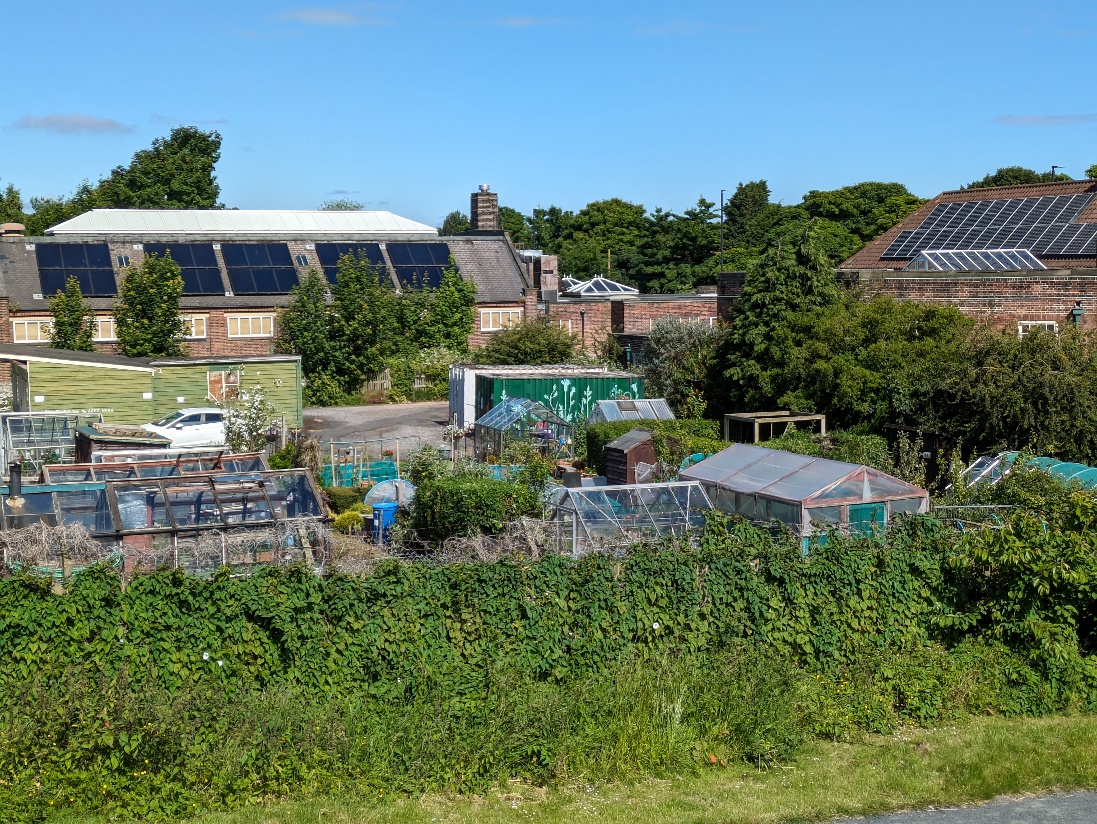
Accessing healthier food environments in urban spaces. Credit: PHIRST Image Repository

Well-planned cities and neighbourhoods are building blocks for health and wellbeing. Our study evaluated one approach that two English local government organisations took to facilitate healthier environments, in both ‘healthy places officers’ were employed to bridge the gap between planning and public health teams.

Share

Target audience

Public health professionals; Local authorities/officers; Urban/spatial planners

The problem

The places where we live, work and play can support or hinder our health and mental well-being but addressing these social determinants of health largely lies outside the remit of the health sector. Local government organisations play a key role in developing environments that promote health through responsibilities for planning and other relevant functions. However, such organisations do not always have the capacity and time to support planning and public health teams to work together.

What we did and why

We undertook an evaluation of healthy places officers employed by two local government organisations located in a city and an area with a mix of rural and urban areas. We aimed to identify changes in workforce capacity and joint working linked to the investment in these dedicated posts. The research involved a documentary review of local government plans, as well as case studies, interviews, and diary keeping with practitioners.

Our study’s contribution

We found that the introduction of the roles provided time and expertise to forge connections between public health and policy areas related to planning for health such as food environments. The postholders also supported the development of workforce competencies by rolling out training on health impact assessment. We also identified some examples of local government plans that more explicitly recognised a link to health as a result of the postholders’ advice and input.

Impacts for city policy and practice

Our findings can be used by other local authorities considering similar roles:

  • Postholders require diverse skills and knowledge including technical expertise as well as an ability to influence, negotiate and lead.
  • Where postholders’ are trained planners, this can complement skills of public health teams and support them to navigate complex planning structures.
  • An organisational commitment to healthy environments (e.g. senior leadership) as well as formal structures to support partnership working are also important for success.

Further information

Full research article:

Open Access Building and facilitating systems capabilities for healthy environments: the role of dedicated ‘healthy places’ postholders by Emma Coombes, Georgia Spiliopoulos, Lourdes Madigasekera-Elliott, Becky Wilkinson, Jacqueline Cannon, Tracey Flitcroft, Sarah E. Rodgers & Emma Halliday
Related posts

Making cities walkable for caregivers: bridging urban complexity and mobility justice

We examine how caregiving-related needs remain overlooked in walkability and Transit-Oriented Development strategies. Despite high levels of urban complexity, many transit-accessible areas lack essential caregiving-support places, particularly in vulnerable neighbourhoods. This spatial mismatch limits care-engaged individuals’ ability to chain trips, and access services, reinforcing mobility and social inequities. Our research highlights the need to integrate caregiving accessibility into planning frameworks to ensure that walkable cities are also inclusive and care-supportive.

Read More »

Enhancing green infrastructure within slums can promote residents’ well-being

Green infrastructure has been conceived as something for the well-off in cities of developed countries. How green infrastructure contributes to quality of life and wellbeing in slums and informal settlements is largely unknown. A survey of the residents (sample size = 455) within a slum community (Ikorodu-Ajegunle) in Lagos, Nigeria. The survey was preceded by stakeholder forum where actors from health, urbanism, environmental sectors discussed the links and made inputs to the research instrument used for data collection.

Read More »