

City Know-hows
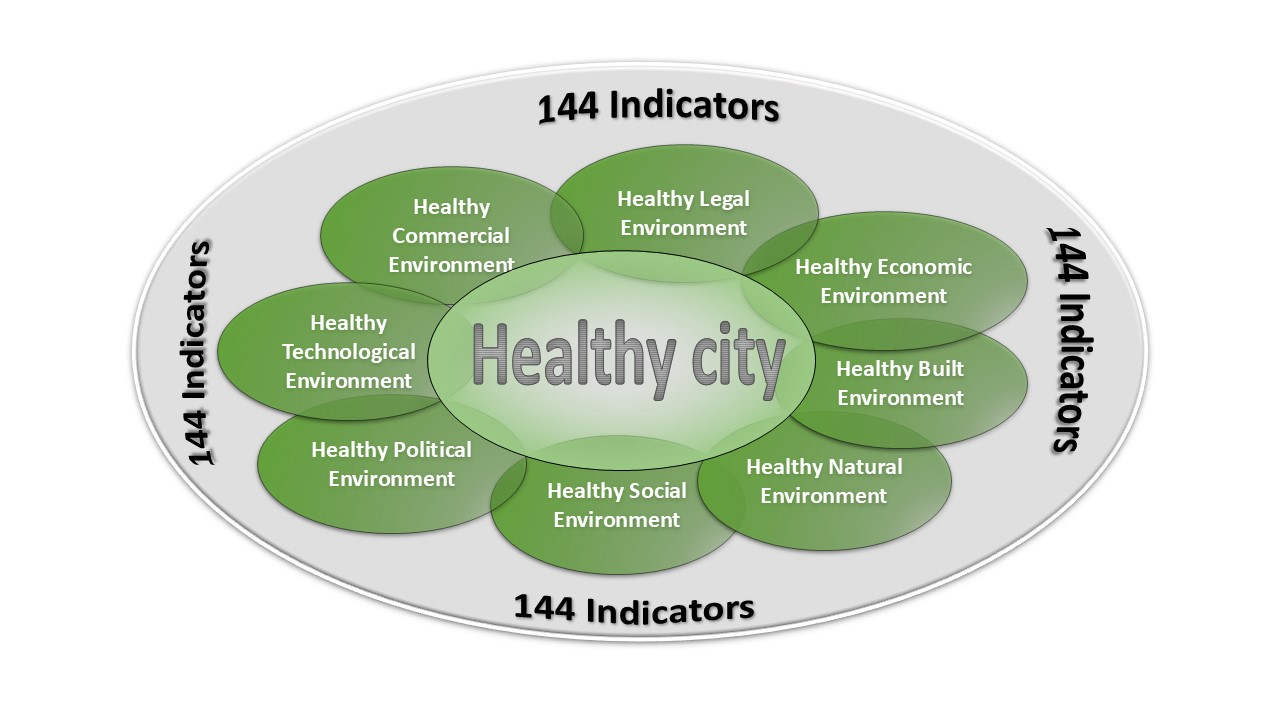
What makes a city truly healthy? This study engaged experts worldwide to identify 144 key indicators across social, economic, environmental, legal, technological, and commercial determinants of health—offering a practical roadmap for India’s mission to build 500 healthy, inclusive, and sustainable cities.
Share
Target audience
Urban planners, municipal officials, Public Health professionals, Policy makers involved in the development and assessment of Healthy Cities, and Academicians
The problem
As India is moving towards an ambitious goal of developing 500 healthy cities, we observed that there is no standardised, India-specific framework to define and assess urban health. Existing global and national tools don’t fully reflect our diverse urban realities to assess healthy cities. Without a comprehensive and validated set of context-specific indicators, it becomes difficult for planners, policymakers, and officials to evaluate urban health to make informed decisions and targeted interventions.
What we did and why
To address the lack of a standardized framework for assessing healthy cities in India, we adopted a two-stage research approach. First, we reviewed global and national frameworks to identify 112 preliminary indicators. Then, we conducted iterative rounds of surveys involving multidisciplinary experts to refined and validate these into 144 indicators across 8 key determinants. Our goal was to create a context-specific tool that can guide evidence-based planning, data collection, and policy decisions for healthier Indian cities.
Our study’s contribution
his study offers a validated, India-specific framework of 144 indicators to assess and guide the development of Healthy Cities—something that was previously missing. By combining global best practices with global and local expert insights, we provide a tool that supports data-driven planning and evaluation, which is adaptable to the diverse urban contexts. It adds methodological rigor through a Delphi process and fills a critical gap in urban health assessment, offering practical value to planners, policymakers, and researchers in India and similar urban contexts worldwide.
Impacts for city policy and practice
These indicators will provide a comprehensive tool for policymakers, urban planners, public health officials, and researchers to evaluate and monitor the health of the city, support evidence-based decision-making, and guide the upcoming Healthy Cities Progamme. This research contributes to a holistic, inclusive approach to urban development, promoting equitable, resilient, and health-promoting growth.
Further information
Full research article:
Developing healthy cities indicators for evidence-based policy making and urban planning in India: a Delphi approach by Sakshi Gupta and Neeraja Lugani Sethi
Related posts

This paper investigates how the project development of Wapping Wharf in Bristol impacted the dwellers’ well-being. It finds that the relationship between urban placemaking and dwellers’ wellbeing is not just constitutive, but also mutually reinforcing.

Even within relatively wealthy cities, food insecurity and health inequalities can be sharply concentrated in specific neighborhoods. We show how economic inequality, food access, and health outcomes are closely linked across Staten Island — and what this means for city leaders and practitioners.

We took a significant step in identifying the existing gaps in knowledge translation for healthy cities and adopting a proactive approach to laying out opportunities for improvement. By developing a visual representation for a renewed conceptual framework, we provide a clear and insightful tool for planners, designers, and policymakers aiming to enhance knowledge translation processes. As a result, this study not only elevates knowledge translation as a field of study for urban professionals but also reinforces its importance in public health.