
City Know-hows
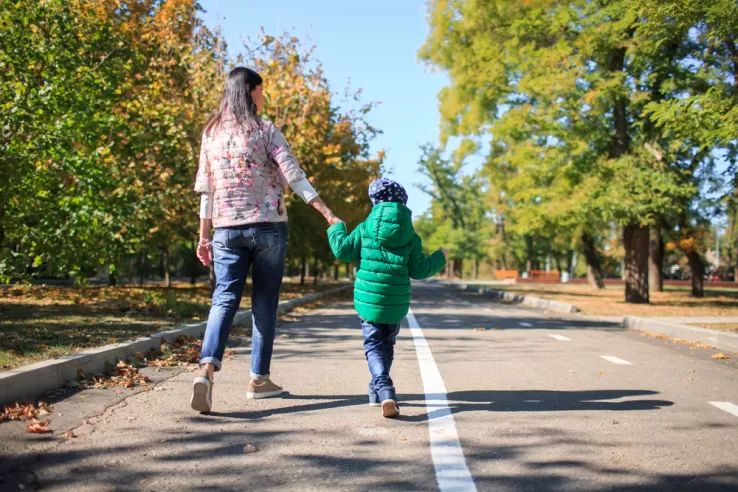
In this study, 82 children aged 9-10, in Newcastle upon Tyne, UK, shared their perspectives on the design of their neighbourhoods. The findings emphasise children’s need for safe active travel infrastructure, well-connected streets, well-maintained green spaces, and cohesive communities.
Share
Target audience
City officers and organisations (built environment/ public health practitioners) working on child-friendly city guidelines and urban regeneration strategies (e.g. Global Designing Cities Initiative, etc.) that aim to promote active travel. NGOs promoting active school travel (e.g. Sustrans, Living Streets, etc.)
The problem
Current urban design practices often fail to recognise streets as social and inclusive spaces, restricting children’s freedom to walk, cycle, and enjoy public spaces. Cities are typically designed by adult urban planners with a car-centred focus, and they frequently overlook the health and well-being benefits of walkable neighbourhoods, disregarding children’s rights to use and participate in the design process of these public places.
What we did and why
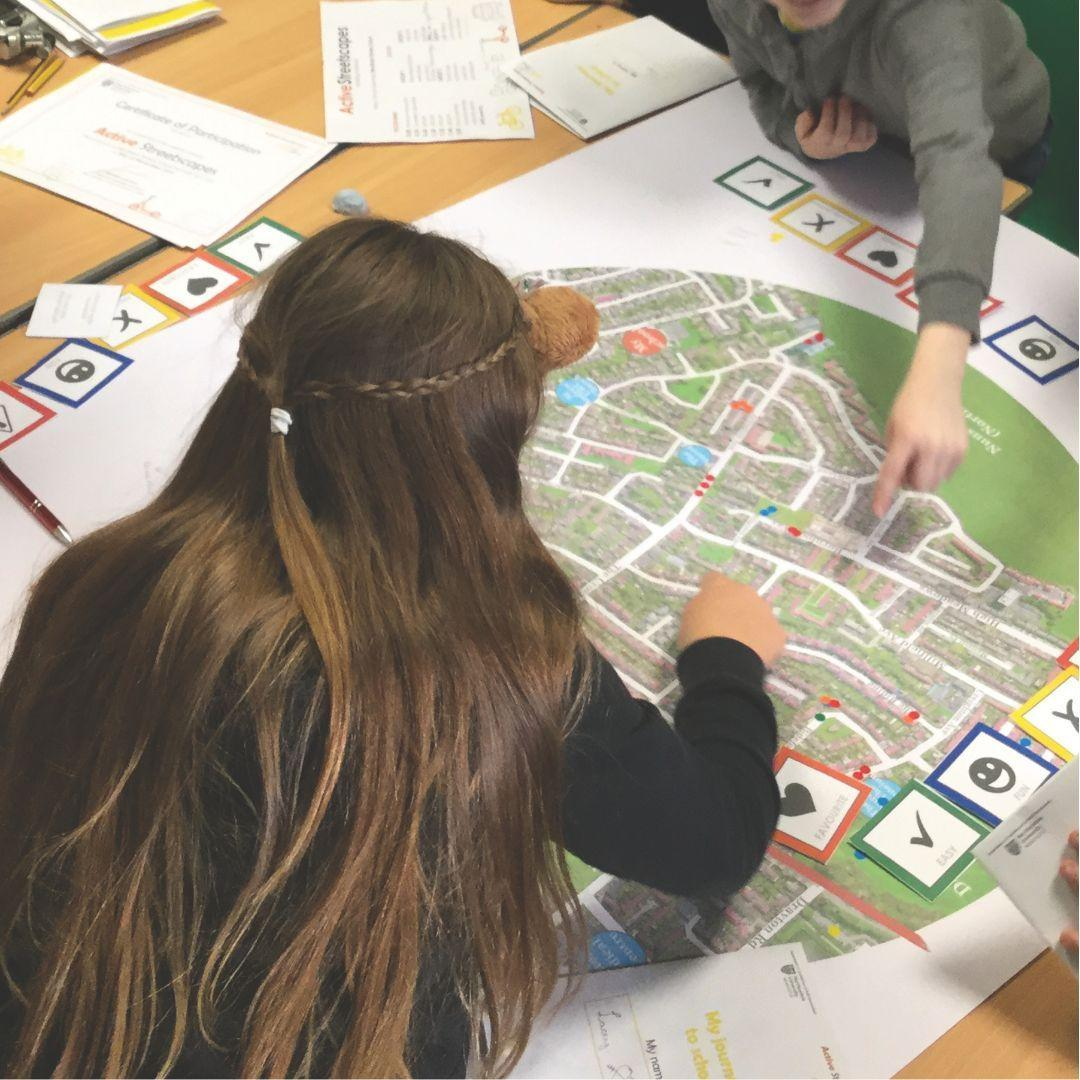
We worked with 82 primary school children (aged 9-10) from four schools and neighbourhoods in Newcastle upon Tyne, UK. Through focus group discussions, we asked them to share their travel experience in their neighbourhoods. Using age-appropriate maps and playful stickers, we gathered insights into their experiences, to identify patterns in what children need from their neighbouhoods. In addition, we mapped their comments to specific locations to better understand the relationships between the built environment features and children’s experiences.
Our study’s contribution
Our study takes a child-centered approach, using participatory methods to bring novel empirical evidence to the field of child-friendly city design. By focusing on children’s neighbourhood experiences, in a UK context, we provide data-led insights to help guide the creation of walkable and inclusive spaces. By connecting children’s quotes to specific locations (alongside images), our findings shed light on how physical features of the city may impact children’s daily experiences.
Impacts for city policy and practice
Our findings offer practical recommendations for built environment and public health practitioners on designing effective, sustainable urban design and planning interventions to create child-friendly, walkable neighbourhoods, highlighting:
• Neighbourhood design features that encourage (e.g., ‘doorstep’ public spaces) or discourage (e.g., wide and busy roads) walking;
• Design features and spatial qualities that make public spaces more inclusive;
• Recommendations on conducting map-based focus groups to meaningfully engage local children in the design and planning process.
Further information
Full research article:
[OPEN ACCESS] Towards child-friendly and walkable cities: Children’s insights on neighbourhood design by Nafsika Michail, Ayse Ozbil Torun and Rosie Parnell
Related posts

Lack of ‘Ciclorutas’ (bicycle lanes) in Bogota’s neighbourhoods of low socio-economic status shows inequality in the access to active transportation options, potentially increasing health disparities.

How has the pandemic changed how we use and perceive our home? Many were working, eating, living, playing, sleeping, and learning in the same space. Has changed perceptions influenced ideas of the design of our homes, and potential for happiness and wellbeing?

The global COVID-19 pandemic, with its associated issues of isolation, enhanced hygiene practices and contact tracing brought up a number of issues to the public domain, many of which bordered on the nexus between urban planning and public health. We examine how new ideas concerning the linkages between urban planning and public health revealed by the COVID-19 crisis can be integrated into practice and how we might leverage this knowledge to build more just, healthier and liveable cities.