City Know-hows

Do housing qualities, characteristics, and affordability affect Iranians’ well-being?

The link between housing and health among Iranians.

Renters and owners have different health outcomes regarding the effects of housing. It is not about the types of housing and decoration but the optimum size of housing and cleanness that affect mental health. Additionally, access to green spaces and daily services plays crucial role overall health outcomes.

Share

Target audience

Urban health policymakers. Urban planners and designers.

The problem

The significant disparity between household income and housing prices in Iran, which ranks among the most unaffordable housing markets globally, can have a critical effect on housing’s ability to impact people’s health.

What we did and why

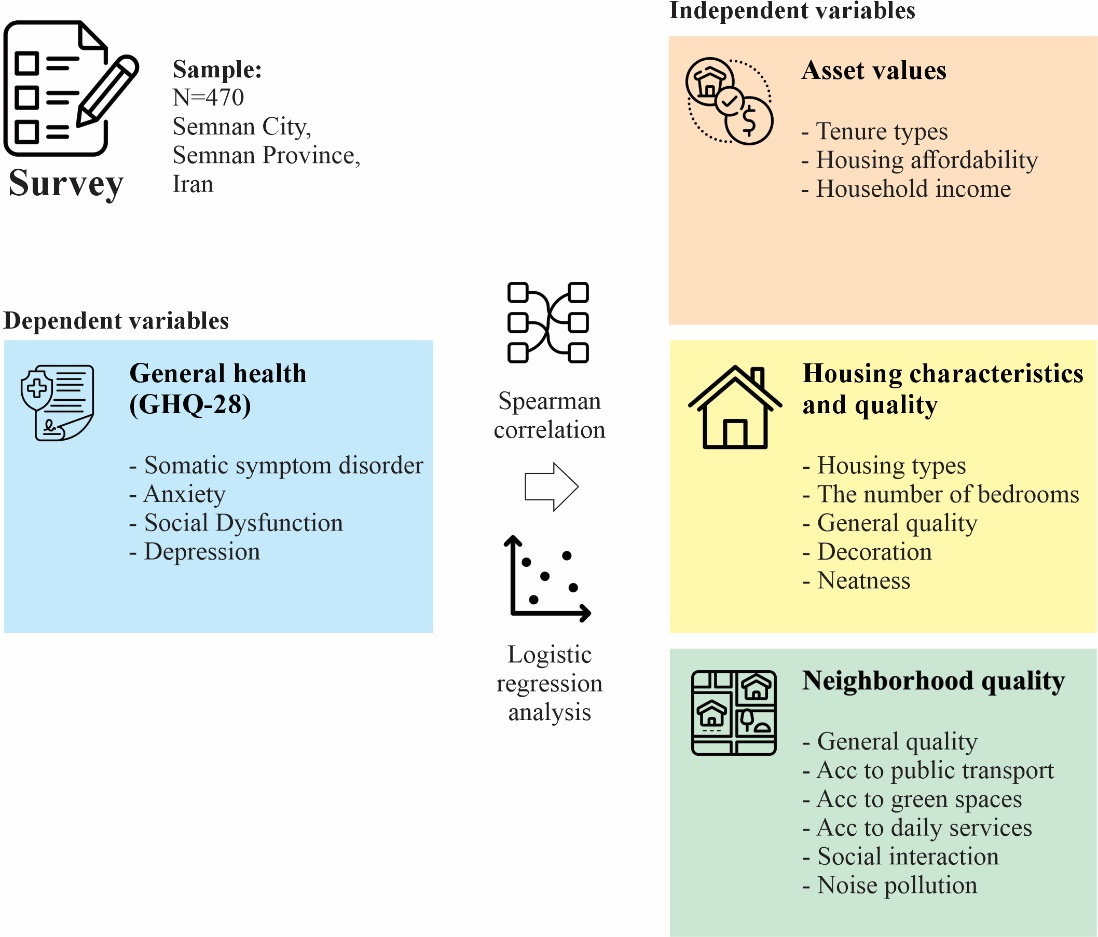
We explored the combined effects of housing affordability, quality, tenure, and neighbourhood conditions on mental health outcomes. We gathered data through a survey involving 470 questionnaires conducted between February and May 2024, and analysed using Spearman.

Our study’s contribution

We have been able to isolate what matters in relation to housing and mental health in our Iranian cohort:
• Renters were more likely to experience poor mental health than homeowners.
• The type of housing did not notably impact mental health.
• Declining perceptions of housing quality were linked to increased anxiety.
• Home decoration didn’t significantly affect either poor mental health or anxiety, while cleanliness perceptions could help alleviate both.
• Negative views of neighbourhood quality, limited green space, and inadequate services were associated with poorer mental health.

Impacts for city policy and practice

From these core findings, we have outlined suggestions for policy and practice:
• Promote social housing, home purchase loans, and long-term land leases to alleviate mental health issues among residents.
• Design housing plots and blocks to ensure an optimal size and room count.
• Rather than investing heavily in interior decoration by builders and designers, provide loans for home repairs and maintenance.
• Ensure residents have access to green spaces in their neighbourhoods.
• Establish communal areas that encourage neighbourly interactions to enhance residents’ mental well-being.

Further information

Full research article:

Related posts

Regenerative urban design and planning: Insights from Turkey for cities worldwide

This study contributes to understanding the intersection of regenerative planning principles and legal frameworks. It identifies the extent to which Turkey’s urban planning legislation aligns with regenerative principles, highlights key gaps in the current system that restricts the integration of regenerative approaches and provides insights that can inform urban planning practices and legislative reforms globally.

Read More »