Target audience

Urban health implementers, Impact investors, City governments, Technologists, Digital health innovators and Childhood disability advocates

The problem

Monitoring neighbourhood-level access to resources, services and programmes, can help to improve health equity in communities. With the proliferation of digital applications, big data approaches have shown some promise in capturing access to such resources such as green spaces, housing, amongst others. However, it is often difficult to capture resources such as programmes that are not spatially observable and as such, “offline” and pre-populated records are often used to gather such data.

What we did and why

We explored linking “online” data from a digital listing of inclusive physical and leisure activity programs to data on neighbourhood-level deprivation, firstly to explore insights on the relationship between both factors, and secondly, to explore how to strengthen novel approaches for capturing equity in access ­­­­to health-promoting programs.

Our study’s contribution

Past evidence gathering and stakeholder engagement efforts have noted the need for a wider range of activities, staff training and resources to accommodate varying sensory and behavioural challenges of Canadian children with disabilities. However to our knowledge, this is the first effort to systematically collect data on actual adapted and inclusive programmes offered on a large scale and covering a broad geographical area, informed by a purposeful and crowd-sourced database as opposed to individual reports.

Impacts for city policy and practice

City-level policy makers and practitioners should note varying dimensions of access, of target populations, and of deprivation in using crowdsourced data to evaluate access to health promoting resources. Additionally, crowdsourced data collection should consider how characteristics of the design team, and analytical and interpretive assumptions may influence results.

Further information

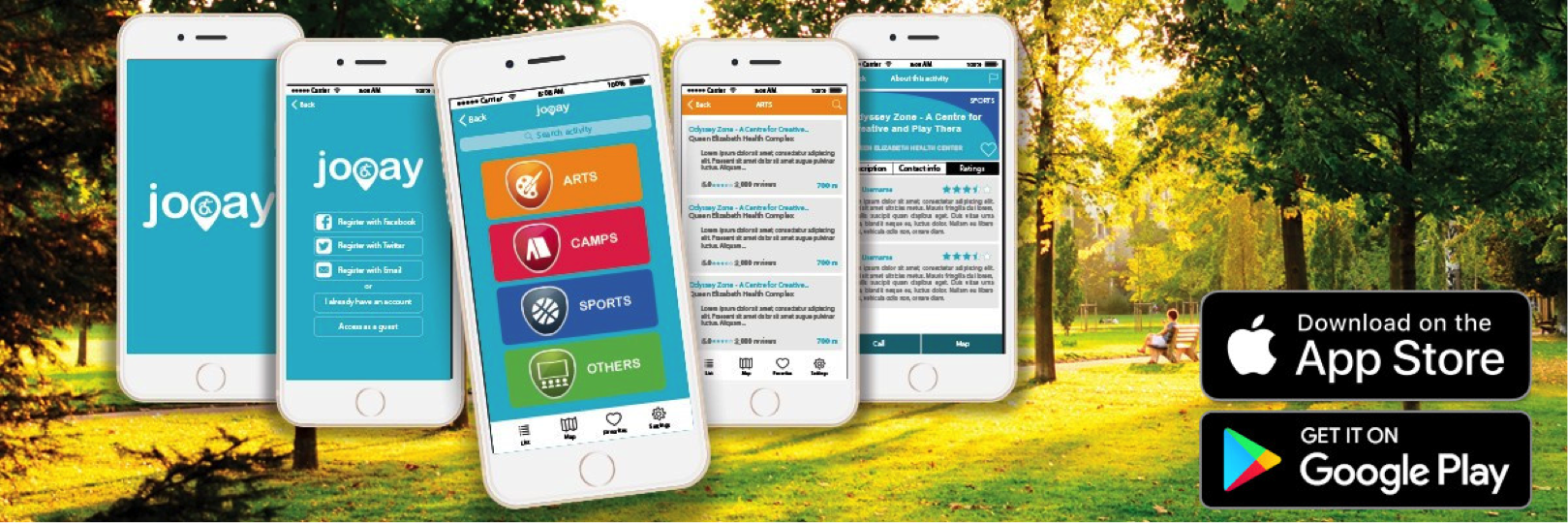
 Jooay app: Connecting children and youth with disabilities to leisure. A free app that helps children with disabilities and their families to locate leisure opportunities that are: close to where they are, accessible, suit their needs and abilities, match their preferences, can help them develop and participate in society.

Full research article:

Related posts

Policy challenges and best practice to designing-in play in cities, a study from the UK

This study contributes to the broader discourse on urban design for children, offering insights into how cities can create more inclusive, engaging, and health-promoting environments. It supports and adds to existing literature, finding that the alignment of play initiatives with public health goals, and strong collaboration between local government departments are effective in supporting children’s play on the strategic level. It identifies barriers to play in policy, namely budget constraints and deprioritisation of play.

Read More »