

City Know-hows
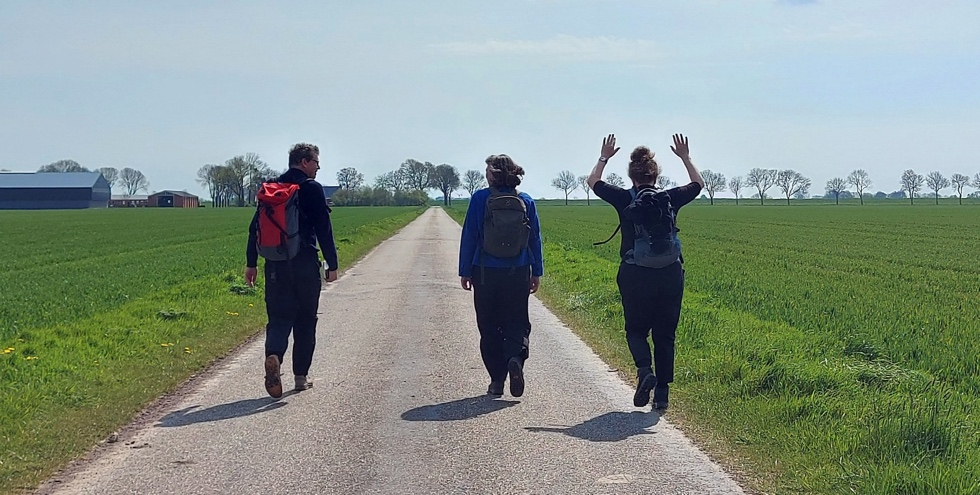
Our study is meant as a provocation for planners to “start walking again” and understand sites, places, and context by observing and listening. Walking is a way to collect diverse stakeholders’ insights and expands a vision. Walking is a cry for sustainability.
Share
Target audience
Everyone involved in spatial planning worldwide, but especially policy-makers and planners.
The problem
We want planners and decision-makers to get away from their computer screens and bring them into contact with the reality of everyday life, by going for intensive walks with local stakeholders. Walking is a temporary and light intervention in the landscape, but it is a radical activity that breaks with thinking in terms of the capitalist idiom of unlimited growth and exploitation.
What we did and why
We started this research because we observed several problems. There is a growing gap between urban and rural, which also translates into politics. Due to too much emphasis on urbanization and unbridled economic growth, multiple environmental and social-economic problems have arisen, especially in the countryside. This requires slowing down and reflection. That’s why we introduce walking as research method, especially intensive long-distance walks with one person as walking fellow, each time at least three hours.
Our study’s contribution
As far as is known, there has not yet been any research in rural areas in which walking is used as a method, at least not in the intensive manner that we propose and apply.
Impacts for city policy and practice
We have already received a lot of media attention (newspapers, radio, television, etc.) for our proposed approach, including supportive reactions from colleagues and academia worldwide. We believe that there is a great need for this now, especially considering geopolitical shifts (in which the urban-rural divide is central) and new technological developments that require researchers to reposition themselves.
Further information
Full research article:
[OPEN ACCESS] Making time to walk again: (re)introducing walking as an inclusive research method in spatial planning by Zef Hemel, Harry den Hartog & Gamze Saygi
Related posts

Thailand has spent 16 years developing design guidelines for the elderly and people with disabilities. Still, accessible design for cognition remains inadequate for the impending super-aged society. This mismatch emphasises a critical failure in design planning that demands urgent improvement.

Our collaboration co-created a new methodology reimagining the design, delivery, and management of the Health Impact Assessment using a community lens of the WHOs four interlinking principles: democracy, sustainable development, equity, and ethical use of evidence. We produced an assessment showing the differences between technocratic and experience-led approaches, and shared our methodology with 10 groups from around the UK in a pilot programme who conducted their own exercises locally.

Loneliness impacts hugely on our lives and there is appetite for solutions. Spending time in a place, bumping into one another could be one of them. Can we reframe how we think about spending time in a place? And should we?