City Know-hows

Walkable Campuses: Tactical urbanism and complete streets in Brazilian knowledge territories

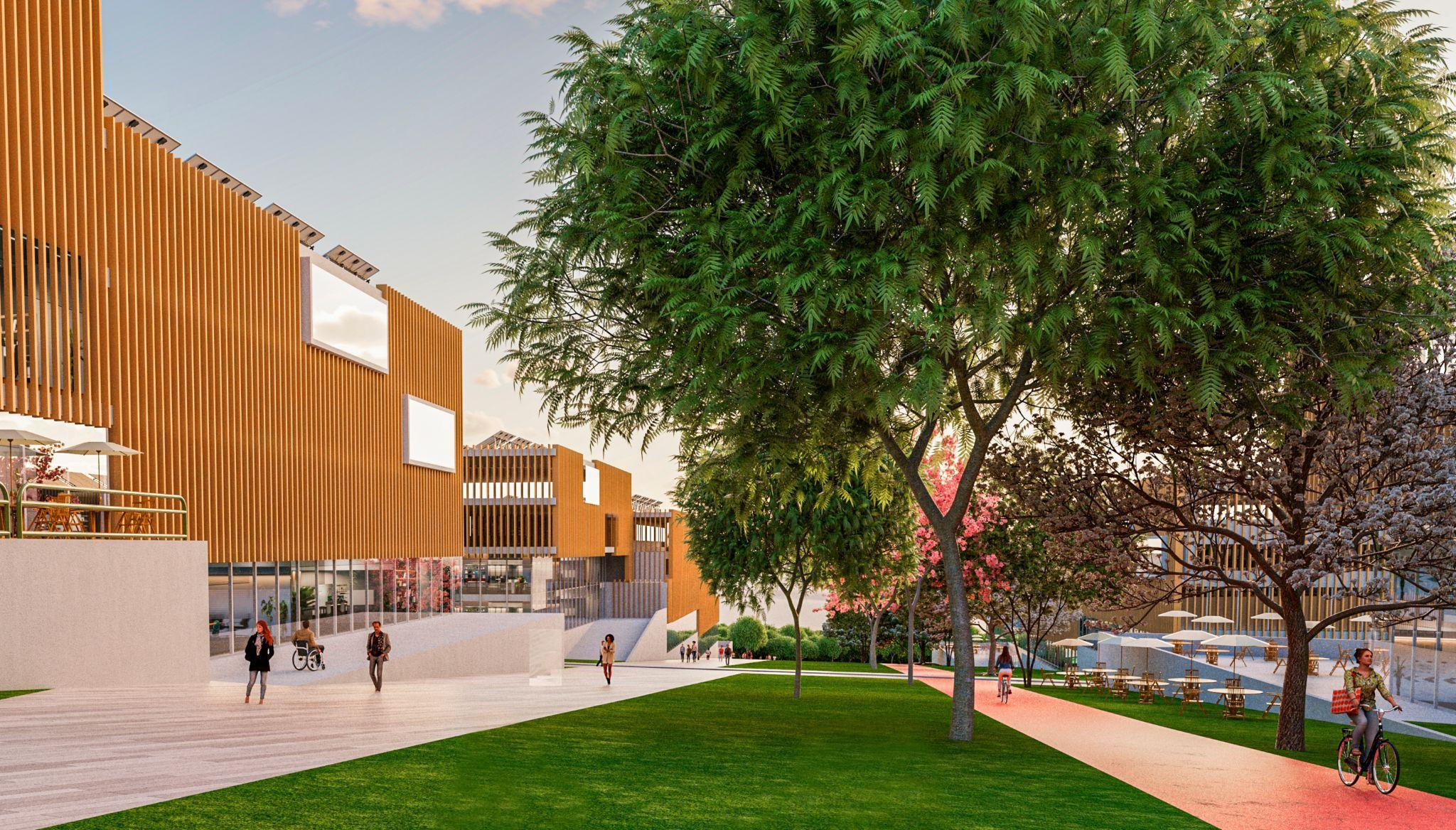
Architectural rendering of greenways in HIDS UNICAMP. Knowledge production territories can be used as living labs to test and promote more walkable and inclusive urban environments. Lessons learned from tactical urbanism interventions to create Complete Streets in existing campuses can be transferred to new projects and disseminate their use. Source: Gustavo de Oliveira Souza (CEUCI, 2023)

Exploring complete streets implementation in knowledge production territories, this research examines the potentials and limitations of using campuses as living labs, applying tactical urbanism. It identifies the opportunities for enhancing walkability and inclusivity and the challenges, e.g. regulatory issues and limited funding, stressing the role of governance and community engagement.

Share

Target audience

City officers, urban leaders and communities, university educators.

The problem

Car-centric cities hinder progress towards Agenda 2030 goals. Campuses can work as living labs to implement Complete Streets using tactical urbanism to promote their wider use in urban centers. Complete Streets ensures safety and access for all users, regardless of transportation mode, while tactical urbanism allows for quick, experimental improvements. This approach contributes to more sustainable, equitable, and livable urban environments.

What we did and why

We collected and analyzed secondary data from existing literature, policy documents, and previous studies to understand the challenges of implementing Complete Streets in Knowledge Production Territories. We focused on three key areas: transportation infrastructure on the Unicamp campus, the UNICAMP Tactical Urbanism Project, and the HIDS Unicamp case, in order to highlight how tactical urbanism can enhance walkability and inclusivity while identifying barriers like outdated infrastructure data, regulatory issues, and funding limitations.

Our study’s contribution

Our study adds an analysis of the challenges and opportunities in implementing Complete Streets in Knowledge Production Territories, emphasizing the role of tactical urbanism in promoting sustainable urban development.
• Potential of Knowledge Production Territories as living laboratories for implementing and testing Complete Streets projects through tactical urbanism
• Importance of integrating active mobility, accessibility, and environmental conservation in campus planning
• Value of community engagement and participatory processes in developing sustainable urban interventions
• Lessons learned from tactical urbanism can inform long-term planning for new campus areas

Impacts for city policy and practice

Our study has important implications for city policy and practice. By utilizing Knowledge Production Territories as living labs, we can test urban mobility solutions using tactical urbanism approaches that enhance walkability and social inclusion. Successful projects require robust stakeholder coordination, emphasizing collaboration among actors, with community engagement ensuring that local needs and cultural contexts are addressed. This strategy can be adapted by other cities to develop walkable, accessible campuses, provided that local contexts and specific requirements are considered.

Further information

Full research article:

[OPEN ACCESS] Promoting Walkable Campuses: Tactical Urbanism and Complete Streets in Brazilian Knowledge Territories by Silvia Stuchi, Marcela Noronha, Thalita Dalbelo, Vivian Bardini, William Machado Emiliano, Felippe Benavente Canteras, Vitor Eduardo Molina Junior, Milena Serafim and Mariana Versino

Related posts

Exploring the restorative and social value of urban running environments as third places, Manila, The Philippines

We asked runners across Metro Manila to rate their usual running spots, not just based on convenience or safety, but on how these places make them feel. Do they offer a sense of community? Do they reduce stress? Can people connect with others there, even informally? These questions are rooted in the idea of “third places”, spaces that are neither home nor work but still feel like a meaningful part of daily life.

Read More »