
City Know-hows
Target audience
Policy makers and Stakeholders (Local and Municipal Authorities, decision-makers from governmental and private institutions, civil society organization) in the fields of health, social service, education, workplace, urbanism, immigration, environmental issues, and local community.
The problem
Since the evidence policy gap often prevents policymakers from using the evidence provided by experts, appropriate structures and mechanisms of governance are needed to overcome this barrier.
What we did and why
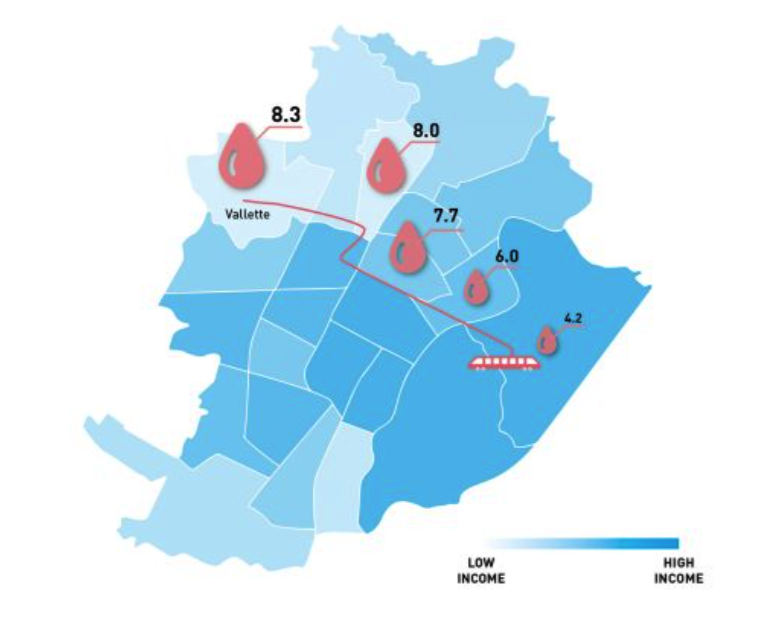
Starting from epidemiology evidence, a community of experts, policymakers and stakeholders was engaged in a participatory evidence-based decision-making process using the research-action approach and several stakeholder engagement strategies to raise awareness and foster intersectoral actions aimed at tackling social health inequalities. More than 50 stakeholders and high-profile local policymakers were involved in a co-investigation, co-decision and co-creation processes to reduce social health inequalities in the city of Turin.
Our study’s contribution
The study demonstrate that the “equity lens” are an effective criterion to identify potential health gains as achievable targets for policymaking, a useful metric for comparative analysis of the impact of different policies and a mean to foster stakeholder’ attitude to cooperate in a multi-sectorial approach.
Impacts for city policy and practice
The city is considered an “umbrella” setting under which all other settings (school, workplace, local community…etc) converge and may be coordinated to achieve common objectives for health promotion and prevention.
Further information
Mindmap Cities: MINDMAP aims to identify the opportunities offered by the urban environment for the promotion of mental wellbeing and cognitive function of older individuals in Europe.
Full research article:
Focusing urban policies on health equity: the role of evidence in stakeholder engagement in an Italian urban setting by Nicolás Zengarini, Silvia Pilutti, Michele Marra, Alice Scavarda, Morena Stroscia, Roberto Di Monaco, Franca Beccaria & Giuseppe Costa.
Related posts

The by-products of urbanisation, such as air pollution and neighbourhood disadvantage, are often overlooked when studying the impact of urban environments on depression. Understanding how these influence neighbourhood-depression relationships can help inform targeted public health interventions and reduce health disparities.

Social sustainability entails improving quality of life by addressing basic human needs, promoting well-being, and creating supportive communities. Our approach prioritizes the inclusion of human needs in neighborhood design to enhance the overall quality of a neighborhood’s physical environment.

New ways of integrating indigenous knowledge in landscape architecture design