




City Know-hows
Health is rarely prioritized in urban decision making. Requiring Health Impact Assessment obliges developers to focus on questions of health. Some local authorities require this, but not all. This is the first paper to undertake a comprehensive review of when and where Health Impact Assessment is required in England, and to set out ways to make the process more effective.
Share
Target audience
Policy makers responsible for urban development at a national and local level, officials responsible for policy development and urban decision making at a local level.
The problem
Despite serious health inequalities in England, and the prevalence of non-communicable diseases, health outcomes are rarely prioritised in national urban development policies. Local Planning Authorities can incorporate health into the planning requirements for new developments by requiring a Health Impact Assessment as part of planning consent. To date, there has been no comprehensive review of Health Impact Assessment policy content in England, but previous research has suggested there is a wide variety of approaches.
What we did and why
We conducted a census of local plans in England to investigate health-related parameters, to establish what the approach to Health Impact Assessment is in policies for individual local authorities. We wanted to understand what different approaches were taken, to identify themes, and to draw out examples of best practice to share with other local authorities.
Our study’s contribution
We identified that only two-fifths of Local Planning Authorities had a Health Impact Assessment policy, and there was a wide variety in the policies which do exist. We find that more prescriptive national guidance on Health Impact Assessment would help to ensure they are more effective. This should include guidance on triggers to be adopted, on the need for Health Impact Assessment to be undertaken early in the process and results fed into the development proposal, and other recommendations set out in the paper.
Impacts for city policy and practice
There is a clear need to ensure health is central in decisions about urban development given extensive evidence connecting urban environments and non-communicable diseases. Health Impact Assessment can enable a focus on ways to maximise health outcomes from a development, and more effective Health Impact Assessment policies can ensure health is taken into account at an early stage.
For TRUUD information films on Health Impact Assessment, including case studies: Click here.
Further information
Full research article:
[OPEN ACCESS] Health obligations and the built environment: analysis of health impact assessment policies in English local plans by David Williams, Edward Kirton-Darling & Michael Chang.
Related posts

Our study sheds light on the evolving dynamics of the Greater Cairo Region, adding depth to the understanding of whether gated communities act as true remedies or reflections of concrete houses. By incorporating a model based on critical factors for mental health, we offer insights into the nuanced dimensions of well-being in the context of urban development. This research contributes to a more comprehensive understanding of the complex interplay between city structure and residents’ overall well-being.
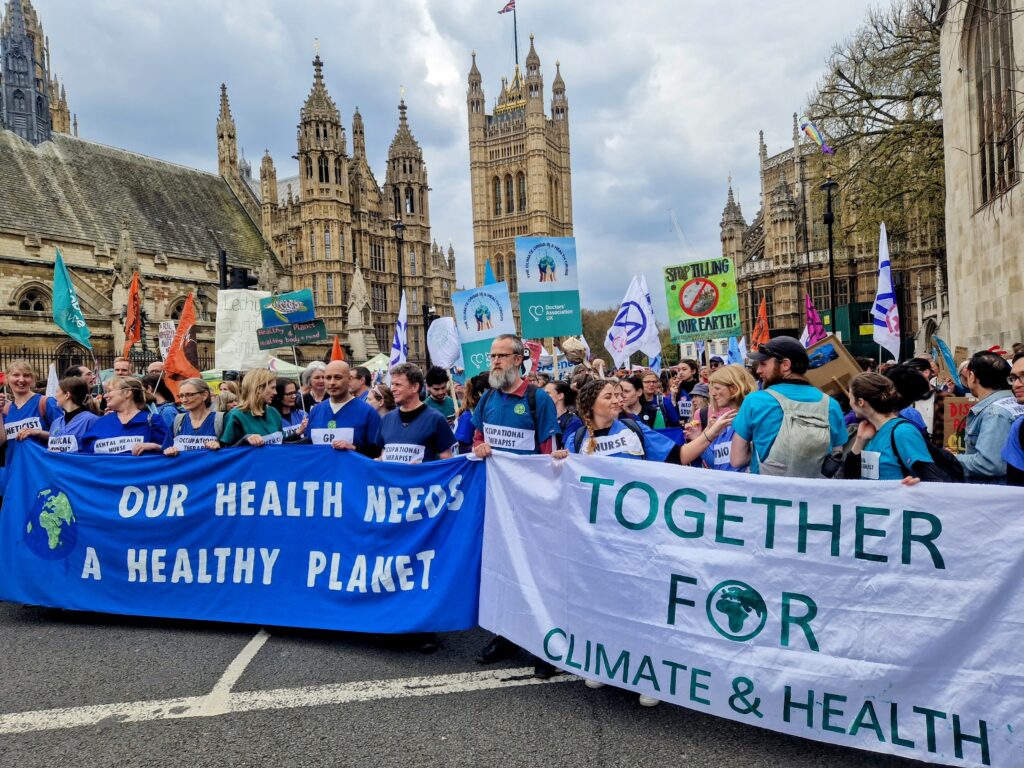
The world is currently responding to the climate crisis and the nature crisis as if they were separate challenges. This is a dangerous mistake. The are leading to dire impacts for our health

This study analysed thirteen neighbourhoods across four Israeli metropolitan cities from a cross-typological perspective to identify meaningful depression patterns and their links to neighbourhood design. The study suggests that while it is clear that urban planners cannot control all features associated with depression, they have at least the power to address the physical features associated with the neighbourhood, such as densities, street networks, building forms, and open spaces.