


City Know-hows

Enhancing children’s play in high-density urban environments: A systematic review of current insights

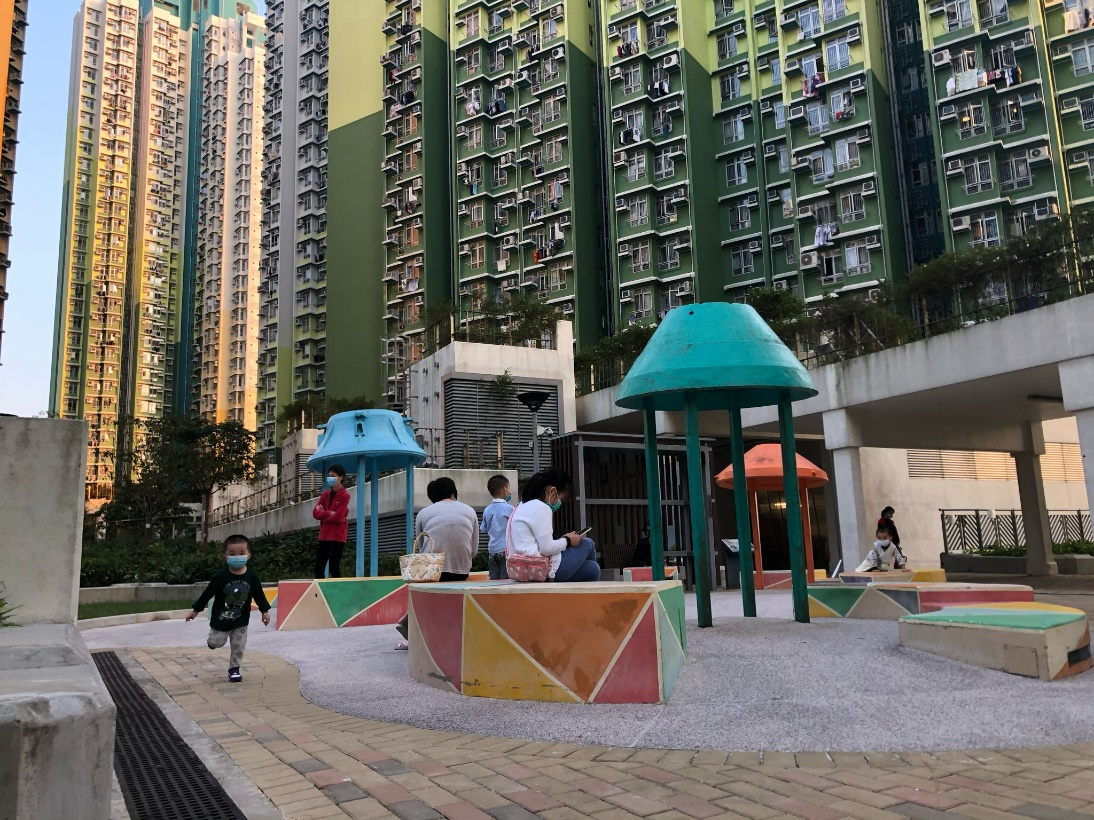
Play areas in On Tai estate, a recently built public housing estate in Hong Kong. Image: Pengyu Lu.

High-density urban environments significantly affect children’s play and well-being. This study provides current insights and explores potential solutions for enhancing play spaces in compact cities, aiming to promote a healthier and more sustainable urban future for children.

Share

Target audience

Urban planners, city officers, public health professionals and community organizations

The problem

High-density urban environments often lack adequate and well-connected play spaces for children. This deficiency negatively impacts children’s physical and cognitive development, well-being, and overall quality of life. Despite the environmental and economic benefits of urban densification, the scarcity of accessible and high-quality play areas poses significant challenges for city planners and policymakers aiming to create child-friendly urban spaces.

What we did and why

We conducted a systematic review to gather insights on the impact of high-density urban environments on children’s play. Using standard tools such as PRISMA and the Bibliometrix R-Tool, we analysed existing literature to identify trends, key insights, and potential relationships between children’s play experiences and urban environment characteristics. Our goal was to synthesize current knowledge and provide guidance for improving play spaces in compact cities, ultimately contributing to more sustainable and liveable urban environments for children.

Our study’s contribution

This study offers an in-depth understanding of how high-density urban settings affect children’s play.

  • We identified significant trends and topics in international literature.
  • We highlighted key insights into the availability, accessibility, and quality of children’s play spaces.
  • We identified gaps in current research and suggested directions for future studies to enhance children’s well-being in urban areas.

Impacts for city policy and practice

Our findings have important implications for city policy and urban planning practices.

  • City planners need to prioritize the creation and maintenance of accessible play spaces in high-density areas.
  • Collaboration between government departments is crucial to maximize resources and opportunities for developing child-friendly spaces.
  • Policies should focus on integrating green spaces and play areas into urban design to promote children’s physical and cognitive development.

Further information

Full research article:

Related posts