City Know-hows
The System for Observing Outdoor Play Environments in Neighborhood Schools (SOOPEN) is a new systematic observation tool to assess children´s play behavior. SOOPEN uses a novel group dynamics approach. The tool has good reliability and is accompanied by a user-friendly protocol.
Share
Target audience
Urban planners, local governments, public health practitioners, education organisations, architects, research communities for healthy playing in urban settings.
The problem
Urban environments significantly influence health. School playgrounds and other urban spaces provide key opportunities to promote child health and wellbeing. Interventions in these environments can generate health benefits, but often lack evaluations to understand their true impacts. Existing systematic observation tools evaluate children’s play behaviour at the individual level, but do not provide information on group-level dynamics. New, tailored evaluation tools to address this gap can provide with better information for policy and practice.
What we did and why
To provide a practical tool to evaluate play behaviour in groups of children in school playgrounds and other urban setting, we developed the SOOPEN tool (System for Observing Outdoor Play Environments in Neighborhood Schools) and tested its reliability. SOOPEN it is accompanied by a user-friendly protocol which includes a recording form to collect observational data.
Our study’s contribution
We provide a novel observation tool that complements other existing and widely used tools. SOOPEN:
• measures interaction at the group level during play, providing a more comprehensive view than individual behaviour alone.
• enables assessment of group-dynamics of all children playing in a specific area in a resource efficient way. The tool was tested in 11 primary schools and showed good reliability for real-world contexts.
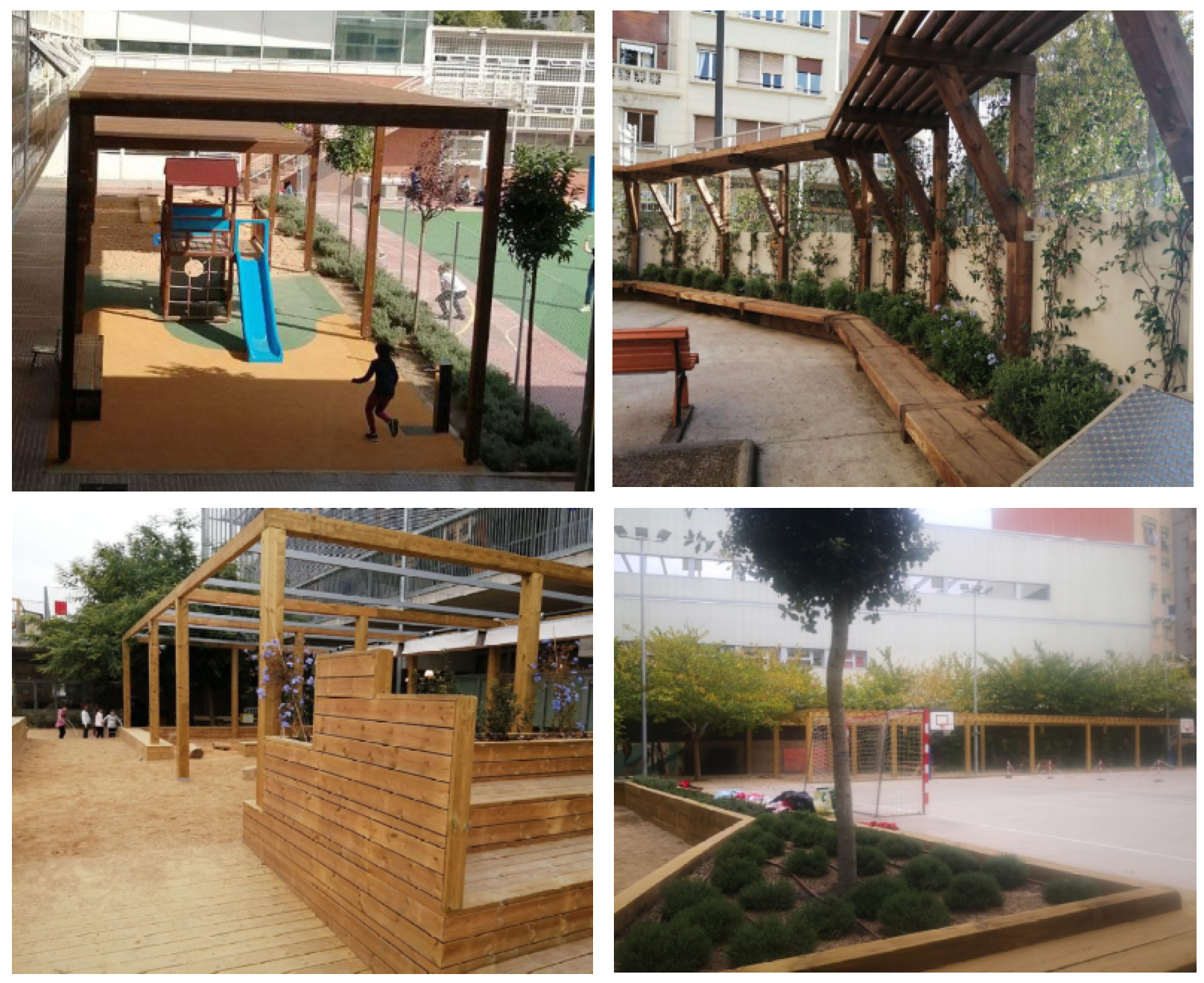
SOOPEN captures the conditions of the target area (i.e. Accessibility, Usability, Supervision, Organized Physical Activity and Equipment) as well as weather conditions at the beginning of each observation. The grade of children being observed is also collected if it is known. SOOPEN collects the use of shade which could be of interest to evaluate public space and school environmental interventions which include solutions in the context of climate change mitigation.
Impacts for city policy and practice
Evaluation of interventions contributes to best practice and can help understand the health and wellbeing impacts of urban environment. SOOPEN can be used to reliably assess children’s play behaviour at the group level in schoolyards and other outdoor play settings, such as community parks. The tool could be tailored to capture behaviours of users other than school-age children in a variety of contexts.
Further information
Full research article:
[OPEN ACCESS] SOOPEN: design and assessment of a tailored systematic observation tool to evaluate outdoor play behavior among schoolchildren groups by María López-Toribio, Laura Hidalgo, Jill S. Litt, Carolyn Daher, Mark Nieuwenhuijsen, Sandra Márquez, Albert Berrón, Berta Franch, Beatriz García & Mònica Ubalde-López.
Related posts

This study sheds light on Indian planners’ perceptions of health integration in urban and regional planning, highlighting implementation obstacles as well as acknowledgement of the topic’s significance.

Anthropogenic climate change is bringing with it a whole host of deleterious public health impacts. People will die and suffer disproportionately following inequitable societal structures. With every passing year time to mitigate and adapt to anthropogenic climate change slips away. The time is now to deliberately plan for the health impacts that are now ‘baked in’ for centuries to come.

People living in informal settlements endure the disproportionate burden of health vulnerabilities due to poor living conditions, overcrowding and infrastructural neglect. I examine how social, economic, political and environmental forces converge to amplify health disparities in Harare’s informal settlements.