City Know-hows

SOOPEN: A new tool to capture children´s group play behaviour in urban settings

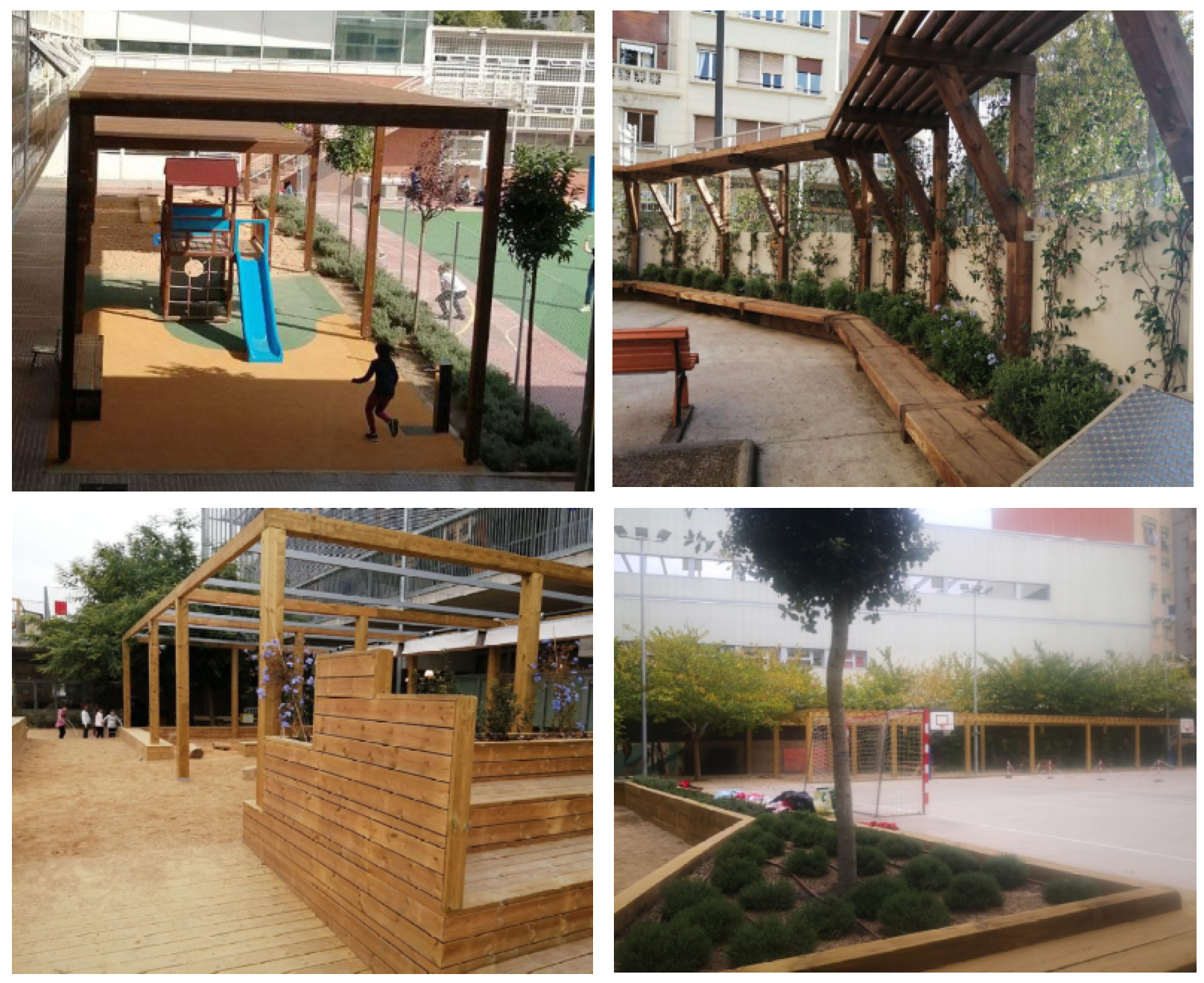
Shade and green interventions of schoolyards where the SOOPEN tool was tested.

The System for Observing Outdoor Play Environments in Neighborhood Schools (SOOPEN) is a new systematic observation tool to assess children´s play behavior. SOOPEN uses a novel group dynamics approach. The tool has good reliability and is accompanied by a user-friendly protocol.

Share

Target audience

Urban planners, local governments, public health practitioners, education organisations, architects, research communities for healthy playing in urban settings.

The problem

Urban environments significantly influence health. School playgrounds and other urban spaces provide key opportunities to promote child health and wellbeing. Interventions in these environments can generate health benefits, but often lack evaluations to understand their true impacts. Existing systematic observation tools evaluate children’s play behaviour at the individual level, but do not provide information on group-level dynamics. New, tailored evaluation tools to address this gap can provide with better information for policy and practice.

What we did and why

To provide a practical tool to evaluate play behaviour in groups of children in school playgrounds and other urban setting, we developed the SOOPEN tool (System for Observing Outdoor Play Environments in Neighborhood Schools) and tested its reliability. SOOPEN it is accompanied by a user-friendly protocol which includes a recording form to collect observational data.

Our study’s contribution

We provide a novel observation tool that complements other existing and widely used tools. SOOPEN:
• measures interaction at the group level during play, providing a more comprehensive view than individual behaviour alone.
• enables assessment of group-dynamics of all children playing in a specific area in a resource efficient way. The tool was tested in 11 primary schools and showed good reliability for real-world contexts.
SOOPEN captures the conditions of the target area (i.e. Accessibility, Usability, Supervision, Organized Physical Activity and Equipment) as well as weather conditions at the beginning of each observation. The grade of children being observed is also collected if it is known. SOOPEN collects the use of shade which could be of interest to evaluate public space and school environmental interventions which include solutions in the context of climate change mitigation.

Impacts for city policy and practice

Evaluation of interventions contributes to best practice and can help understand the health and wellbeing impacts of urban environment. SOOPEN can be used to reliably assess children’s play behaviour at the group level in schoolyards and other outdoor play settings, such as community parks. The tool could be tailored to capture behaviours of users other than school-age children in a variety of contexts.

Further information

Full research article:

[OPEN ACCESS] SOOPEN: design and assessment of a tailored systematic observation tool to evaluate outdoor play behavior among schoolchildren groups by María López-Toribio, Laura Hidalgo, Jill S. Litt, Carolyn Daher, Mark Nieuwenhuijsen, Sandra Márquez, Albert Berrón, Berta Franch, Beatriz García & Mònica Ubalde-López.

Related posts

Cooler kids need greener spaces

Heat exposure and greenness influence health and learning outcomes. Satellite images show schools on the Coast have strong heat stress levels and low vegetation; schools in the Andes have the largest solar radiation. Reforming school infrastructure standards is urgently needed in Ecuador. To describe environmental conditions in nine Ecuadorian schools, we analyzed three variables: temperature, vegetation, and solar radiation derived from satellite images that we downloaded from Google Earth Engine. We compared schools across three ecoregions to see differences in range and average values.

Read More »

Navigating autism in public transport: WHO’s International Classification of Functioning, Disability and Health (ICF) as a framework to investigate the spatial and physical barriers

Among the factors impacting functioning and quality of life in autism, aspects of the built environment have recently gained increasing attention. However, the opportunity of proposing a universal framework for cross-scalar examination of these factors remains largely unrealized.
By narrowing the focus to public transport, a key component of urban spatial structure and urban mobility, this study explores the applicability of the World Health Organization’s International Classification of Functioning, Disability, and Health (ICF) in examining the built environmental factors that influence autism.

Read More »