City Shorts
Share
City and Authors
Cork, Eire: Denise Cahill, Healthy Cities Co-ordinator Cork City,
Summary and Hook
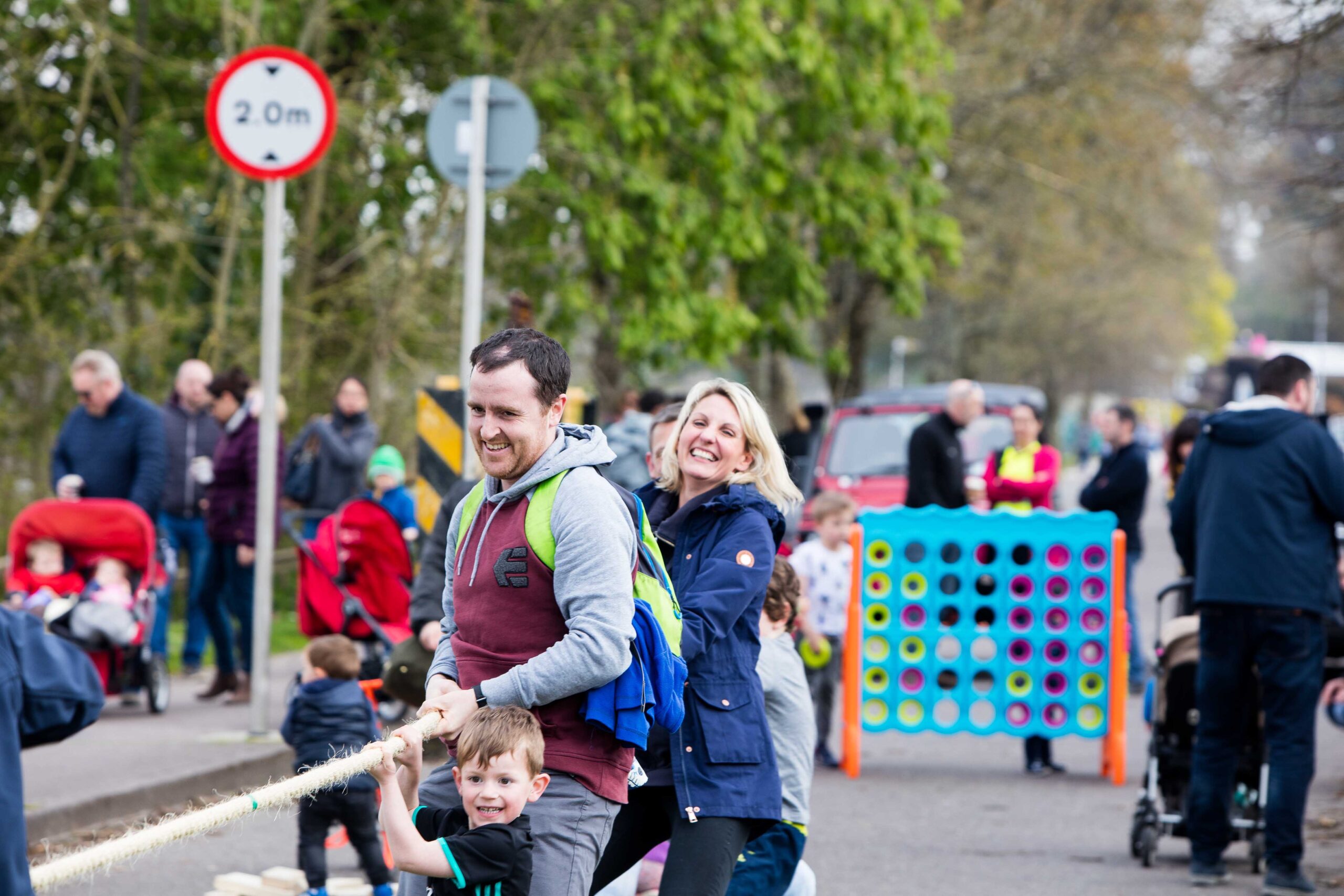
Intertwining play and placemaking (‘PlaysMaking’) in Cork city has inspired positive changes in the spaces, places and lives of citizens. The barriers of high car dependence and a history of resistance to pedestrianisation policies in the city were overturned by levering play to temporarily pedestrianise areas in the city. Community led PlaysMaking in Cork City has secured the permanent pedestrianisation of public roads, creating inclusive recreational spaces and led to the creation of dedicated public spaces for popup events and playful cultural trails.
Focus Area
Your City in Context
Cork City is Ireland’s second-largest and fastest-growing city, with a population of 210,000. Built on a series of islands this ancient merchant city is steeped in maritime history and a rich artistic culture. Cork’s ancient motto “A safe harbour for ships” reflects the maritime haven that Cork grew from as a tiny 7th-century settlement into the compact and vibrant city it is today.
Cork contributes 19% of Ireland’s GDP and has the 4th highest disposable income per capita in Ireland. There are more than 36,000 students enrolled in Cork City’s third-level colleges.
Cork is a WHO Healthy City, an UNESCO Learning City, a Smart City and an Age-Friendly City. Cork is often considered Ireland’s ‘Food Capital’ with award-winning restaurants and the English Market selling locally produced foods, including fresh fish, meats, fruit and vegetables, eggs, artisan cheeses and breads and has a Cork Food Policy Council.
What is the Problem?
The projected population and associated economic growth planned for Cork City will result in a significant increase in the demand for travel. This demand needs a considerable modal shift towards more sustainable and active transport modes; waking, cycling and public transport to reduce the car dependence and to improve current mobility in the City
The Cork City Profile highlights that there is slightly higher than average dependence on private car to commute to school or work (at 62.6%), and a lower than average uptake of public transport at 9.1% of journeys.
Since 2019, Cork City the value of play and placemaking as tools to inspire positive changes in the city have been employed across Cork City. Lessons learned through the URBACT Playful Paradigm, combined with expert training in placemaking with international networks have led to wider collaboration and a demand by more communities to host playful events.
What we did and Why?
Intertwining play and placemaking (‘PlaysMaking’) in Cork city has inspired positive changes in the spaces, places and lives of citizens. Community led PlaysMaking in Cork City has secured the permanent pedestrianisation of public roads, creating inclusive recreational spaces and led to the creation of dedicated public spaces for popup events and playful cultural trails. PLAYSMAKING provided an opportunity to trial new approaches to remove cars from key areas in the city. Rather than announce that the road is closed we opted for the concept that the ‘Street is ‘Open for Play’ This good practice supports the green transition by placing sustainability at the heart of all actions.
Barriers and Support
The barriers of high car dependence and a history of resistance to pedestrianisation policies in the city were overturned by levering play to temporarily pedestrianise areas in the city. This laid the groundwork for further pedestrianisation of city centre streets which have remained in place and declared CLEAN AIR ZONES, with Urban Renewal Schemes underway in each. A culture of active transport is being cultivated with the ‘OPEN STREETS’ Project in the city centre with regular car free and street play events.
What this Study adds
The use of play for community development, placemaking and active travel promotion is novel. PlaysMaking practice is steeped in participatory approaches to use public space in an inclusive and playful manner. This approach has fostered a culture of active play across the city and enhanced partnerships with statutory bodies, community groups, voluntary organisations. Cork City Council has developed a cross directorate team of placemaking champions who have engaged in placemaking capacity building opportunities.
Implications for City Policy and Practice
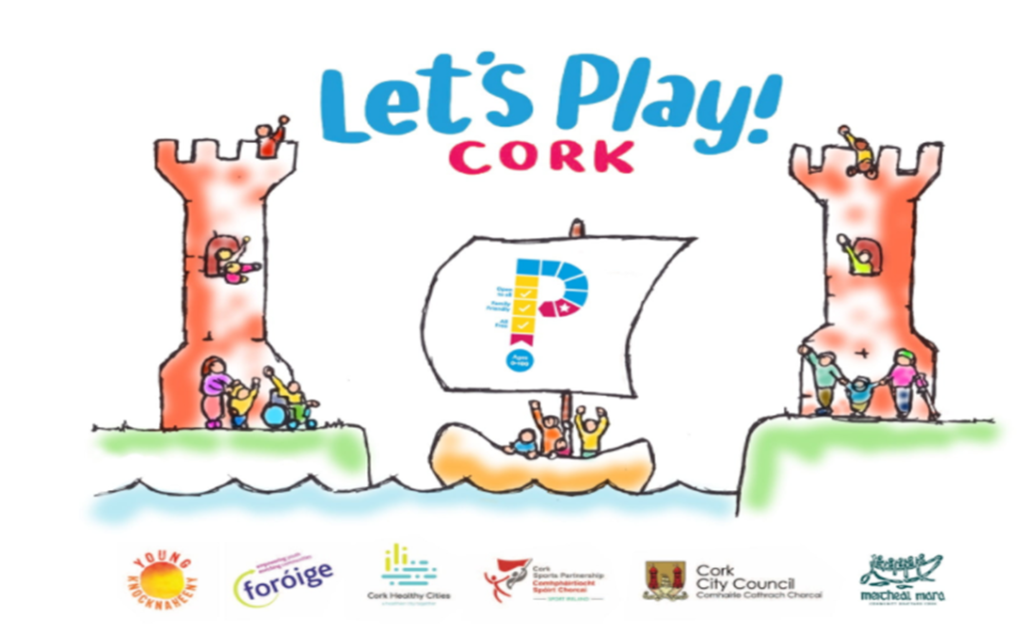
We use play to co-create novel solutions to urban challenges. The combination of civic authority experience in placemaking processes combined with cross-sectoral expertise in play has led to novel projects in the public domain. There are now established processes for connecting communities, agencies and planning experts to co create public space upgrades. At micro level we use this approach for street upgrades, at macro level for the design of a new large urban village and a new regional park. This has yielded positive outcomes in active travel, air quality, native biodiversity and recreational opportunities. Through advocacy and policy submissions ensured Play was enshrined as a high level objective in the City Development Plan 2022- 2028 and the Local Economic and Community plan Developed Let’s Play Cork as an interagency model.
Lessons for Others
PlaysMaking provides innovative approaches to behaviour and systems change and citizen engagement to the complex challenges posed by climate change. This novel approach has helped to remove cars from key areas in the city, to open public space for play, pedestrians and cyclists. We believe that this has paid dividends in terms of the sustainable growth of the approach, and the grass roots understanding of the ethos of Play and Placemaking.
Image Collage
References
Further information: • https://urbact.eu/whats-new/stories/urbact-national-transfer-story-impact-play-ireland
• Play resources & tutorials.
• Playful cultural trail.
• Play and placemaking policies included in Cork City Council Development plan 2022 – 2028.
• P4Play, Occupational Science research in Cork dedicated to enabling play.
Related posts

Unregulated urbanization in Islamabad fuels flooding and health risks like dengue, revealing gaps in environmental health integration. Our study’s insights urge planners to prioritize equitable, health-focused urban policies.

On this webpage, follow the Bötzowviertel case, a neighborhood streetscape analysis with pedestrian solutions.

Do we have the potential to combat childhood obesity rates with nature based programs? How does the design of community-based programming play a role?
Our study, analyzing 4,010 articles, reveals nature-based interventions promote healthy living. Focusing on community engagement and program gaps, our research highlights innovative strategies for healthier children. A collaborative approach offers new hope in addressing this global health challenge.