City Know-hows

Food environment and hunger: a study on food insecurity in northeastern Brazil

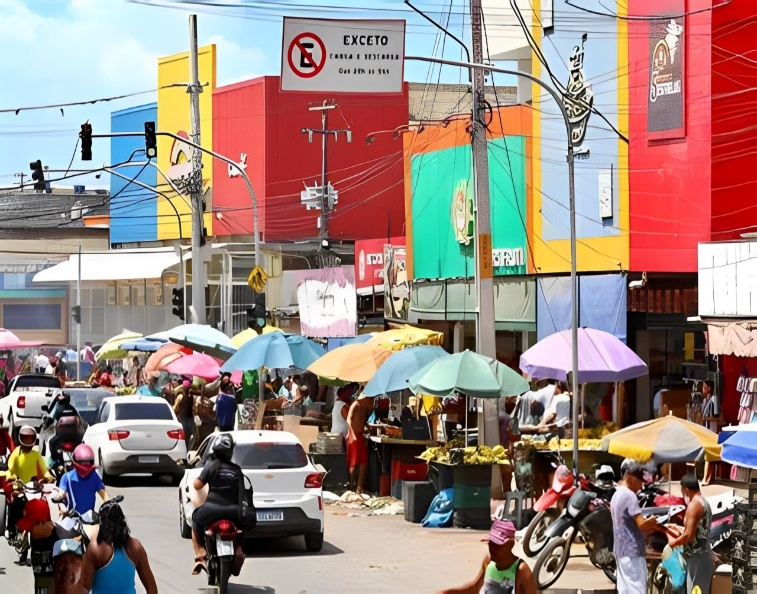
Neighborhoods on the outskirts, where the majority of the population is food insecure, have shopping centers with disorderly growth, with markets and supermarkets in parallel with street vendors and stalls selling natural foods (especially fruits, vegetables and greens), but without a certain standard of quality and origin.

Our study found that 39.2% of the individuals were food insecure. In these surroundings, there is a high number of ultra-processed food trades, but significantly closer to places with lower prices of fruits, vegetables and greens and greater availability of light 03 pay 02 advertisements for natural foods.

Share

Target audience

City officers, urban leaders, built environment or health professions.

The problem

The northeast of Brazil has a high prevalence of moderate and severe food insecurity, a condition in which people need to reduce the amount of food consumed, and in some cases stop eating for more than one day. As an aggravating factor, the food environment close to their homes has a high availability of establishments that sell ultra-processed foods plus a shortage of natural foods.

What we did and why

We decided to evaluate the prevalence of moderate and severe food insecurity among adults in northeastern Brazil and verify the relationship with the food environment, at 1600m (the most used metric) and at 800m, considering this a more accessible distance for individuals to buy food on foot or with greater ease of access. We would like to assess the availability of ultra-processed foods and natural food options closer to homes.

Our study’s contribution

This situation reflects the severity of the food situation in the locus of development of this study, especially when compared to the worldwide prevalence of 29.6% (UN 2024). Establishments that primarily sell ultra-processed foods were twice as concentrated at 800m from the households when compared to 1600m, demonstrating the excess of supply of these products closer to individuals in food insecurity. The low availability of natural/minimally processed food establishments in the two metrics evaluated, portrays the low supply of foods directly associated with health, well-being and quality of life.

Impacts for city policy and practice

Understanding the distribution of food establishments will help policymakers, planners, and managers in spatial planning to control for the sale of healthy food at affordable prices. For urban planning, we highlight the need to add natural food establishments and look at confronting the excess trade of ultra- processed foods. We recommend improving the food system, with markets and street markets, encouraging local and organic agriculture, at a distance where individuals can shop close to their homes.

Further information

Full research article:

Food environment and food insecurity in Northeastern Brazil: assessment using 800m and 1600m buffers by Vanessa Sá Leal, Emília Chagas Costa, Risia Cristina Egito de Menezes, Juliana Souza Oliveira, Nathalia Paula de Souza, Nathalia Barbosa de Aquino, Marco Aurélio de Valois Correia, Pedro Israel Cabral de Lira, Paula Santana & Ricardo Almendra.

Related posts

In studying the epidemiology of a virus (COVID-19), the urban context must not be ignored

The high concentration of people and activities in cities makes them vulnerable to various stressors such as natural and man-made disasters. In the recent pandemic, the cities are the places where the transmission started. We investigated the impact of social, economic, and environmental indicators on the rate of COVID-19 disease in the neighborhoods of Urmia City, Iran. Our results show that the number of employees, gross residential density, number of elderly people, building density, commercial density and road density have a significant relationship in predicting the epidemic.

Read More »

Constraints, compromises and decision-making: What drives healthy and unhealthy diets in Urban Informal Settlements

We examined the factors that limit and enable the uptake of healthy diets among urban populations with multiple socio-economic vulnerabilities. By exploring the interconnected economic, social and environmental influences, we aimed to generate context-specific evidence that can inform effective and targeted action to support progress towards achieving global nutrition targets in the context of triple burden of malnutrition and increasing concern on high incidences of diet-related diseases in rapidly urbanizing areas.
Read More »