City Know-hows
Understanding how mobility capacity and socioeconomic level, rather than mere proximity to food stores, significantly shapes access to healthy food can provide valuable insights for enhancing proximity-based planning for healthy eating. Given the diverse socioeconomic and food culture contexts worldwide, region-specific research is essential for informed urban planning decisions.
Share
Target audience
Urban planners, public health policymakers, and community-based organizations.
The problem
Urban food policies might assume that urban residents rely on nearby stores, overlooking the role of mobility, socioeconomic factors, and store characteristics in the use of healthy food stores. This assumption risks misrepresenting how residents interact with food stores. We wanted to explore how residents’ mobility capacity and store preferences shape their access to fruits and vegetables. Understanding these dynamics can enhance proximity-based planning by addressing economic, cultural, and mobility contexts more effectively.
What we did and why
We conducted a study in a Mexican city to understand how mobility capacity, socioeconomic status, and store characteristics influence access to fruits and vegetables. Through qualitative interviews, we examined residents’ real access to the stores where they purchase fruits and vegetables and their reasons for store choice. Our goal was to provide insights into how these factors shape access beyond proximity, offering valuable perspectives for improving urban food policies in diverse socioeconomic contexts.
Our study’s contribution
Our study highlights the importance of moving beyond proximity-based measures to understand food access in cities.
• We show that residents with low access to stores and low socioeconomic status use their mobility capacity to access stores with better prices, quality, and/or customer service, often prioritizing these factors over proximity.
• These findings emphasize the need to account for diverse socioeconomic and cultural contexts when designing urban food policies.
Impacts for city policy and practice
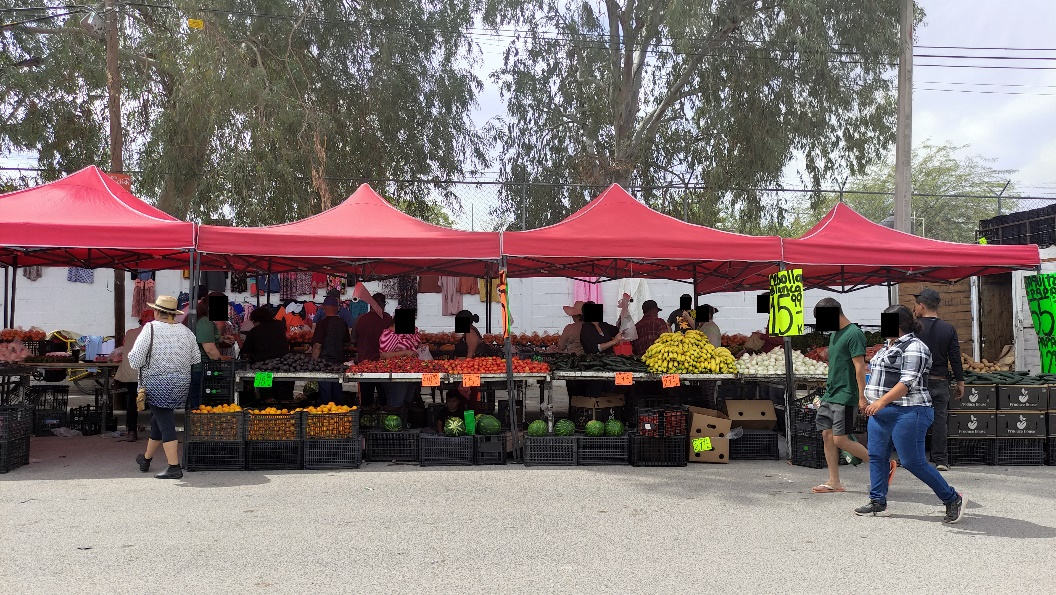
Proximity-based urban planning to improve healthy eating must adapt to each socioeconomic and cultural context, actively engaging communities to understand their needs. For example, in Latin American cities, as shown in our study, traditional food retailers, such as public markets and street markets, play a crucial role in providing affordable, high-quality produce to low-income residents. Improving spatial access or proximity to these retailers may be more effective than opening other types of food stores.
Further information
Full research article:
Beyond proximity in urban food environments: mobility capacity to access fruits and vegetables in a Mexican city by Eduardo López-Gastélum, Pablo A. Reyes-Castro, María del Carmen Arellano-Gálvez & Carolina Pérez-Ferrer.
Related posts

Our research studies how 16-25-year-old Londoners’ perceptions of parks management practices affect their use of these public spaces. Our aim was to address a knowledge deficit regarding the role of spending time in green space and young people’s mental wellbeing. For policymakers and practitioners aiming to manage parks as health infrastructure, this information is essential, given this cohort is at a critical developmental stage for building mental health resilience.

Heat exposure and greenness influence health and learning outcomes. Satellite images show schools on the Coast have strong heat stress levels and low vegetation; schools in the Andes have the largest solar radiation. Reforming school infrastructure standards is urgently needed in Ecuador. To describe environmental conditions in nine Ecuadorian schools, we analyzed three variables: temperature, vegetation, and solar radiation derived from satellite images that we downloaded from Google Earth Engine. We compared schools across three ecoregions to see differences in range and average values.

To understand the current drivers of air pollution, we used two natural experiments (Car-Free Day and COVID-19 Lockdown) to examine their impact on air pollution using particulate matter air pollution data in Kigali City. The health impact of non-motorized transport events in Kigali, known as ‘Car-Free Days,’ goes beyond just mass physical exercise. Importantly, it has reduced air pollution by 15%, this is expected to save more than 200 disability-adjusted life years annually.