City Know-hows

A pragmatic all-inclusive method to uncover drivers of health in high-density apartment buildings

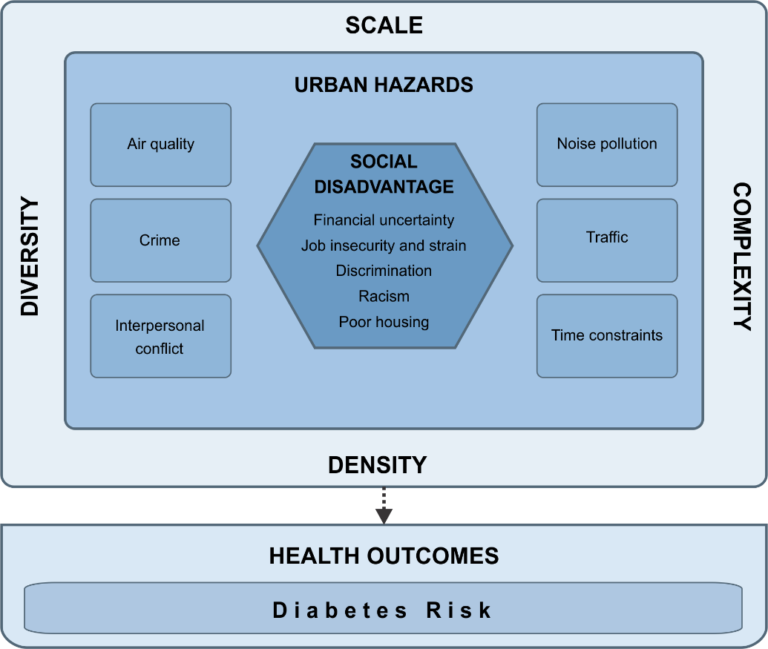
Residents’ experiences of health and wellbeing in dense housing are shaped by complex interacting factors. Image credit: Tamara Al-Obaidi

Using qualitative methods informed by systems thinking, I explored how city residents experience health and well-being in high-density apartments. This approach uncovered influences that typical studies overlook, offering cities fresh insights for healthier high-density environments.

Share

Target audience

Urban leaders commissioning future studies involving the public and healthy places decision makers working on high-density projects

The problem

High-density apartment living is increasingly common in global cities, yet its impacts on residents’ health and well-being are complex and poorly understood. Traditional research often misses deeper, contextual factors—especially those shaped by human–environment interactions. Without these insights, policy, planning and design risk oversimplifying what makes dense living healthy, leading to developments that fail to meet residents’ real needs.

What we did and why

I took a pragmatic approach, using conversational interviews and loosely-defined concepts, combined with a coupled human–environment systems perspective. This flexible methodology allowed residents to speak freely about what mattered most to their health and wellbeing. By prioritising context over pre-set assumptions, I uncovered diverse, layered factors—spanning personal, social, environmental, and structural dimensions—that shape healthy high-density living. I wanted to capture complexity in a way that could inform future study designs and real-world city decision-making.

Our study’s contribution

This research from Sydney shows the value of combining qualitative flexibility with systems thinking. Key contributions include:
1) Demonstrating how conversational, non-rigid methods reveal overlooked drivers of health and well-being.
2) Showing that human–environment systems perspectives add depth to urban health research.
3) Providing a never-before-used resident-centred approach for studying complex city living challenges.

Impacts for city policy and practice

My methodology can help cities design better housing policy and planning processes. I suggest:
1) Embedding pragmatic, resident-centred research early in planning and policy cycles.
2) Allowing flexible conversational studies with the public to understand and manage the contextual, community and broader influencers of health and wellbeing.
3) Embedding future studies with systems thinking to anticipate unintended health impacts of high-density housing.

Further information

Full research article:

Related posts