City Know-hows
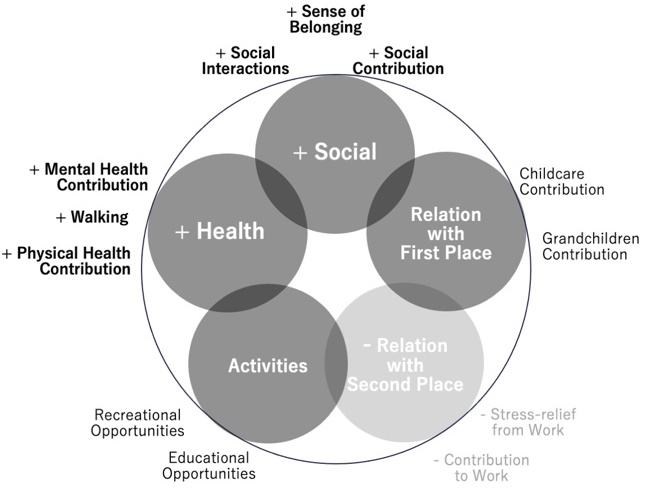
Our research shows that third places, like community centers or parks, play a vital role in helping retirees adjust to their new life after work. By providing opportunities for social interaction, contributing to society, and improving physical and mental health, these spaces can significantly enhance the quality of life for older adults.
Share
Target audience
Urban planners: The findings of this study provide valuable insights for developing inclusive and supportive communities for retirees.
Policymakers: Understanding the importance of third places in retirement can inform the development of policies that promote active aging and social inclusion.
Community leaders: These results can guide initiatives to create vibrant and engaging spaces for retirees to participate in community life.
International organizations: The study offers valuable lessons for countries seeking to improve the quality of life for their aging populations.
The problem
Retirees often face challenges adjusting to their new life without the structure and social interactions provided by their previous jobs. This can lead to feelings of isolation, decreased well-being, and a reduced sense of purpose. Understanding how third places can support retirees during this transition is crucial for promoting healthy aging and social inclusion.
What we did and why
We conducted in-depth interviews with retirees in Tsukuba City, Japan, to explore how their perspectives on third places changed after retirement. By analyzing their responses using sentiment analysis and thematic analysis, we identified the key elements of third places that contribute to retirement adjustment. Our goal was to provide valuable insights for urban planners and policymakers seeking to create more supportive and inclusive communities for older adults.
Our study’s contribution
Our research provides new evidence for the importance of third places in supporting retirees’ well-being and social engagement. We found that these spaces can play a significant role in fostering a sense of belonging, improving mental and physical health, and facilitating social interactions.
Impacts for city policy and practice
Invest in third places: Cities should prioritize the development and maintenance of accessible and welcoming third places, such as community centers, parks, and libraries.
Promote social inclusion: Implement programs and initiatives that encourage retirees to participate in community activities and connect with others.
Consider the needs of older adults: Involve retirees in the planning and design of urban spaces to ensure they meet their specific needs and preferences.
Support community-based organizations: Provide funding and resources to organizations that offer programs and services for retirees.
Further information
Full research article:
Related posts

This newly developed methodological approach aims to identify the underlying causes of stress in urban environments. To this end, it analyses a broad spectrum of perception-related factors from various fields to capture the full complexity of human perception in a more holistic manner. The evaluation of five case studies using the so-called ‘Stressor Matrices’ serves as the basis for deriving initial hypotheses about the triggers of urban stress.

We investigated how Safe Routes to School (SRTS) programs intersect with gentrification in Greenville’s West End by using children’s active mobility as a lens to assess community perceptions. Through observations, behavior mapping, and interviews, we explored how mobility infrastructure impacts cultural traditions and socioeconomic dynamics. This approach allowed me to uncover tensions between design intentions and community realities, providing critical insights to guide equitable, context-sensitive urban planning in rapidly changing neighborhoods.

This paper investigates how health-promoting planning strategies are leveraged in place-based urban transformation initiatives to develop public spaces within neighbourhoods to improve children’s and community wellbeing. Safe, healthy, and accessible neighbourhood public spaces transform children’s lives in cities.