
City Know-hows

Can crowdsourced data help us understand access to health-promoting programs in cities? A case study on Canadian cities

Target audience

Urban health implementers, Impact investors, City governments, Technologists, Digital health innovators and Childhood disability advocates

The problem

Monitoring neighbourhood-level access to resources, services and programmes, can help to improve health equity in communities. With the proliferation of digital applications, big data approaches have shown some promise in capturing access to such resources such as green spaces, housing, amongst others. However, it is often difficult to capture resources such as programmes that are not spatially observable and as such, “offline” and pre-populated records are often used to gather such data.

What we did and why

We explored linking “online” data from a digital listing of inclusive physical and leisure activity programs to data on neighbourhood-level deprivation, firstly to explore insights on the relationship between both factors, and secondly, to explore how to strengthen novel approaches for capturing equity in access ­­­­to health-promoting programs.

Our study’s contribution

Past evidence gathering and stakeholder engagement efforts have noted the need for a wider range of activities, staff training and resources to accommodate varying sensory and behavioural challenges of Canadian children with disabilities. However to our knowledge, this is the first effort to systematically collect data on actual adapted and inclusive programmes offered on a large scale and covering a broad geographical area, informed by a purposeful and crowd-sourced database as opposed to individual reports.

Impacts for city policy and practice

City-level policy makers and practitioners should note varying dimensions of access, of target populations, and of deprivation in using crowdsourced data to evaluate access to health promoting resources. Additionally, crowdsourced data collection should consider how characteristics of the design team, and analytical and interpretive assumptions may influence results.

Further information

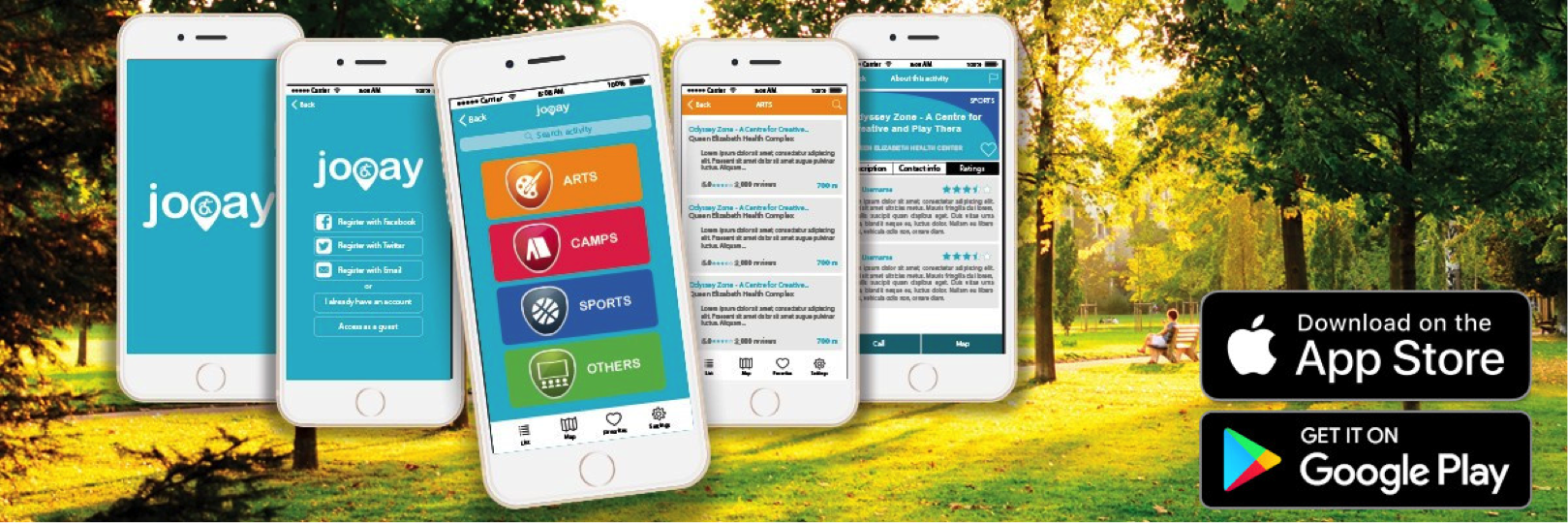
 Jooay app: Connecting children and youth with disabilities to leisure. A free app that helps children with disabilities and their families to locate leisure opportunities that are: close to where they are, accessible, suit their needs and abilities, match their preferences, can help them develop and participate in society.

Full research article:

Leave a Reply

Your email address will not be published. Required fields are marked *

Related posts

Opportunities and challenges of using mobile phone data for evaluating placed-based interventions: A green space pilot

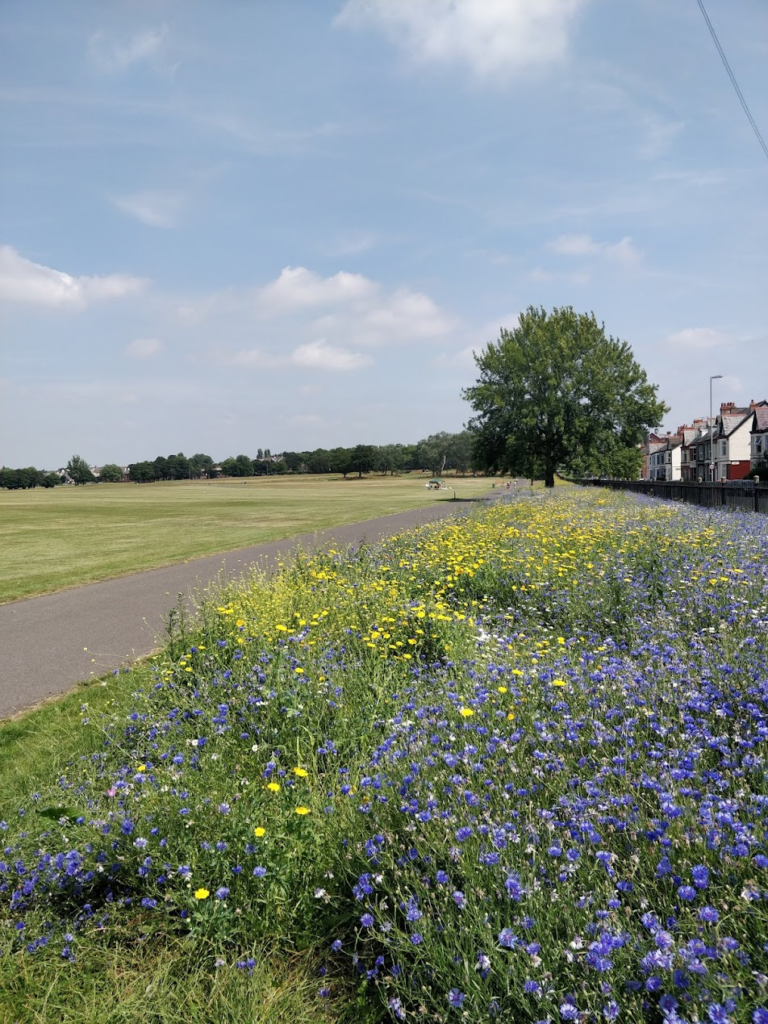
There is limited evaluation of whether green space interventions lead to more people using these spaces. This is partly due to the difficulty of collecting data on visits to green spaces. Mobile phone data may offer one solution, but are rarely made available to researchers. As such, there is less examination of whether these data are valuable. We accessed small area anonymised mobile phone GPS data for Liverpool (2021-2022). Using a case study of wildflower planting, we identified green spaces where wildflowers were planted. A synthetic control was then constructed to identify similar green spaces where planting did not take place. We then compared the number of visits post-intervention between the intervention and control green sites. Our paper also gives an empirical and methodological evaluation of the strengths and weaknesses of using mobile phone data, which can inform others on how to best use them.
Read More »

Collaboration for healthier urban development

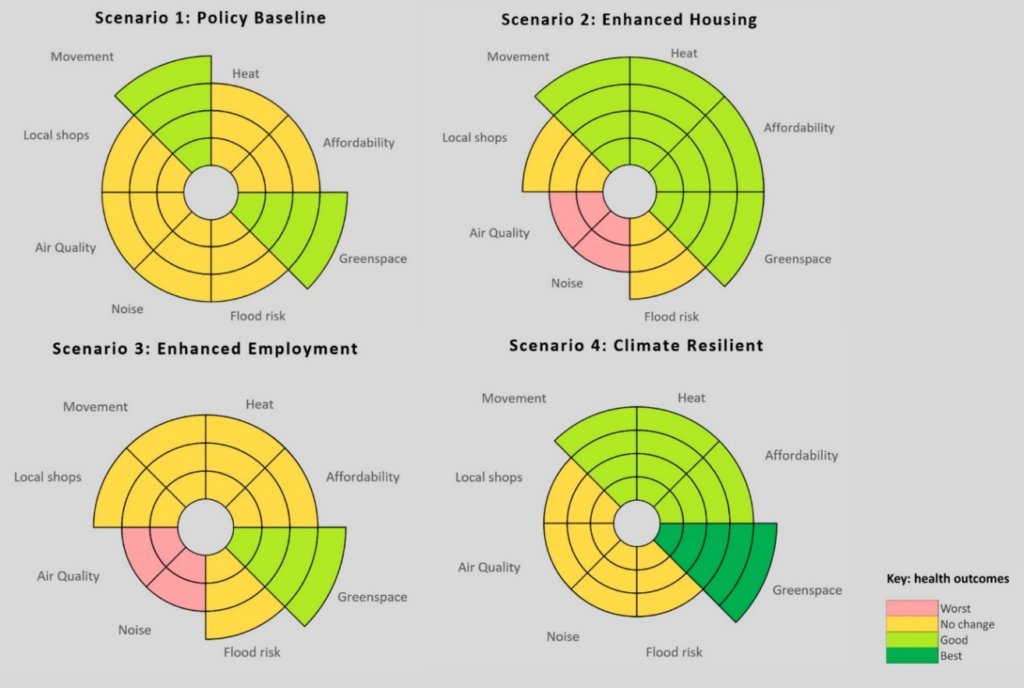
Health evidence could be used more effectively to influence healthier urban development. We learn from a researcher-practitioner collaboration, involving an embedded researcher in local government working on a regeneration project, which helped to develop a new health modelling tool for environmental change and influence decision-making.
Read More »