City Know-hows
Target audience
City council public health and transport officers
The problem
Urban health studies usually focus on the differences between neighbourhoods in the same city; however, that approach lacks any assessment of the overarching forces affecting the city as a whole.
What we did and why
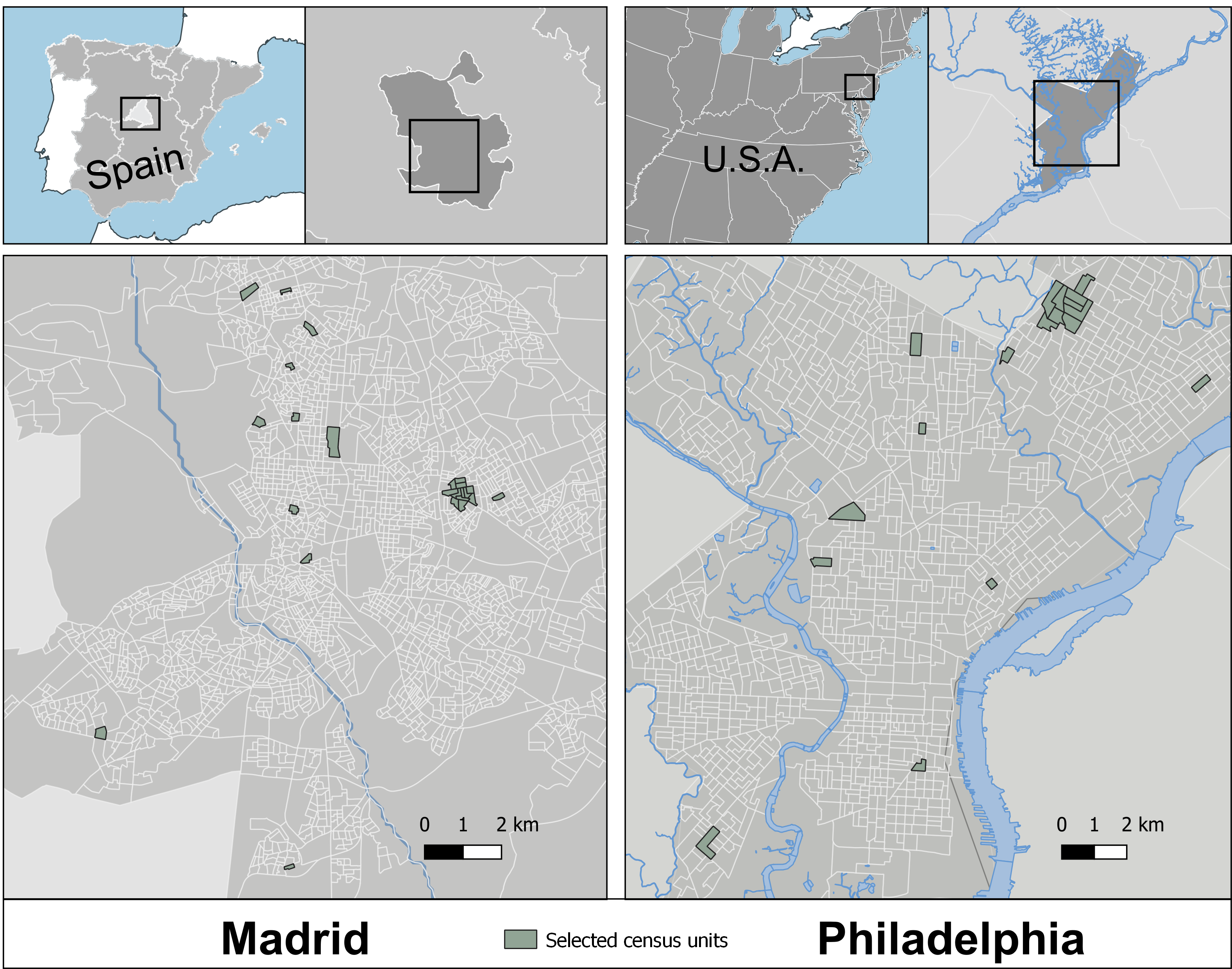
We compared differences in the walking environment between Madrid and Philadelphia. We used an audit tool called M-SPACES that measures, for each street segment;
Our study’s contribution
We found that Philadelphia’s streets had higher scores for function (physical attributes that supported walking) and safety, while Madrid streets had greater a greater proportion of streets having at least one walking destinations. These results are key to understand which elements of the built environment could be key to uncover mass influences that operate at the city level.
Impacts for city policy and practice
In order to understand which urban characteristics impact on physical activity and health, we need to understand what characterize our cities as a whole. In our study, Madrid is characterized by a higher proportion of daily walking destinations, while the streets of Philadelphia have better physical infrastructure for walking in the street.
Future studies should include attention to the potential impact of built environment characteristics at the city level.
Further information
Authors: Pedro Gullón (@pgullon), Usama Bilal (@usama_bilal), Patricia Sánchez, Julia DÃez (@JuliaDiez91), Gina S. Lovasi, and Manuel Franco (@mfranco_uah)
Full research article:
Related posts

Our study evaluates the reliability (consistency) of a local tool for measuring health determinants in public spaces, using a co-creation process with older adults living in care homes in Barcelona. It highlights the importance of inclusive urban planning and the varied perspectives of community members in enhancing urban health.

Urban environments and public spaces play a crucial role in shaping mental health, life satisfaction, and social connections. Most studies have mainly looked at cities as a general category, but we still don’t fully understand how different kinds of public spaces affect people’s mental well-being. We try to fill that gap by looking at seven types of urban spaces to find out which ones help people feel better mentally.

This study measured the effectiveness of stepping stones as an element of landscape design – to make walking a more effective form of exercise for health. The average increase in heart rate due to steppingstones was 17.22%. In conclusion, we estimate that stepping stones can significantly increase peoples metabolic and physiological parameters, and can help the wider population to achieve the recommended government and health guidelines of ‘moderate exercise’ of 150 min/week, improving population health. This new evidence can help designers to implement ‘Active Urbanism’ strategies.