City Know-hows
Target audience
Policymakers for city and town planning and development, urban planners, urban designers, public health practitioners.
The problem
The evidence suggests that there is a link between greenspace and health. However, most studies to date use a generic measure of greenspace quantity or greenness, not distinguishing between different types of greenspace or vegetation. To be able to inform policy and planning, we need to understand ‘what works best’ and for whom.
What we did and why
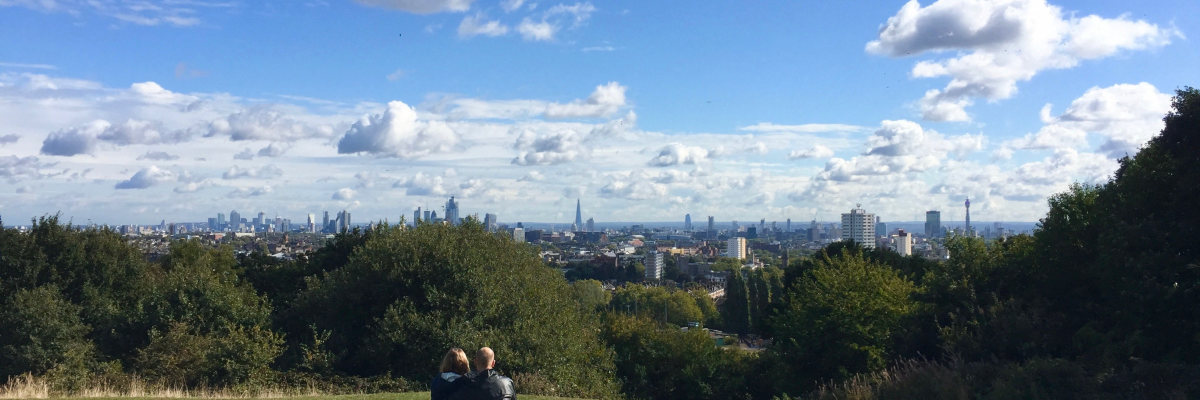
To add more nuance to our understanding, we investigated the role of different types of greenspace in the mental health and well-being of youth living in London. We distinguished between ‘any green land cover’, ‘parks & gardens’, ‘natural & semi-natural urban greenspaces’, and ‘outdoor sports facilities’, and calculated proportions in 500m around adolescents’ postcodes. We then linked these exposures to mental health and well-being outcomes in 10- to 15-year-old adolescents.
Our study’s contribution
This study adds to an evolving stream in the literature, not only assessing the role of mere quantity of (any) greenspace but distinguishing between different types of greenspace. In this study, findings were inconclusive, however, we identified interesting patterns. For example, parks & gardens and outdoor sports facilities seemed to be more ‘beneficial’ than natural & semi-natural urban greenspaces. Overall, however, no clear conclusions can be drawn, and further studies are needed to shed light on the nuances of associations.
Impacts for city policy and practice
This study is only one contribution to an evolving stream in the literature. More studies are needed to shed light on the nuances of the associations of greenspace with health in general, and with mental health in adolescents in particular. It is important to remember that there are many types of greenspace and many different demographics. Ideally, at some point, we will have a better idea of ‘what works for whom’ to make more informed policy and planning decisions
Further information
Full research article:
Types of greenspace and adolescent mental health and well-being in metropolitan London by Marie Mueller, Emily Midouhas and Eirini Flouri.
Related posts

This study presents 20 key insights into the walking experiences of people living with dementia, highlighting shared priorities like safety and subgroup-specific needs. These findings offer actionable strategies for designing dementia-friendly neighborhoods that enhance mobility, inclusion, and well-being.
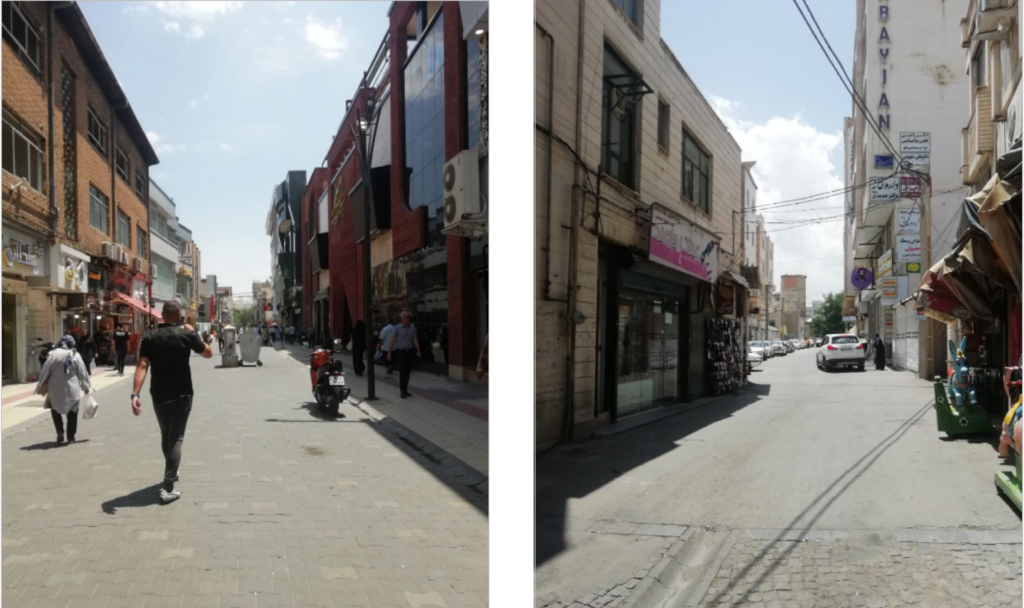
The high concentration of people and activities in cities makes them vulnerable to various stressors such as natural and man-made disasters. In the recent pandemic, the cities are the places where the transmission started. We investigated the impact of social, economic, and environmental indicators on the rate of COVID-19 disease in the neighborhoods of Urmia City, Iran. Our results show that the number of employees, gross residential density, number of elderly people, building density, commercial density and road density have a significant relationship in predicting the epidemic.

Walking around the neighborhood is good for older adults health, but the way older adults perceive their surroundings can affect this behavior. This topic has been discussed for some time in high-income countries. There, it is observed that older adults who live in neighborhoods with high residential density, diverse land use, good road connectivity, access to public transport, pleasant aesthetics, security against crime and traffic, presence of recreational facilities, infrastructure for pedestrians and cyclists, green spaces and visible parts of the sky are more likely to walk, whether for utilitarian or recreational purposes. On the other hand, in Latin American countries such as Brazil, where there is a significant increase in the older adults population and challenges related to urbanization and social inequalities, the relationship between the characteristics perceived of neighborhoods by the older adults and walking behavior is still unknown.