

City Know-hows

How to assess the resilience of urban neighbourhoods in the context of health-related challenges?

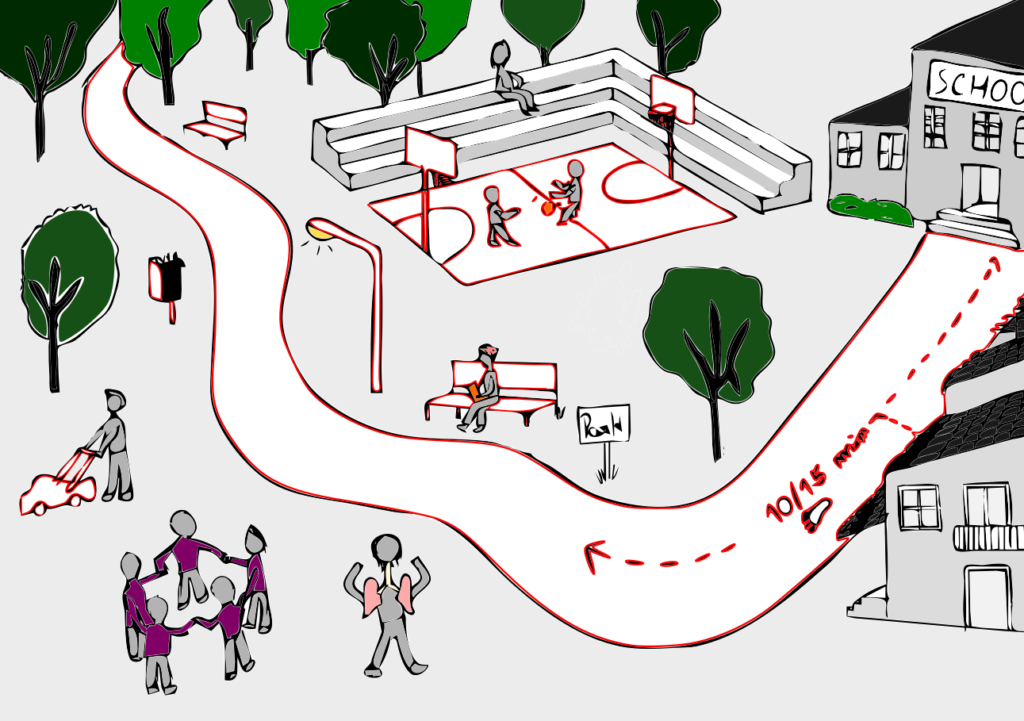
Urban neighborhood lifestyle illustration (Image by Freepik, www.freepik.com)

Cities can build stronger, healthier, and more resilient communities by tailoring resilience strategies to the unique vulnerabilities and strengths of each neighbourhood. This approach ensures resilience is integrated into both emergency response and the long-term development of urban areas.

Share

Target audience

Public health practitioners, urban planners, (international) non-profit organizations working on urban resilience and health

The problem

Urban neighbourhoods are facing growing challenges from increasing threats like pandemics and extreme weather events that affect both the physical and mental health of the population. Integrating resilience-building efforts into public health planning by leveraging existing community resources can enhance the ability of the population to withstand and recover in an effective and efficient manner. However, tools for regular assessment are needed to guide decision-making.

What we did and why

In a team of researchers and municipal Public Health practitioners, we developed an indicator and included various urban planning dimensions relevant to public health to assess the resilience of urban neighborhoods. By using openly available data and established frameworks, we mapped the results in a case study to identify areas in need of intervention.

Our study’s contribution

Our study provides empirical evidence for assessing resilience in urban neighbourhoods, with a particular focus on health-related challenges. We discuss the benefits and challenges of integrating resilience into public health, address limitations in the use of indicators, and call for further research to improve these methods and increase their effectiveness. We also show that resilience strategies should be tailored to the specific vulnerabilities and strengths of individual neighbourhoods, rather than applying a one-size-fits-all approach.

Impacts for city policy and practice

Using indicators as tools can provide evidence to guide action and to ensure that interventions are targeted and effective. Our indicator is a simple and straightforward method that can help foster collaboration across various sectors to engage all relevant stakeholders in building resilience to emerging public health challenges. Cities can use the resilience indicator to better understand which neighbourhoods are most at risk and to allocate resources efficiently by identifying their specific needs. Furthermore, our approach can be adapted for use in other cities worldwide, offering a flexible solution for different urban contexts.

Further information

Full research article:

How to assess neighbourhood resilience in the context of public health emergencies? Insights from an indicator assessment in Berlin-Neukölln, Germany by Georgianna Manafa, Tillman Schmitz, Jeffrey Butler, Alexandra Roth, Nicolai Savaskan, Blake Byron Walker and Tobia Lakes.

Related posts

Identifying the best strategies and actions for cities to build urban resilience: a review of the evidence

Cities need to be aware of their vulnerabilities to local emergencies. They also need to understand which urban planning, design and management strategies work best to build resilience. We reviewed the latest scientific evidence to identify the most effective preparedness strategies for different emergency scenarios, analysing co- and dis-benefits among them. Ideas and tools for local authorities and communities in general to build back better.

Read More »

How can we reconnect mental and urban health?

Our study found that community place-based initiatives involving the public and private sectors can provide public spaces, such as public parks and communal gardens, that are appropriate for reconnecting mental and urban health using the concept of co-benefit endorsed by the World Health Organization in 2011. We examined this concept in large projects in Seoul and Singapore to show the advantage of intersectoral collaboration for reconnecting mental and urban health initiatives by urban planning.

Read More »