


City Know-hows
Target audience
For the attention of: Social Institute of Housing and Habitat of Medellín and other social housing research and policy groups; Word Bank in Latin America and Caribbean and other low- middle-income countries; Economic Commission for Latin America and the Caribbean.
The problem
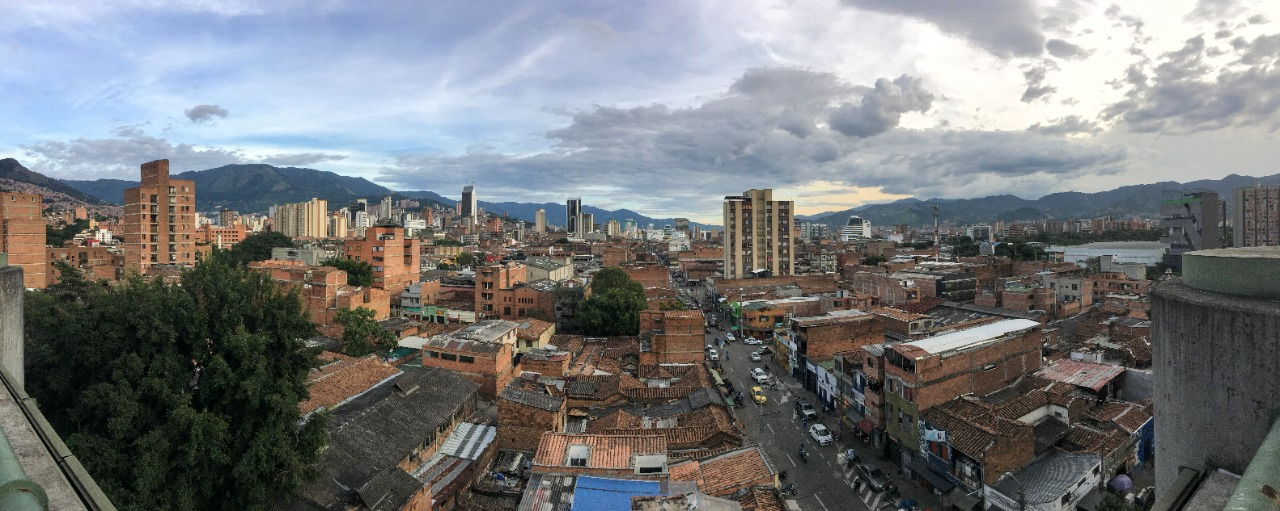
The living place is a determinant of health, in the last century the population growth has increased the housing demand, so the governments have invested in social housing for low-income dwellers, which has brought new urban configurations everywhere, including suburbanization, social polarization, and residential segregation. Therefore, it is necessary to study the life conditions related to the health of dwellers in social housing and to contribute to the planning and management of decent housing.
What we did and why
We used a novel methodology – the ‘Fuzzy Analytical Hierarchy Process’ – and criteria extracted from the 2017 Multidimensional Living Conditions Index of Medellin. The five communes with largest number of social housing projects were evaluated in terms of health, sustainability, and well-being. This made it possible to identify useful indicators to use when promoting the management of social housing for a healthy city.
Our study’s contribution
The way we used this hierarchical analysis makes it possible to regroup the complex characteristics of a problem. Through integrating experts, we could weight and evaluate the indicators of the living conditions of the inhabitants of social housing. The results can enrich territorial vision and guide decision-makers for better public policy.
Impacts for city policy and practice
Cities on the road to sustainability are those that provide better health conditions. This article shows the applicability of multi-criteria analysis for decision-making in the context of public policies that contribute to improving the most dignified living conditions for the inhabitants of Medellín.
Further information
National Affordable Housing Program Project: World Bank
Full research article:
Life conditions of residents in social housing in Medellin, Colombia: a Fuzzy Analytical Hierarchy Process by Harold Cardona-Trujillo (@hcardonat), Estefany Peña-Rojas, Eliana Martínez-Herrera and María Claudia Mejía-Gil.
Related posts

Our study identified predominant research themes, influential publications and authors, and emerging trends in pedestrian-built environment research. A database was used to analyse publications from 1975 to 2024, identifying research gaps and charting future research directions.

We conducted a citizen science project to engage with current residents in higher density residences in Northern Sydney to explore the positive and negative aspects of their lived experiences on their health and wellbeing. Together, we identified the elements that residents of these communities value as well as those with potential negative impacts that could be mitigated through good planning and design.

The high risk of death and disability from being struck by a car is unevenly distributed geographically and socially. Our analytics reveal a troubling pattern in that people from Black and Latino neighbourhoods facean especially high risk of crashes, both near and far from home.
Vision Zero leaders in the hundreds of participating cities across the world in planning departments, nonprofits, and community groups need to look at our approach.