City Know-hows
How do children experience and perceive the public space in their own neighborhood? And what are the environmental factors that encourage and hinder children from playing outside? In this article, Dutch children explain what they see as a play-friendly city.
Share
Target audience
Urban planners, health professionals and other municipal officials involved in the design, programming and management of public spaces.
The problem
Children are playing outside less and less, which can have a negative impact on their personal development and health. Many municipalities are aware of the benefits of playing outside, but do not know how to make their city more play-friendly. This is partly due to a lack of knowledge about how children currently use and value public outdoor space as a place to play.
What we did and why
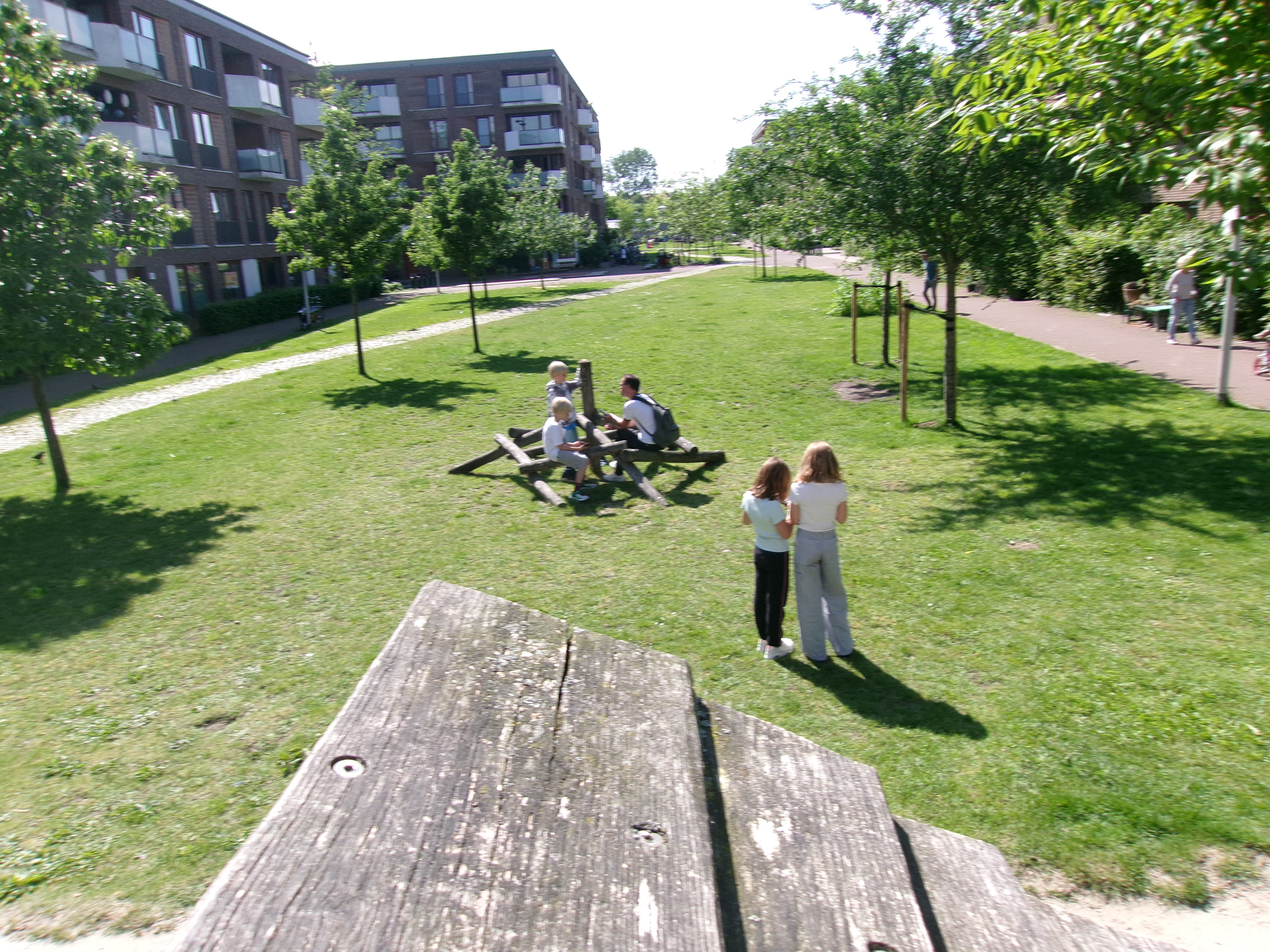
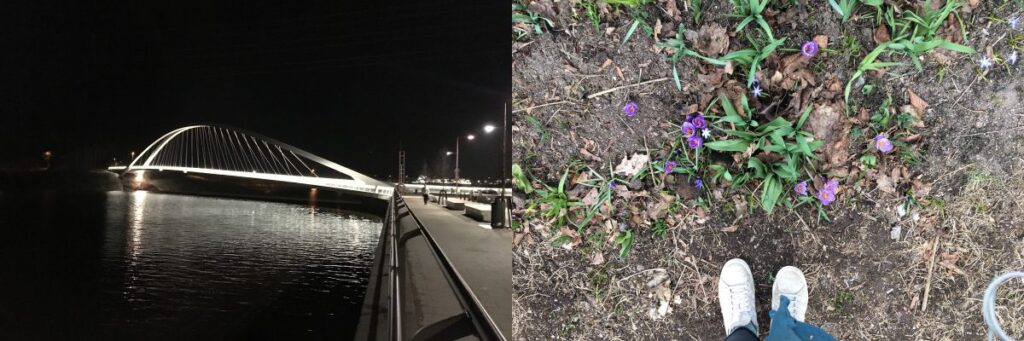
In order to gain insight into children’s perspective of the outdoor space as a place to play, we appointed 90 children as junior researchers. They took photos of their (less) favorite play spaces and accompanied us on walks through their neighborhood. In this way, children could tell and show what they consider important for realizing a play-friendly neighborhood.
Our study’s contribution
Our research shows that – despite their criticism – children make extensive use of the play elements offered to them in playgrounds. They also employ creativity to reinterpret the public space to their liking by transforming general objects into play attributes. Important factors that influence the way children value the public space are: variation of play spaces, challenging play elements, materials, hygiene, presence of other children, bullying, tolerance of adults, and social safety.
Impacts for city policy and practice
A lot of the children are bored or displeased with the limited and uniform play possibilities. Thus, they seek entertainment that the current physical environment cannot always offer them. On the one hand, there is a need for more varied play areas with sufficient challenging play elements (higher, faster) and on the other hand, there is a need for more unplanned, residual spaces or manipulable places that children can fill in according to their own imagination.
Further information
Full research article:
[OPEN ACCESS] Playing outdoors in Dutch cities: how children perceive and value the public space as a place to play by Gerben Helleman, Sanne I. de Vries & Machiel van Dorst
Related posts

Our ‘adaptive bubble strategy’ illustrates how older adults protect themselves from virus transmission and maintain healthy living activities and psychological wellbeing with the support of the built environment during COVID-19.

On this webpage, follow the Bötzowviertel case, a neighborhood streetscape analysis with pedestrian solutions.

Caste and environment intersect to shape urban health inequities in Indian cities. Based on fieldwork in Aligarh, this study uncovers how lower-caste households are disproportionately exposed to environmental hazards and denied equitable healthcare. I conducted a mixed-methods study of 1,650 households in Aligarh to examine the relationship between caste, environmental conditions, and health. Using correlation analysis and spatial mapping, I identified patterns of environmental risk and unequal access to healthcare services. The findings urge inclusive urban health planning that prioritizes caste-aware environmental justice.