City Know-hows
Discover how cities can build resilience against future health crises. Our study synthesises key lessons from the COVID-19 pandemic to create healthier, more sustainable urban environments.
Share
Target audience
Urban planners and city officials; Public health professionals; Community leaders and activists
The problem
Cities worldwide face increasing challenges from health crises, social inequalities, and climate change. The COVID-19 pandemic exposed vulnerabilities in urban systems, highlighting the need for resilient infrastructure, equitable access to resources, and sustainable urban planning. Despite efforts to address these issues, there remains a gap in synthesizing lessons learned from the pandemic to create healthier and more resilient cities capable of mitigating future crises.
What we did and why
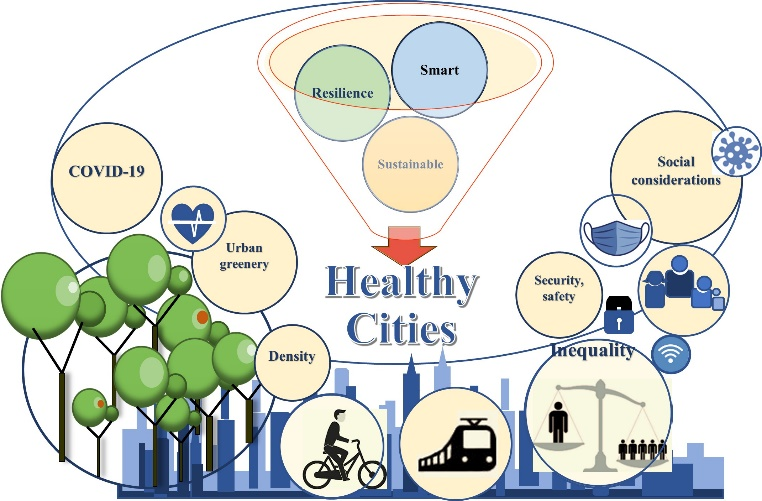
We systematically reviewed 50 studies analyzing city-level responses to the COVID-19 pandemic. Using thematic synthesis, we identified key urban characteristics—such as green spaces, population density, inequality, and smart city technologies—that contribute to urban resilience. Our aim was to provide a comprehensive framework for creating healthier, more resilient cities by synthesizing lessons learned from the pandemic. This approach bridges gaps in fragmented research and aligns urban planning with sustainability and equity goals.
Our study’s contribution
Our study enhances understanding of urban resilience by synthesizing diverse themes and systemic approaches for future pandemics. We present a unified framework intersecting sustainability, intelligence, equity, and nature, moving beyond fragmented studies. Strategically aligning urban planning with SDGs, we emphasize environmental justice and nature-based solutions. Highlighting Global North/South differences, we tailor recommendations and link “COVID-19” with “urban models,” stressing adaptation. “15-minute city” and “walking city” concepts connect to resilience, enriching insights for urban adaptation and sustainability.
Impacts for city policy and practice
To foster resilient cities, we propose prioritizing green infrastructure, especially in underserved areas, to boost public health. Crucially, policies must reduce socioeconomic disparities and improve access to essential services. We advocate for integrating sustainability goals into urban planning and leveraging smart city solutions for better management. Finally, tailoring strategies to the unique needs of cities in both the Global North and South is essential.
Further information
Full research article:
Healthy and resilient cities for future pandemics: a systematic review by Shima Taheri, Amirhosein Shabani, Hannah Badland, Ali Cheshmehzangi & Ayyoob Sharifi.
Related posts

Our research provides new evidence for the importance of third places in supporting retirees’ well-being and social engagement. We found that these spaces can play a significant role in fostering a sense of belonging, improving mental and physical health, and facilitating social interactions.

We explored the influence of third places on walking habits across life stages. Our study demonstrates the unique goal structures for students, workers, and retirees, identifying key patterns shaping walking behavior in cities. Integrating these findings into urban planning can revolutionize cityscapes and promote healthier, more active communities.

Our study evaluates the reliability (consistency) of a local tool for measuring health determinants in public spaces, using a co-creation process with older adults living in care homes in Barcelona. It highlights the importance of inclusive urban planning and the varied perspectives of community members in enhancing urban health.