

City Know-hows

An exploration on the contribution of Third Places to fostering healthy walking habits in cities

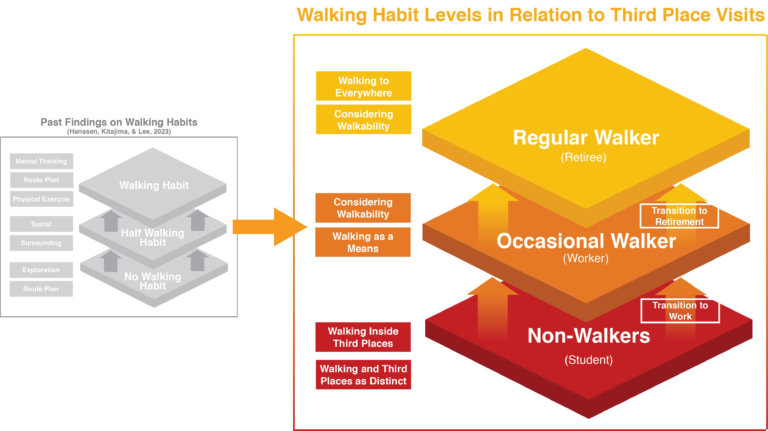
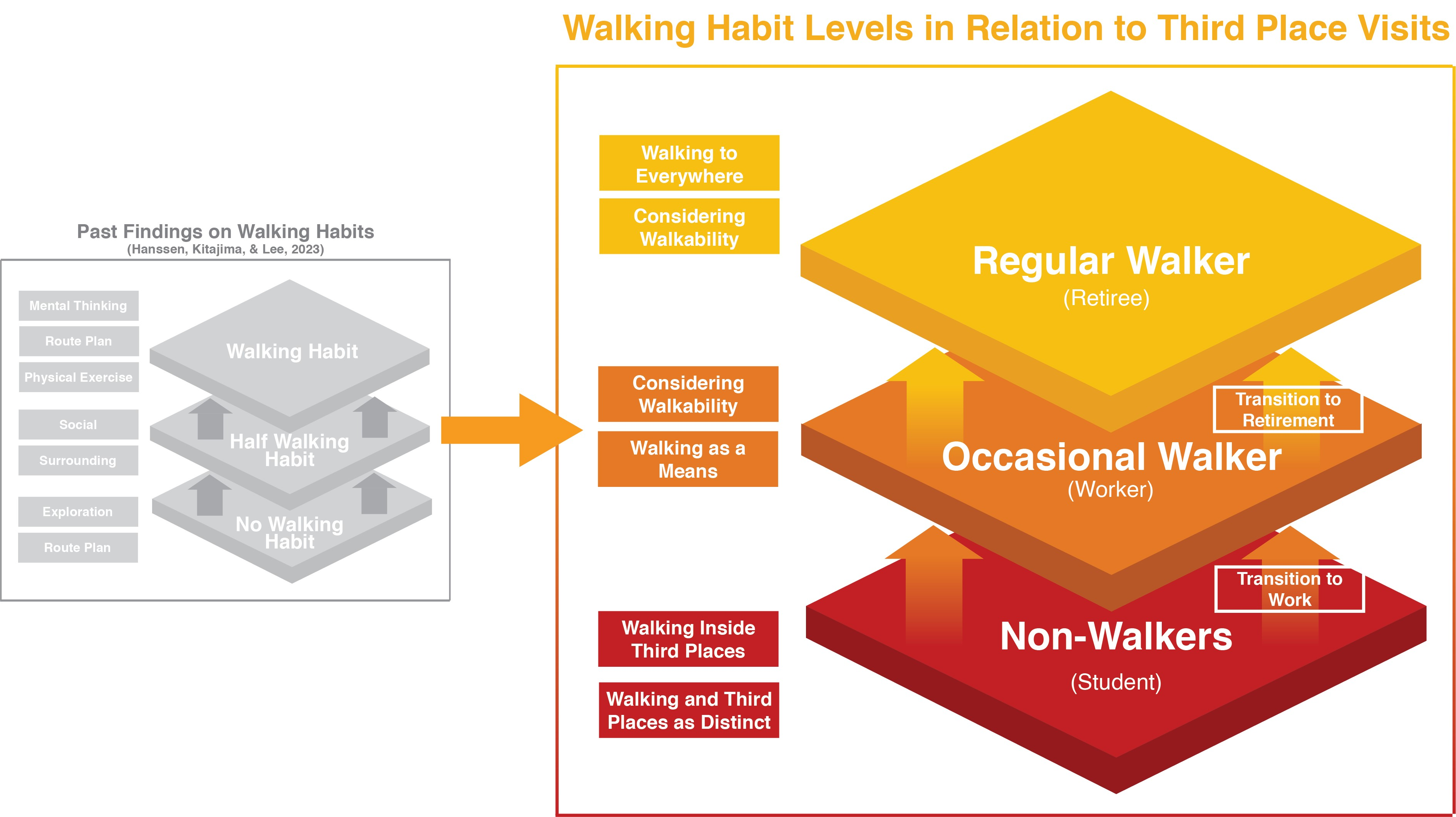
The extension of past findings about walking habits to third place visitation.

We explored the influence of third places on walking habits across life stages. Our study demonstrates the unique goal structures for students, workers, and retirees, identifying key patterns shaping walking behavior in cities. Integrating these findings into urban planning can revolutionize cityscapes and promote healthier, more active communities.

Share

Target audience

This research is particularly relevant for urban planners, city officials, and community health organizations worldwide.

The problem

Third places play a crucial role in urban environments, acting as social spaces distinct from the home (first place) and workplace (second place), contributing to our social and physical health. However, we still do not know how they could contribute to the formation of healthy walking habits.

What we did and why

Therefore, we explore the role of third places for students, workers, and retirees. Building upon past studies that utilized Cognitive Chrono-Ethnography, a mixed-method approach examining people’s in-situ behaviour and decision-making processes, in-depth interviews questioned the role of third-place activities in the process of forming walking habits.

Our study’s contribution

Our findings revealed that students, workers, and retirees displayed distinct levels and patterns of walking habits. Moreover, we identified three goal structures, with either walking, third-place visits, or both together forming the primary goal.

Impacts for city policy and practice

Our study underscores key considerations for city policy and practice. City officers responsible for urban development, urban leaders shaping policy, and health-focused organizations seeking innovative approaches to community well-being will find valuable insights in understanding how third places impact walking habits across diverse populations. Three key considerations:

  • Customised Planning: Tailoring urban development to accommodate the unique walking habits of students, workers, and retirees.
  • Strategic Integration: Incorporating third places thoughtfully into urban landscapes to enhance walking experiences.
  • Goal-Oriented Initiatives: Developing city-wide programs aligned with identified goal structures to promote walking and third-place visits.

Implementing these insights can foster healthier, more active communities and guide future urban planning initiatives.

Further information

Full research article:

Related posts

An examination of urban green spaces usage behaviours and mental health benefits

The study by collecting data from a sample in a developing and rapidly urbanizing country in South Asia highlighted the importance of green space interventions to promote urban dwellers’ contact with urban green spaces and physical activity levels. Moreover, it highlighted differences in urban green space usage behaviours based on differences in sociodemographic characteristics, suggesting the necessity to target certain sub-population groups more than others.
Read More »