Transforming the urban public realm to children’s play network in a tower neighbourhood in Toronto

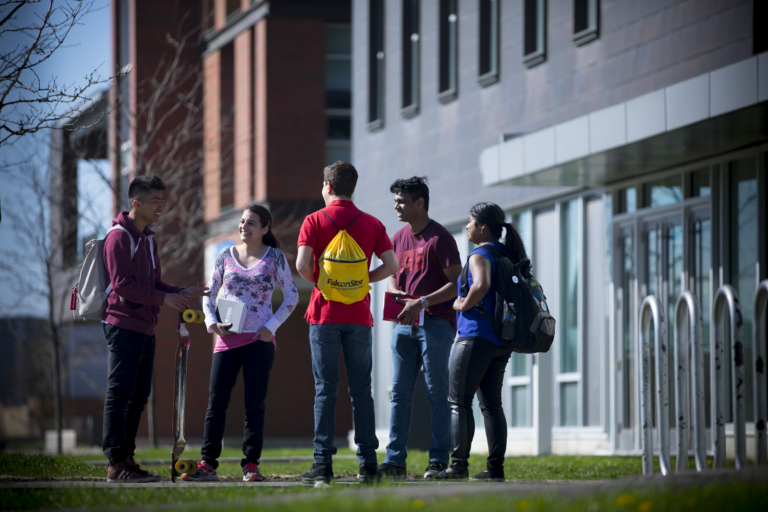
Our findings revealed that despite the limited play destinations compared to the local child population, children’s outdoor play experiences are predominantly positive. This positive outlook is attributed to their sense of safety within familiar spaces and strong social ties with neighbours beyond their immediate families. Key contributing factors include the proximity of schools and play areas to residential locations, the strategic placement of playgrounds along home-to-school routes, and the hierarchical relationship among neighbourhood open spaces.

Read More »

Engagement matters more than distance: Rethinking neighbourhood parks for active childhoods, Bhopal, India

Children’s physical activity and movement increases when they visit nearby parks often and stay longer. However, simply building more parks is not enough. We show how practical design, safety and inclusive programming can turn everyday parks into places where children want to play. Most importantly, measure success by visits and time spent, and not by counting parks and playgrounds!

Read More »

Compact city, compact playgrounds: How Oslo’s population density and daycare size influence children’s outdoor spaces 

In this study, I measured the size of outdoor playgrounds at all daycare centers in Oslo and looked at how these sizes relate to how densely populated the districts are and how many children are enrolled at each center. Since the 1980s, Oslo has been getting busier and more built-up due to a compact city policy, a trend that is likely to continue as more people move to the city in the coming years. This makes it interesting to investigate how living in a denser city and having bigger daycare centers might affect the space children have to play outside in their daycare.

Read More »

Factors influencing playspace quality in Melbourne’s greenfield developments, Australia

We recognised that while playspaces are crucial for child development and community building, their quality in Melbourne’s greenfield developments is highly inconsistent. Playspaces often suffer from minimal design guidance, maintenance pressures, risk aversion, and a lack of genuine community engagement. As a result, children and families miss out on vibrant, inclusive, and challenging play environments. We saw an urgent need to understand how governance structures influence playspace design and delivery in these rapidly growing communities.

Read More »

The first overview of a now deleted federal program planning for climate change and public health: The Climate Ready State and Cities Initiative

Anthropogenic climate change is bringing with it a whole host of deleterious public health impacts. People will die and suffer disproportionately following inequitable societal structures. With every passing year time to mitigate and adapt to anthropogenic climate change slips away. The time is now to deliberately plan for the health impacts that are now ‘baked in’ for centuries to come.

Read More »