


City Know-hows
How does everyday mobility shape local social cohesion in cities? Our study shows that walking and cycling in the neighborhood create spontaneous, low-threshold encounters – and that these everyday interactions are vital for building healthier, more connected urban communities.
Share
Target audience
Urban planners, public health officials, local policymakers, and mobility advocates – especially those working on active travel and healthy city initiatives. The findings are also relevant for international networks focused on inclusive and sustainable urban development.
The problem
I was interested in understanding how everyday mobility affects local social cohesion in cities. This impact is often overlooked in both mobility and public health research. While much attention is given to physical health benefits of walking or cycling, the social dimensions are rarely explored. I wanted to know: How do people’s daily movements through their neighborhoods shape their experience of local and social familiarity – especially in times of increasing social fragmentation?
What we did and why
I conducted episodic interviews with 19 residents in Cologne, Germany, to explore how their everyday mobility behavior relates to experiences of local social cohesion. I used reflexive thematic analysis to identify recurring themes in how people perceive and navigate their urban environments. I chose this approach to better understand the subtle, often unnoticed ways that walking and cycling in transit spaces can foster spontaneous social interactions and local connections.
Our study’s contribution
I explored how everyday urban mobility contributes to local social cohesion – an often underestimated aspect of urban health. I found that:
• Walking and cycling create regular, unplanned, and low-effort opportunities for social interaction.
• Four themes link mobility behavior to social cohesion: 1) Social contact preferences, (2) Immediacy of experiences, (3) Target of attention (4) Orientation of locomotion
• People who use different modes of transportation differ on these themes on a social level.
Impacts for city policy and practice
My findings highlight the importance of everyday mobility in fostering local social cohesion, with implications for city policy and practice:
• Promote active mobility (walking or cycling) as a means to enhance social and local interaction, beyond its physical health benefits.
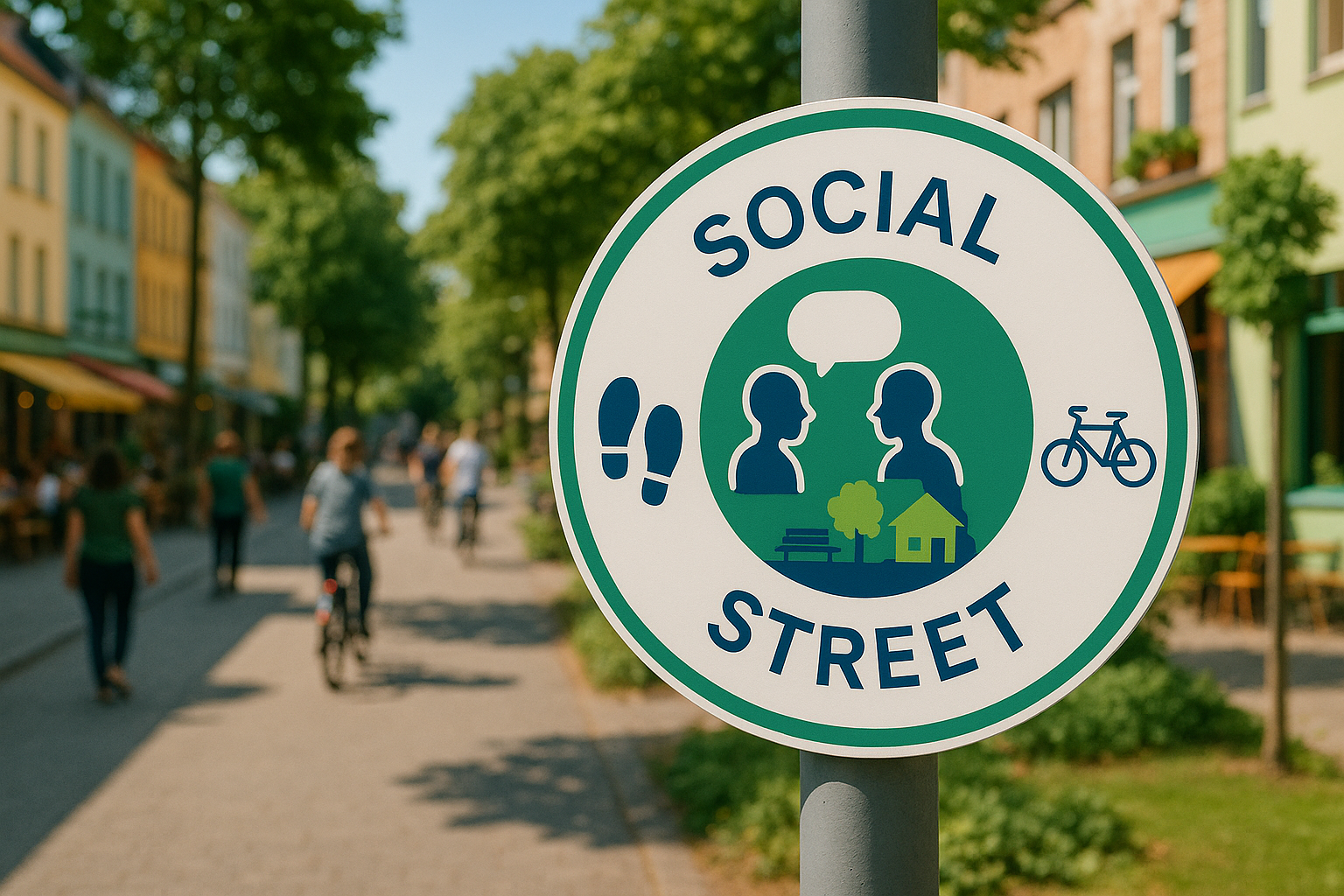
• Conceptualize “social streets” in neighborhoods that prioritize spontaneous encounters and encourage local social cohesion.
• Incorporate local social cohesion into urban planning policies, ensuring that transit spaces facilitate connection and inclusivity.
Further information
Full research article:
[OPEN ACCESS] Incidental, everyday social and spatial experiences in urban mobility as a driver of local social cohesion: towards social streets by Harald Schuster, Gesa Solveig Duden, Jolanda van der Noll & Anette Rohmann
Related posts

Our study sheds light on the evolving dynamics of the Greater Cairo Region, adding depth to the understanding of whether gated communities act as true remedies or reflections of concrete houses. By incorporating a model based on critical factors for mental health, we offer insights into the nuanced dimensions of well-being in the context of urban development. This research contributes to a more comprehensive understanding of the complex interplay between city structure and residents’ overall well-being.
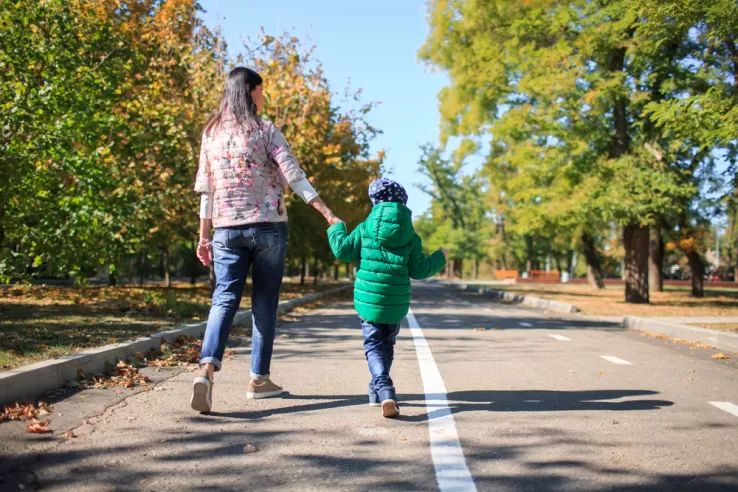
Access to green spaces and a walkable neighborhood are essential for maintaining good health, particularly for vulnerable populations. Thus, it is imperative to ensure that individuals have the opportunity to reside in neighborhoods that are not only walkable, but also equipped with adequate green spaces conveniently located within a reasonable walking distance.
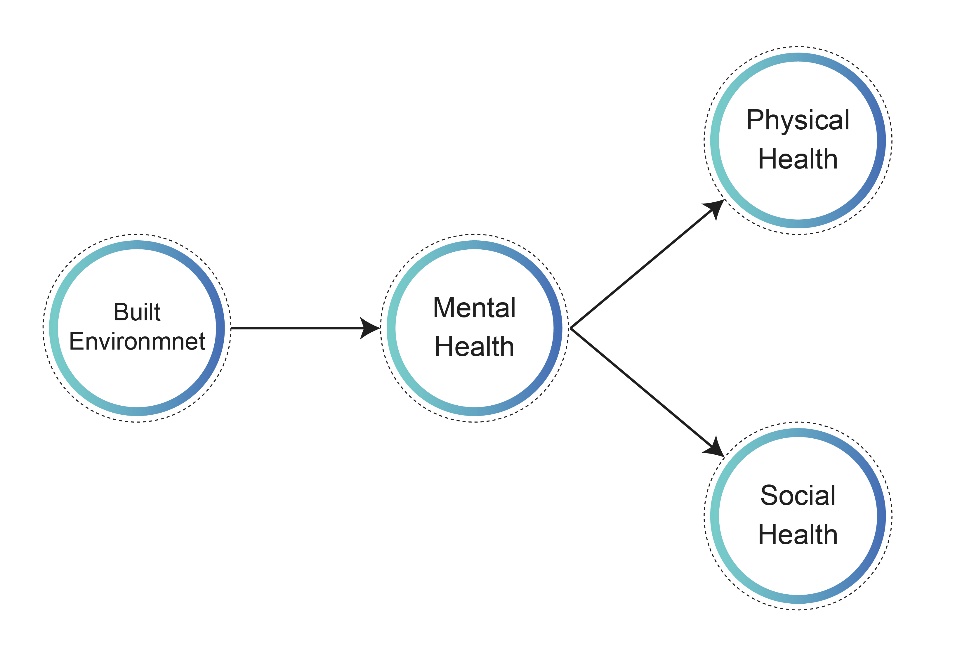
The expected rise of working from home after the COVID-19 pandemic necessitates a deeper understanding of the cause and effect of home environment on physical, mental, and social health. Existing research primarily focuses on physical and psychological health, with less attention given to social health. Incorporating social health is emphasized by various researchers during the pandemic. Moreover, the interconnected nature of health components suggests the possibility of mediation, requiring a model selection to represent the working from home situation.