

City Know-hows
As cities age, are we ready to meet the needs of aging residents? This review shows how rethinking urban planning, green spaces, and better accessibility can make cities healthier and more inclusive for older adults. It highlights what’s working, what’s missing, and what cities can do better.
Share
Target audience
Urban planners and municipal policymakers who are responsible for inclusive city design; Public health and ageing services officials who are working on age-friendly initiatives; Non-profit organisations advocating for older adults in urban settings.
The problem
As we progress and cities grow, many cities are not meeting the needs of the aging population. I see a gap between urban development and the lived experiences of older adults. Very often, aging is treated as an afterthought in planning. I wanted to understand what has been done in this area so far, what is missing, and how we can create sensible, more accommodating environments for older people living in and around us.
What we did and why
I conducted a narrative review of global research to explore how cities respond to the challenges and opportunities of aging populations. I wanted to go beyond isolated examples and look at the bigger picture, the emerging themes, where the gaps are, and how planning, policy, and community design can better support older adults in urban environments.
Our study’s contribution
This study brings together key global insights on urban aging in one place. It shows how planning, green spaces, accessibility, and social inclusion all shape the lives of older adults in cities. It also highlights where current efforts fall short and offers clear directions for more inclusive, age-friendly urban development.
Impacts for city policy and practice
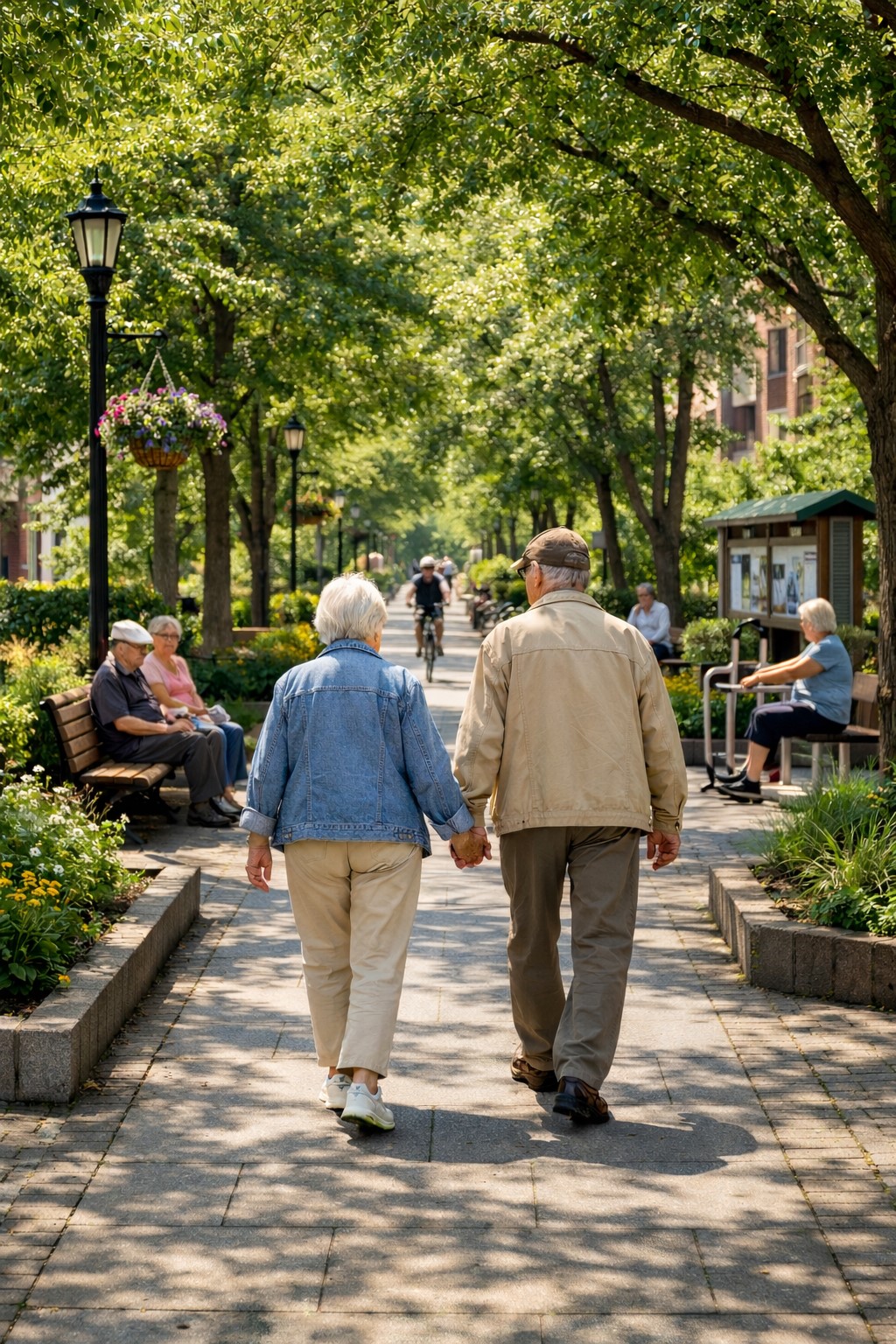
City leaders must make aging a core part of urban planning, not an add-on. This means designing walkable neighborhoods, improving access to services, and involving older adults in decision-making should be necessary. Policies should focus on equity, especially for those in under-resourced areas. By investing in age-friendly infrastructure and inclusive design, cities can improve the quality of life for older residents while creating healthier, more liveable spaces for everyone.
Links to further information, networks, and resources for age-friendly cities:
WHO Global Network for Age-friendly Cities and Communities: A global platform with toolkits, case studies, and evidence-based guidance to help cities become more age-inclusive.
AGE Platform Europe: A network of organisations promoting older people’s rights in Europe—useful for policy briefs, advocacy tools, and research updates.
Centre for Aging Better (UK): Features accessible reports, practice guides, and evidence on age-friendly homes, work, and neighbourhoods.
ICLEI – Local Governments for Sustainability: See the Ageing & Inclusion Projects with case studies and technical support for cities working on inclusive urban sustainability initiatives, including for ageing populations.
Further information
Full research article:
Exploring urban ageing: a narrative review of emerging insights by Munmun Ghosh
Related posts


This study contributes to understanding the intersection of regenerative planning principles and legal frameworks. It identifies the extent to which Turkey’s urban planning legislation aligns with regenerative principles, highlights key gaps in the current system that restricts the integration of regenerative approaches and provides insights that can inform urban planning practices and legislative reforms globally.

Our study focuses on active and independent mobility of children in a car-free settlement which can be promising for developing policies for a child-friendly urban future and mobility justice for children. The outputs of this study can bridge the gap between vehicle-oriented and non-vehicle-oriented settlements and enable the transfer of good experiences.