

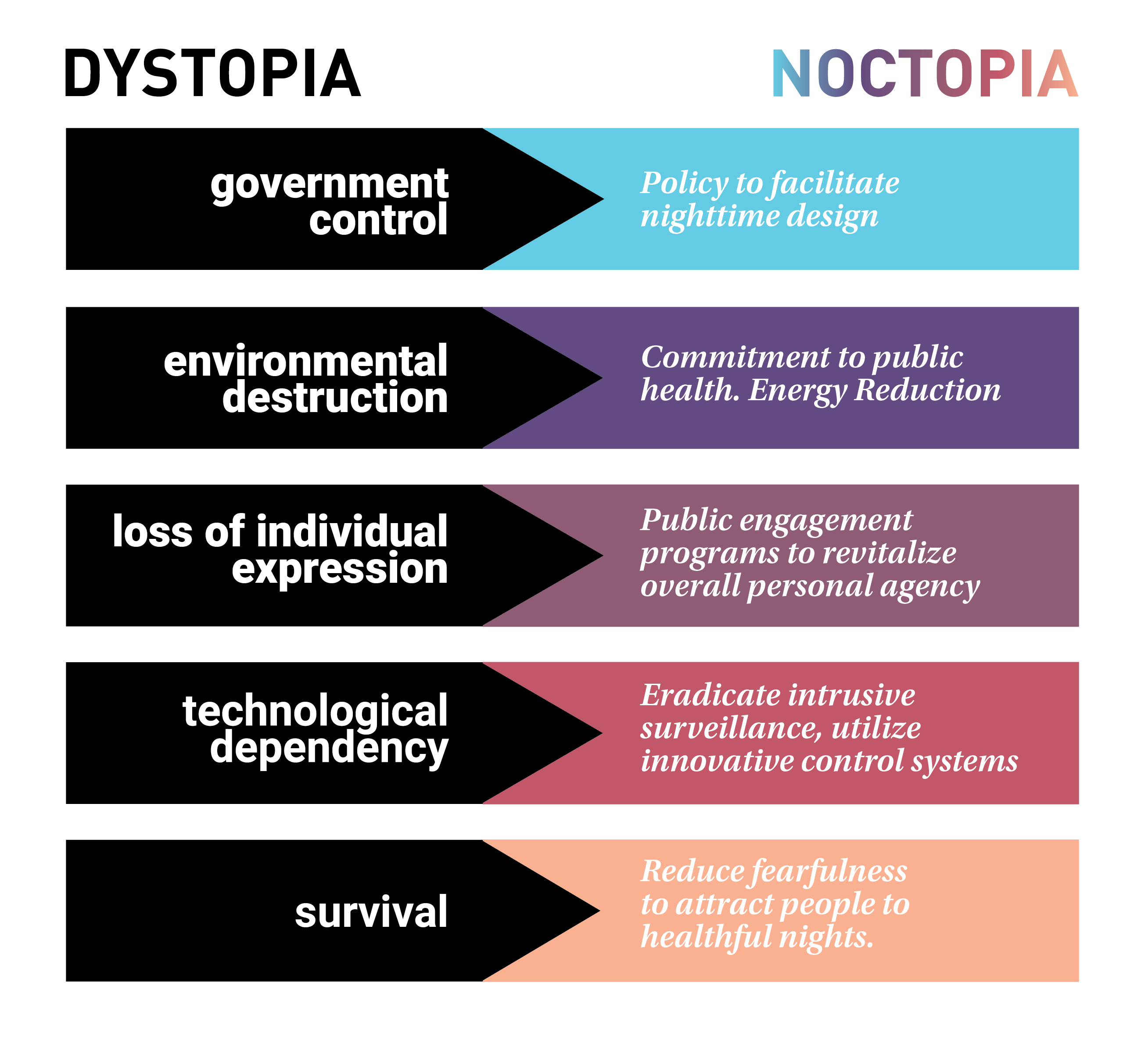
Dystopian frameworks portend the future. With climatic upheavals increasing, dystopia is now. Because of escalating urban heat and heat-related illness and death, this essay speculates a future that switches daily activities into the coolness of night: Noctopia.

Share

Target audience

Urban Planners, Civic leaders, Health and city policy makers

The problem

As long as the earth encircles the sun and urban heat escalates, nighttime matters as a space and time for respite.
However, our nights are undesigned and neglected. And are not fit for “daily” consumption.
This manifesto posits a kind of revolutionary adaptation–a switch up of night for day. Here, we contemplate: Is it possible to transform negative impressions of darkness by designing optimistic spaces after sunset?

What we did and why

I am a hybrid professional urban lighting/nighttime designer. Public space after dark has been my site for more than a decade. My research group and I have identified cases where work and play are shifting to the dark hours. I strongly believe that that shift will continue. My point to climate change activists and city-makers is that we need, now, to embrace nighttime design.

Our study’s contribution

This study adds cases where work and play scenarios have moved to night – with in humane, undesigned environments such as glary lighting and lack of services.
A utopian/Noctopian vision is posited with community-engaged design combined with technologically enabled, adaptive lighting. For example, in Noctopia, the library is open at midnight; luminous benches provide safe respite. Late-night closings thrive in midweek, especially along the transit corridor. A night market is open around the corner. Posters are up for a midnight concert at the local park, with provisions for audio headsets to coexist with the residential district.

Impacts for city policy and practice

Nighttime design is a new discipline or approach that is gaining traction. However, liveable nighttime environments are unevenly considered throughout the world’s cities. Lighting, urban design, and tech areas are implicated. And therefore, a multiplicity of city agencies are involved with holistic nighttime design…  …unbeknownst to them! Example city departments include:
• Public works
• Urban planning and design
• Cultural agencies
• Building departments
• Climate change or heat specialities
• Public health
• And rarely, but growing, nightlife divisions

Further information

Full research article:

Night for Day by 
Leni Schwendinger

Related posts

Opportunities and challenges of using mobile phone data for evaluating placed-based interventions: A green space pilot

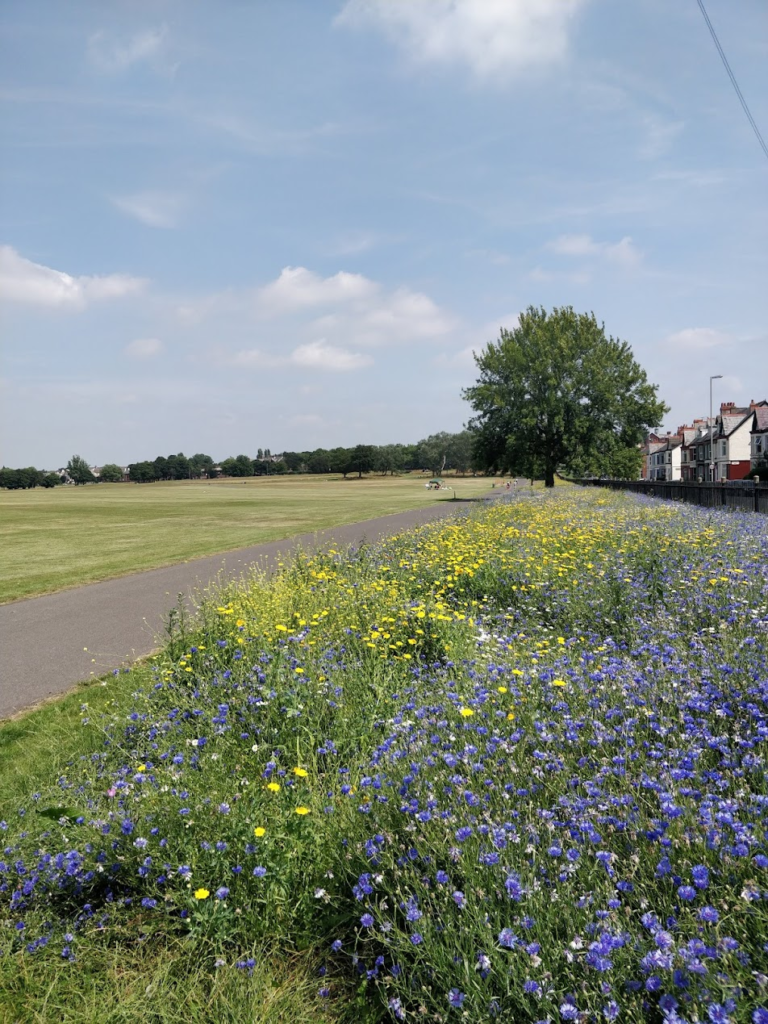
There is limited evaluation of whether green space interventions lead to more people using these spaces. This is partly due to the difficulty of collecting data on visits to green spaces. Mobile phone data may offer one solution, but are rarely made available to researchers. As such, there is less examination of whether these data are valuable. We accessed small area anonymised mobile phone GPS data for Liverpool (2021-2022). Using a case study of wildflower planting, we identified green spaces where wildflowers were planted. A synthetic control was then constructed to identify similar green spaces where planting did not take place. We then compared the number of visits post-intervention between the intervention and control green sites. Our paper also gives an empirical and methodological evaluation of the strengths and weaknesses of using mobile phone data, which can inform others on how to best use them.
Read More »