Restorative urban wildness for people, biodiversity and urban ecosystems health

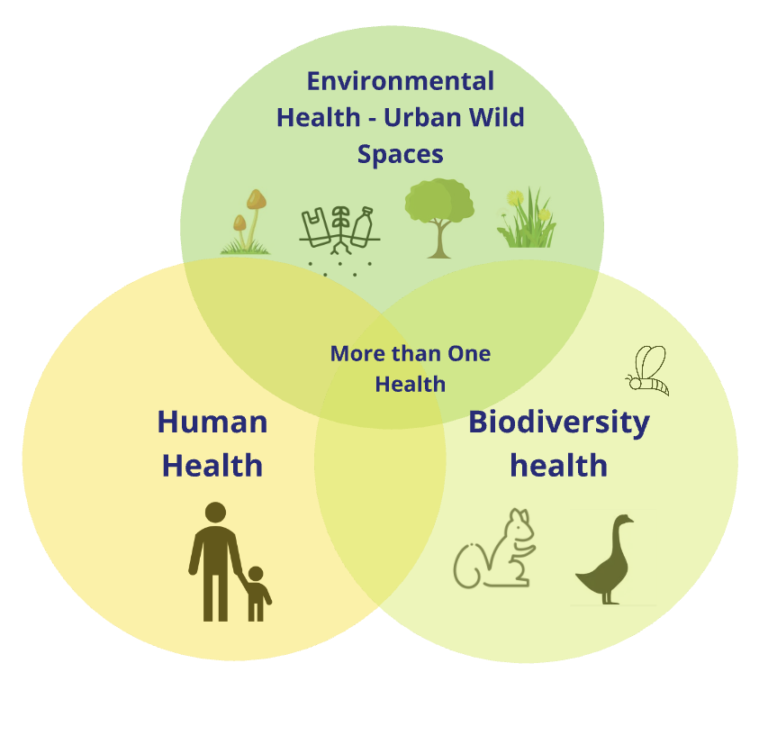
What if urban health went beyond human wellness? Through our more-than-One Health conceptualization, we explored urban wild spaces as places where the health and flourishing of humans, animals, and ecosystems intertwine. This approach provides new insights into designing cities that are not just green, wild, but interconnected as restorative habitats for human and non-human health.

Read More »

Understanding gardening for wildlife in London’s private residential gardens

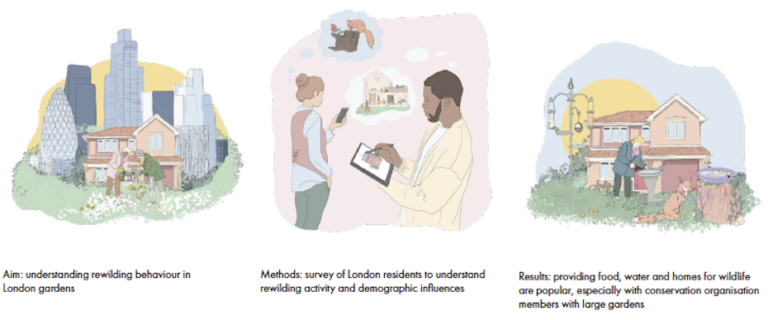
We wanted to understand the types of gardening for wildlife taking place in London’s private gardens and the influence of demographic factors on the likelihood to garden for wildlife. We sent out a digital questionnaire to ask Londoners about their gardening for wildlife practices and their age, gender, ethnicity, religious beliefs, occupation, household income, accommodation type, home ownership status, garden type, shared garden or not, dependents, and conservation-organisation membership status.

Read More »

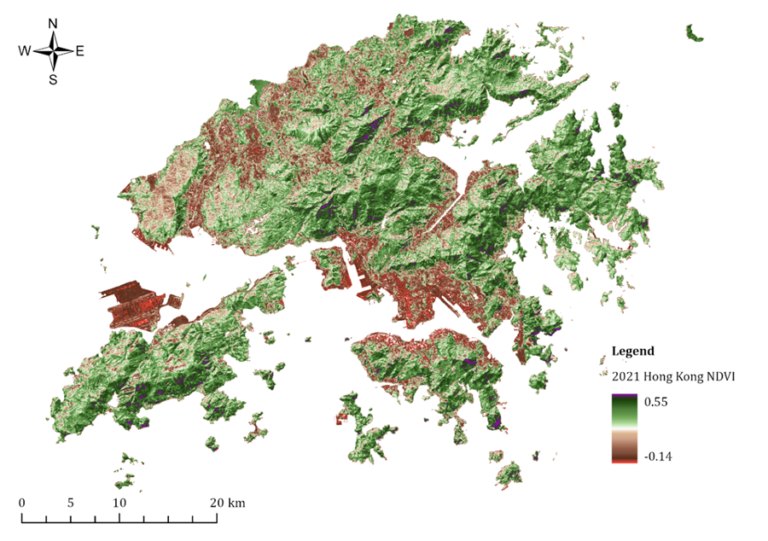
The role of greenness during the COVID-19 pandemic

Residing in a neighbourhood with higher greenness within 400 metres was associated with higher residential greenspace visitations during the COVID-19 pandemic. Policies towards scaling up and optimising residential greenness may constitute important interventions for enhancing population-level resilience during public health emergencies.

Read More »

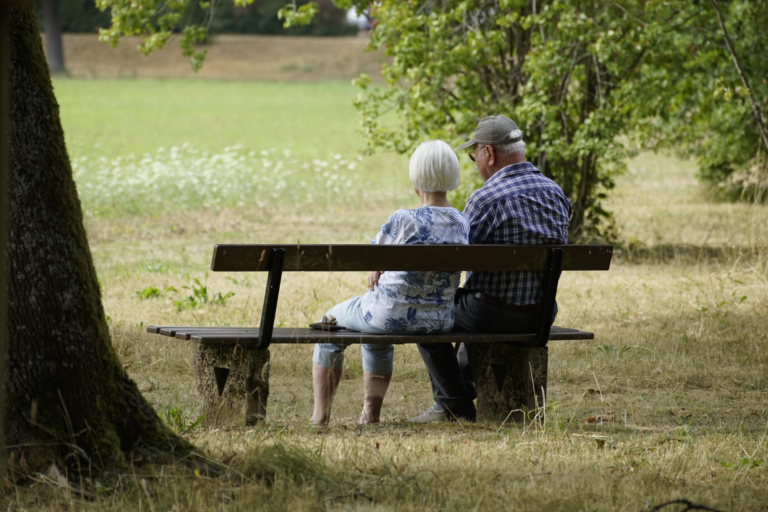
Natural spaces and depression in urban older adults: Exploring types, accessibility, and mediators

Increasing the availability of urban green spaces, even small pocket green spaces, should be considered a promising intervention for reducing depression among older individuals. Beyond 100m, urban green space protection diminishes. WHO recommends that the population have a green space within a 300m radius. However, for older people, this threshold may be too distant.
However, not all green spaces confer mental health benefits; therefore, researchers and professionals should consider the differential effects of different categories of greenery.

Read More »

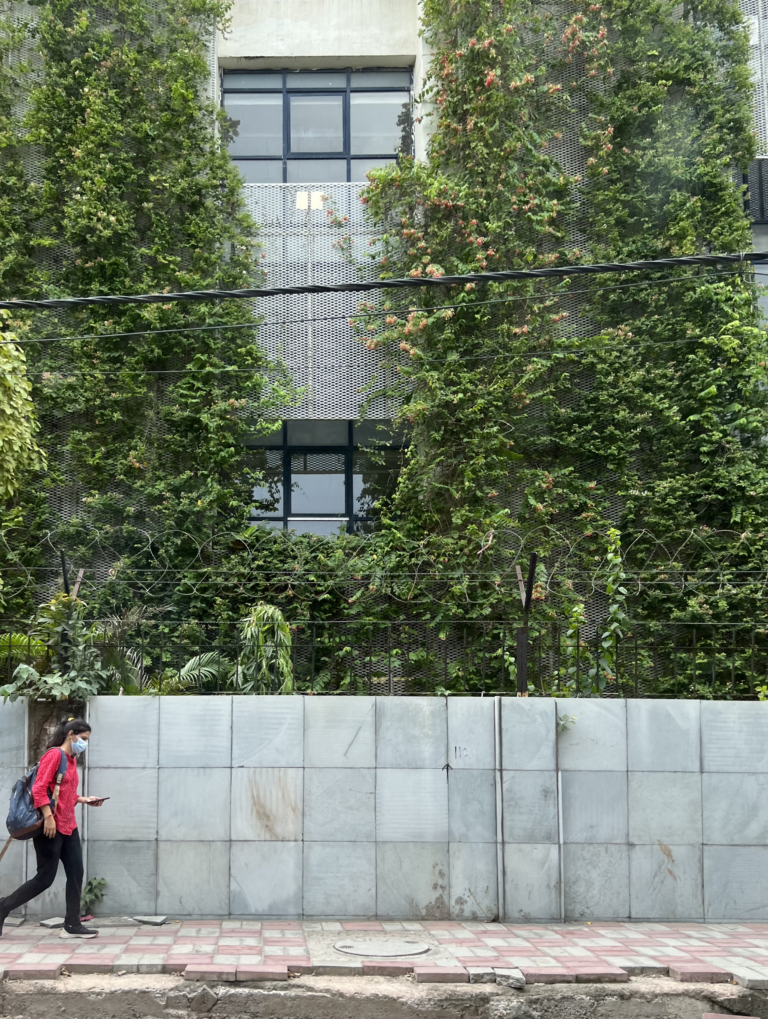
Perceptions of design professionals regarding vertical greenery in buildings – A case of Delhi

Our study provides valuable insights by examining the obstacles and viewpoints regarding vertical greenery systems in Delhi. It highlights the technical challenges as significant adoption barriers among built environment professionals. Emphasizing the pivotal role of vertical greenery in climate change mitigation, this research advocates for further scholarly investigation and evidence-based policy formulation. This deepened understanding supports the seamless integration of vertical greenery systems into urban landscapes, fostering sustainability and resilience.

Read More »

The Emerald Isle or a Green Desert? Gardens as sites for city greening 

To create cities where both nature and humans thrive, the research outlines how city gardens are interconnected with the surrounding countryside and coast. A hands-on approach is needed to bring more nature into gardens through combining disciplines such as 1) environmental psychologists (unearthing different types of gardeners) 2) the horticultural industry (the know-how) and 3) the marketing/advertising industry (the storytellers). Aggregated actions of domestic gardeners could help policy-makers push for improved biodiversity restoration.

Read More »

Wild Ways: influencing ‘rewilding’ behaviour in urban gardens

We reviewed the existing research on influencing rewilding behaviour by city residents in their gardens. We used a behaviour-change model to identify intervention and policy strategies that affect residents’ rewilding behaviour. We found that all intervention and policy categories were effective, requiring action across many organisations and areas to drive change.

Read More »

Urban biodiversity helps with mental well-being, but we need to take more notice of it

As urbanisation continues globally, the interest in urban green space as a provider/supporter of mental well-being is still growing. The question has largely moved on from “Will a walk in the park help with mental well-being?” to “Will a walk in any park do?” Previous research suggested that urban green spaces with rich fauna and flora (i.e. rich biodiversity) improved mental well-being. However, the experimental evidence remains limited.

Read More »